Cherry Hill, NJ · Garage Door Service
Commercial garage door repair in Abington, NJ, 13 miles from our Cherry Hill shop, covering steel rollup doors on buildings built between 1938 and 1997.
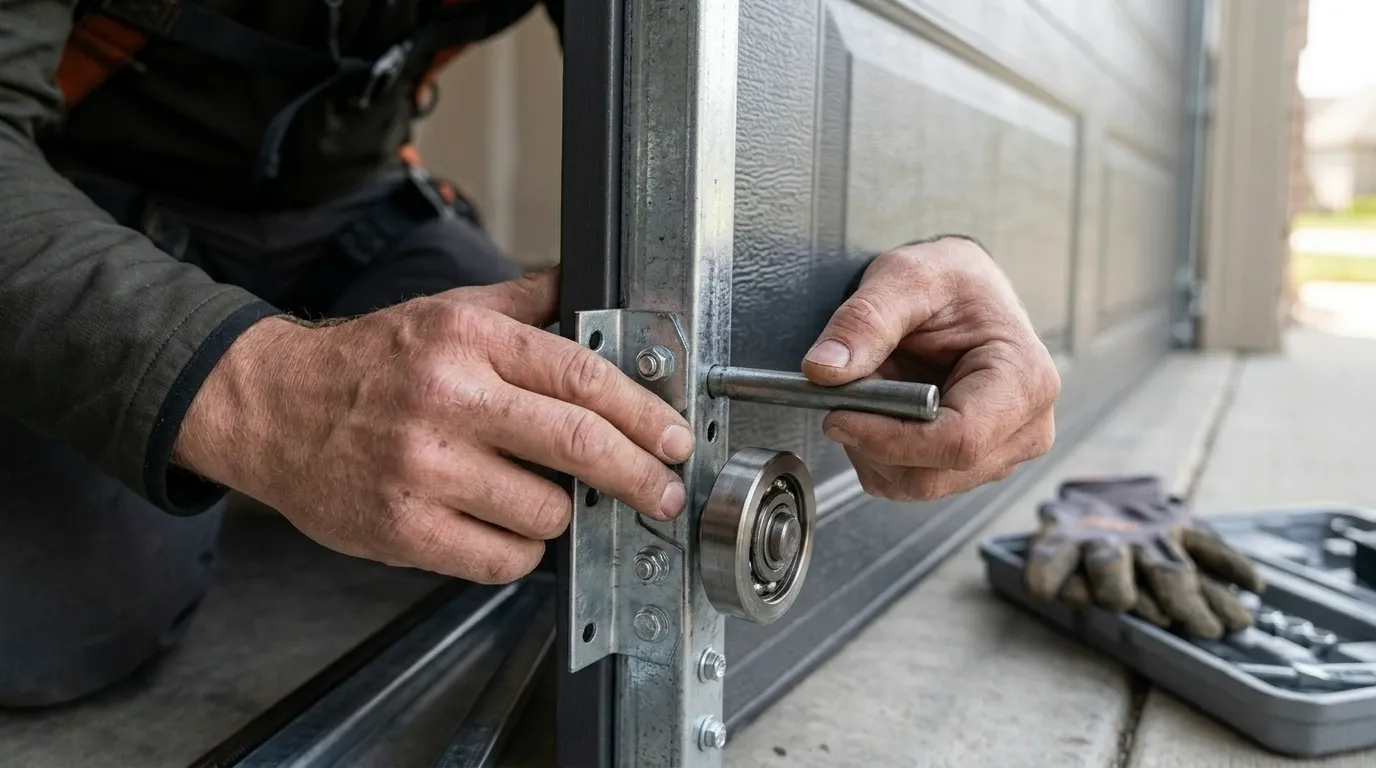
Abington sits about 13 miles out from our shop in Cherry Hill, which puts it near the far edge of where we run commercial calls. That distance matters less than what's behind the storefront doors once we get there. Most of the commercial and mixed-use buildings in this stretch of the service area went up somewhere between 1938 and 1997, with the bulk of that stock centered around 1956. That's the same era pattern we see across most of the towns we cover, not something unique to Abington, but it's the number that decides what kind of door we're looking at before we even open the truck.
On a building that age, the symptom is rarely a dead opener. It's a steel rollup or sectional commercial door that's cycled tens of thousands of times on hardware nobody has touched since it went in - a torsion spring that's lost tension unevenly, a track bent from a forklift clip years back, rollers that were never sealed bearings to begin with. The door still moves. It just moves wrong, and it's loud, slow, or catching partway through the cycle.
Because Abington is roughly 13 miles from Cherry Hill and we don't keep a second truck or a depot stationed out that way, we schedule the trip rather than promise a same-day drop-in the way a shop based closer might. Once we're on site, the job on a commercial door from this era usually starts the same way: check spring tension and cable wear before touching the opener, because on a high-cycle steel door the spring is almost always the actual failure, not the motor everyone blames first.
We carry standard torsion springs, cable, and roller stock sized for the sectional and rollup doors common to buildings from the 1938 to 1997 window. If a part is nonstandard - an odd-width track, a discontinued jackshaft operator - that's a return trip while we source it, and we say so up front rather than guess at a repair time we can't back up. For a fuller look at what we run out of Cherry Hill day to day, see our main commercial page. You can also check which nearby towns we cover from the same route on our service area page.
The climate band here runs cold, and cold winters are hard on steel commercial doors in a specific way: the metal contracts, weatherstripping that was already brittle from age cracks further, and a torsion spring under uneven load in freezing temperatures is more likely to snap outright than to just sag. On a building put up in the 1950s with original hardware, that's not a hypothetical - it's the most common reason we get called out on a January morning.
The other half of it is maintenance history. A lot of commercial tenants don't own the building and don't budget for door upkeep the way a homeowner might, so lubrication and adjustment get skipped for years. Combine 60-plus-year-old steel, a cold-climate winter cycle, and no maintenance record, and the failure mode is predictable: springs go first, then cables, then the track once the door's been running out of alignment long enough to chew the rollers. None of that is unique to any one building - it's what happens to commercial doors of this age in this climate, full stop.
A commercial torsion spring on a wide rollup or sectional door holds a lot more stored force than the springs on a typical residential garage door, and it's not a fair fight if it lets go while someone's hands are on the bar. We won't talk a tenant or property manager through a spring swap over the phone, and we'd tell you the same if you called us from any building on our route, not just this one.
Where it makes sense to handle yourself: basic visual checks - listening for grinding, watching for a door that hangs unevenly, noting if the opener strains before it moves the door at all. That's useful information to have ready when you call, and it can shorten the visit. Where it doesn't make sense: springs, cables, or anything that involves releasing tension, on a door this size, on hardware this old. If the frame or track is bent badly enough that the door won't square up, that's often a sign replacement makes more sense than another round of adjustment, and we'll say so rather than keep patching it.
We run out of Cherry Hill only. Abington is about 13 miles out, so we schedule commercial calls there rather than offer the same-day window we might closer to the shop. We'll give you a real time when you call, not a guess.
A lot of the commercial buildings in this part of the service area date to the 1938 to 1997 window, many around 1956. High-cycle steel doors on original torsion hardware that old, combined with cold winters, tend to fail at the spring before anything else gives out.
No. A commercial-width spring stores far more force than a residential one, and releasing it without the right bars and clamps is a real injury risk. We handle spring work on every call, regardless of building age.
Call now or request a free quote - same-day service on most repairs, upfront written pricing.