Cherry Hill, NJ · Garage Door Service
Cherry Hill Garage Door Pros repairs and services commercial overhead doors across Cherry Hill and the surrounding South Jersey service area, from broken springs to worn track on cold-climate buildings.
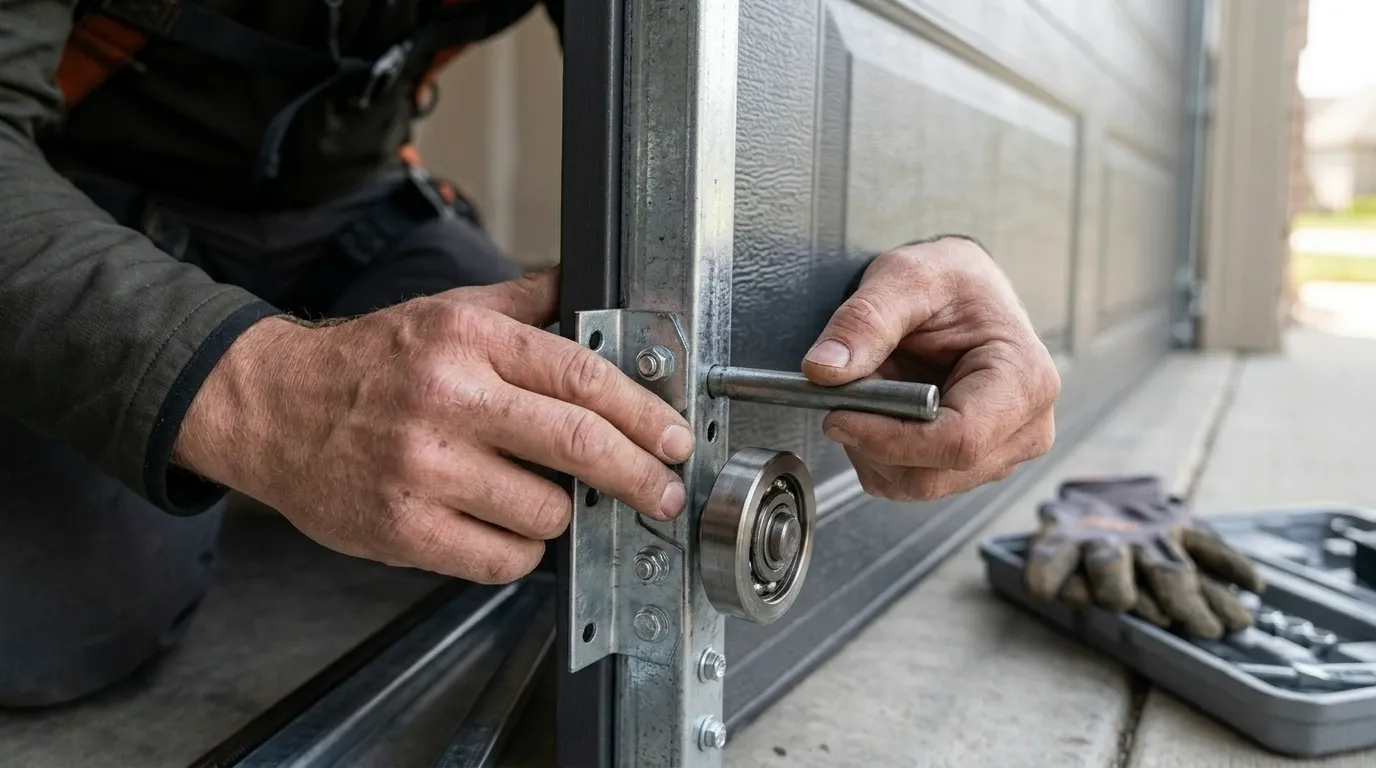
We start with the door doing the work, not the panel that looks worst. On a commercial section door that means pulling the operator cover first - chain-drive units on steel track take a different diagnostic path than the torsion-spring residential doors most trucks see all day. We check cycle counts against the opener's rated duty, look at cable wear at the drum, and check track alignment against the slab. On multi-door loading setups we test each door independently before we touch the shared control panel, because a bad limit switch on one door can look like a motor fault on the next one over.
For a stuck or slow-closing commercial door, the fix is usually one of three things: a spring that's lost tension from cycle fatigue, a track that's walked out of plumb from slab settling, or a photo-eye sensor knocked out of alignment by forklift traffic. We replace what's worn rather than the whole assembly when the hardware underneath is sound - a new spring set on a good track outlasts a full replacement door at a fraction of the cost. When the drum, shaft, and bearing plates are all original to a building from the 1950s or 60s, though, patching one part often just moves the failure to the next weak link, and we'll say so before we quote the job.
This area's commercial buildings sit inside a housing and building stock that mostly went up between 1938 and 1997, with the bulk of it older than 1960. Strip retail, small warehouses, and back-lot service bays built in that same postwar wave carry door hardware sized for a much lower cycle count than today's delivery, trade, and loading traffic actually puts on them. A chain-drive opener rated for a dozen cycles a day in 1962 gets forty or fifty now, and nobody upgraded the spring set to match.
The cold-severe climate band this region sits in adds a second stress the original hardware wasn't built around. Steel torsion springs lose tension faster through repeated freeze-thaw cycling, cable strands corrode from condensation inside unheated bays, and track bolts backed into decades-old concrete work loose as the slab moves seasonally. Put an aging spring set on a door that's cycling harder than it was designed for, in a climate that fatigues steel faster than a mild one would, and you get the pattern we see most: doors that were fine in October and won't lift by January.
We don't have a published flat rate to give you here - commercial pricing depends on door size, spring count, and whether the opener needs replacing alongside the spring, and we'd rather quote it after we've seen the door than guess in print. What we can tell you is how we price the visit: a diagnostic call to look at the door and give you a number, then the repair itself if you approve it, with parts and labor broken out separately so you can see what you're paying for.
One honest limit: if the track, drum, and shaft are all original and worn together, we'll tell you replacement is the better spend rather than stack a new spring on old hardware that's going to strand you again in six months. That's not the answer that makes the invoice bigger, but a repair that fails again in cold weather costs you more than the honest number would have.
The complaint we hear most on commercial calls is a door that's slow to close, or one that closes and reverses on its own without hitting anything. Sometimes it's a door that lifts fine in the afternoon and won't budge first thing in the morning - that's the cold-severe climate working on a spring that's already fatigued, tightening up overnight and losing the last bit of lift it had left. Other times it's a grinding or slapping sound from the track as the door travels, which usually means a roller or a shaft bearing that's worn past the point of adjustment.
A door that won't stay down, or drifts open a few inches on its own, points to a broken or unbalanced spring rather than the opener - the motor is trying to hold weight the spring should be carrying. None of these are safe to keep running past a service call or two; a loaded spring or a cable under tension that finally lets go can take a section of door with it.
It depends on cycle count more than a calendar date. A loading-dock door running forty or fifty cycles a day needs a look well before a low-traffic bay does. Given the cold-severe winters here, we'd rather check spring tension and cable condition before the first hard freeze than after a door fails on a January morning.
Yes, and it's common in this area given the age of the building stock. The catch is parts - original drums, shafts, and some track profiles aren't made anymore, so a repair on hardware that old sometimes means sourcing a compatible replacement part rather than an exact match, or replacing the section instead of patching it.
Yes. On multi-door commercial setups we test each door and opener separately before touching any shared control panel, since a failure on one door can mimic a different problem on the door next to it. We'll quote the visit to cover all the doors you want looked at in one trip.
By Neighborhood
We also handle commercial garage door in these Cherry Hill-area suburbs.
Call now or request a free quote - same-day service on most repairs, upfront written pricing.