Cherry Hill, NJ · Garage Door Service
Cherry Hill Garage Door Pros drives 13 miles into Abington, NJ to fix broken springs and worn openers on homes built near 1956, older stock than Cherry Hill's own median.
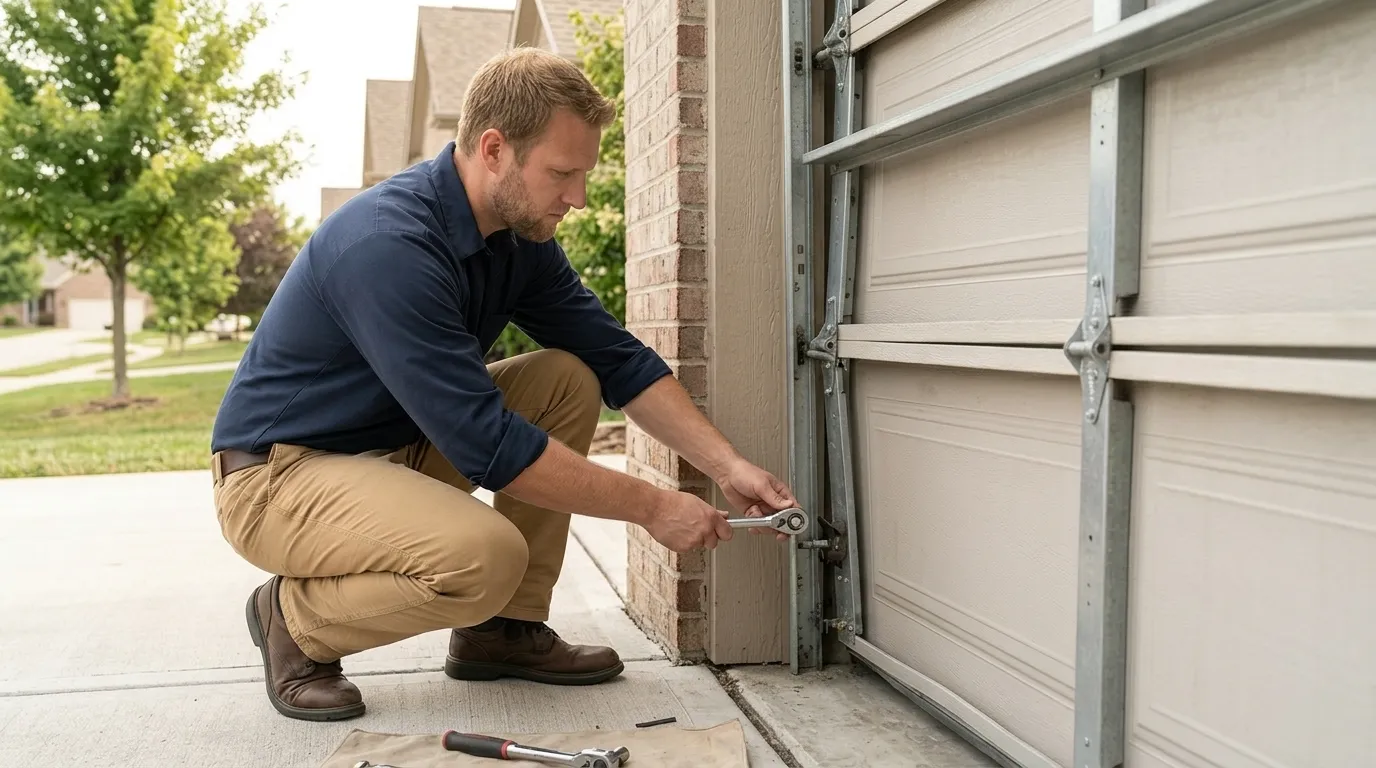
Abington sits 13 miles out from Cherry Hill, which is the longest run on our list of nearby towns. That distance doesn't change what's wrong with your door, but it changes how the call gets scheduled - a truck coming from Cherry Hill needs to know what it's walking into before it leaves, not after.
What it usually finds in Abington is a door that's fighting hardware older than most of the cars in the driveway. The area's homes run to a median build year of 1956, and a lot of that stock never got upgraded past the original spring and track setup. The symptom is almost always the same story: a torsion spring that's been carrying the same weight since the Eisenhower administration finally lets go, or a cable frays where it's been rubbing on a drum that was never re-lubed. Sometimes it's the opener straining against a door that's gotten heavier with age as wood panels absorb moisture over sixty-plus winters.
Homeowners here don't usually call at the first squeak. They call when the door won't move, or moves on one side only, which means a spring has already gone and the other side is close behind.
We bring the parts that fit 1950s hardware, because guessing wrong on a torsion spring size means a second trip, and a second trip from 13 miles out costs everyone time. On a door from this era we're usually replacing both torsion springs as a pair - even if only one snapped, the other one is the same age and the same number of cycles from failing.
Cables and rollers get checked at the same time, since a spring that let go under load often took a cable with it, or bent a track trying to drop the door straight down instead of on its rails. If the opener is original to the house, we test whether the motor is worth keeping or whether the gear set inside has already stripped - that's a five-minute check, not a guess.
We replace what's broken and inspect what's aging, then get the door balanced so the opener isn't doing a spring's job. That balance check matters more here than it does on newer stock, because a door built for 1956 hardware doesn't always sit right on modern replacement springs unless someone accounts for the difference in weight and drop.
This region sits in a cold-severe climate band, and steel takes that differently depending on how old it is. A track or spring installed in the 1950s or '60s has had decades of freeze-thaw cycling to work rust into joints that were tight when they were new. Add a household base of 22,416 in this immediate area, most of it in homes from that same build era, and the failure pattern repeats house after house - not because anyone did anything wrong, but because that generation of hardware wasn't built to run this long.
Median household income in Abington runs to $103,367, a bit above the $100,130 median across the wider Cherry Hill service area. That gap matters for one practical reason: when a fifty-year-old opener finally strips its gears, more owners here choose a full replacement over patching the old unit again, since the parts for some original units aren't stocked new anymore anyway.
We don't stage inventory in Abington itself - every job runs off the Cherry Hill truck, so what we carry that day is what's available that day.
A torsion spring holds enough stored energy to break a hand or worse, and that doesn't change because the door is old. If your spring has snapped, don't try to wind the new one yourself - this is the one repair on a garage door we tell people flat out not to attempt without the right bars and clamps.
What you can check yourself: whether the door is binding on one track versus dropping evenly, and whether the opener is straining audibly before it moves at all. Both of those observations help us bring the right part on the first trip instead of the second.
One honest limitation: on some of the oldest doors in this area, the original panel section is no longer made, and a broken panel means replacing the whole door rather than matching one section. We'll tell you straight when a repair isn't worth it against a full replacement - patching a sixty-year-old door with a mismatched panel usually costs more in the long run than doing it right once.
About 13 miles. We run the job off the Cherry Hill truck rather than a local depot, so scheduling accounts for that drive - there's no separate Abington branch or crew.
Torsion springs wear out on a cycle count, not a calendar, so two houses built the same year can fail at different times depending on how often the door's been used. On 1950s-era hardware, both springs are usually close to the same age either way.
Often yes. Once the gear set inside an original motor strips, matching parts for that model usually aren't made anymore. A new opener sized for the door's actual weight typically costs less than chasing parts for a fifty-year-old unit.
We bring standard torsion hardware sized to the door on the job, which covers most of what's out on 1950s and 60s builds. We don't pre-stock obsolete parts, so if a door needs something unusual we'll tell you before starting work, not after.
Call now or request a free quote - same-day service on most repairs, upfront written pricing.