Cherry Hill, NJ · Garage Door Service
22,416 households, mostly built around 1956 - Abington's doors and openers wear the way that era's hardware wears. Cherry Hill Garage Door Pros drives the 13 miles to fix them.
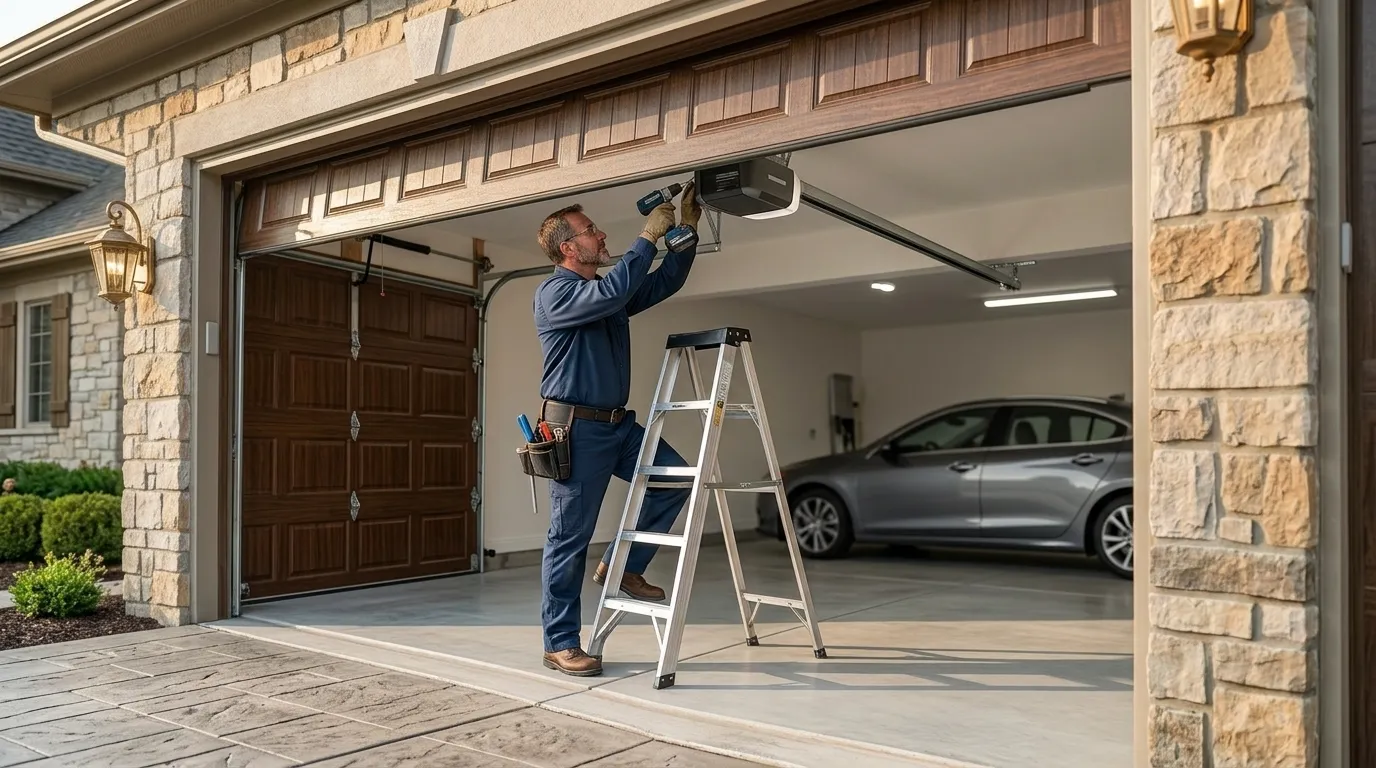
Abington runs about 22,416 households, which is enough volume that the same handful of problems show up on repeat: a torsion spring that lets go on a cold morning, an opener that grinds instead of pulling, a track that's walked out of alignment because the door's been forced by hand for months. When a town this size calls, it's rarely one-off weirdness - it's the same failure pattern surfacing house after house because the housing itself is uniform.
That uniformity comes from when the houses went up. Across this part of the service area, homes were built between 1938 and 1997, with the median landing around 1956. A door and opener installed on a house built in the mid-1950s has had a lot of time to accumulate small failures that finally add up: hardened lubricant on rollers, a cable that's frayed from decades of the same drum, a spring rated for a door weight nobody re-checked after a panel replacement. The symptom people describe as sudden - "it just stopped working" - is usually the last step of a slow one.
We come from Cherry Hill, about 13 miles out, so a service call to Abington isn't a same-block stop - we plan the job before we load the truck, which means we want a clear description of what the door's doing (grinding, drifting off track, refusing to open past a foot) before we head out.
Once we're on site, the fix depends on what's actually failed, not on a generic checklist. A door from the 1950s era common here often has hardware that doesn't match anything sold today - a torsion spring wound for a weight rating that current doors don't use, or a track gauge that's been discontinued. We carry stock for the common older sizes, but if a part is genuinely obsolete we'll tell you that on the spot rather than stall the job pretending otherwise. Openers get checked for travel limits and force settings separately from the door itself, because a door that's mechanically fine can still get blamed for an opener problem, and vice versa. We diagnose both before touching either.
The climate band this area sits in is classified cold and severe, and that matters more for older doors than people expect. A torsion spring loses tension as temperatures drop, and a door built to mid-century tolerances doesn't have the weather seals or insulated panels that later doors do. Combine that with a median household income around $103,367 - high enough that a lot of these houses have had one or two upgrades over the decades, but not necessarily to the garage door - and you get a common mismatch: a newer, heavier opener bolted onto a door and spring setup that predates it.
That mismatch is the actual local failure, not just cold weather in general. An opener rated for a modern insulated door, installed on an older single-layer panel door, works the motor harder than it should, and the door itself takes stress it wasn't built to handle season after season. It's a pattern we see enough in towns with this housing profile that it's worth checking for directly rather than waiting for the belt or gears to fail first.
Some of this is fair to handle yourself - lubricating rollers and hinges, tightening loose bolts on the track, clearing the photo-eye sensors if the door won't close. None of that requires a call.
What isn't worth doing yourself is anything involving the torsion spring. It's under enough tension to cause a serious injury, and on a door from the 1950s-70s era common in Abington, the spring may not match a size you can buy off a shelf anyway - guessing wrong means re-doing the job, or worse. The honest limitation here: if your door's spring or hardware is old enough to be non-standard, we may need to order a part rather than fix it same-visit. We'll tell you that up front instead of promising a fast turnaround we can't back up. For a door that's original to a house built around 1956, replacement sometimes makes more sense than a repair that just buys another year - we'll say so if that's the case, not just sell the visit.
Yes. We drive out from Cherry Hill, about 13 miles, to handle garage door repair and installation in Abington. There's no local branch here, so we schedule the trip rather than offering a walk-up response time.
On older houses common in this area, a newer opener is sometimes installed on a door and spring setup built decades earlier. The opener works harder than it should because the spring tension or panel weight doesn't match what the motor expects. That mismatch shows up as strain long before the door itself visibly fails.
Often yes, for common sizes from that era, but not always. Some torsion springs and track hardware from houses built in the 1950s and 60s are no longer manufactured. If we hit that, we'll tell you directly and talk through whether a repair or a full replacement makes more sense.
Sometimes, sometimes not. If the door frame and panels are sound and it's just a spring or cable, repair is usually the cheaper path. If the opener, spring, and panels are all original and failing together, replacement often ends up costing less over time than repeated repairs.
Call now or request a free quote - same-day service on most repairs, upfront written pricing.