Cherry Hill, NJ · Garage Door Service
Abington homes date to 1956 on average, and a lot of that original track and roller hardware is still up there. Here's why doors jump track and what fixing it actually takes.
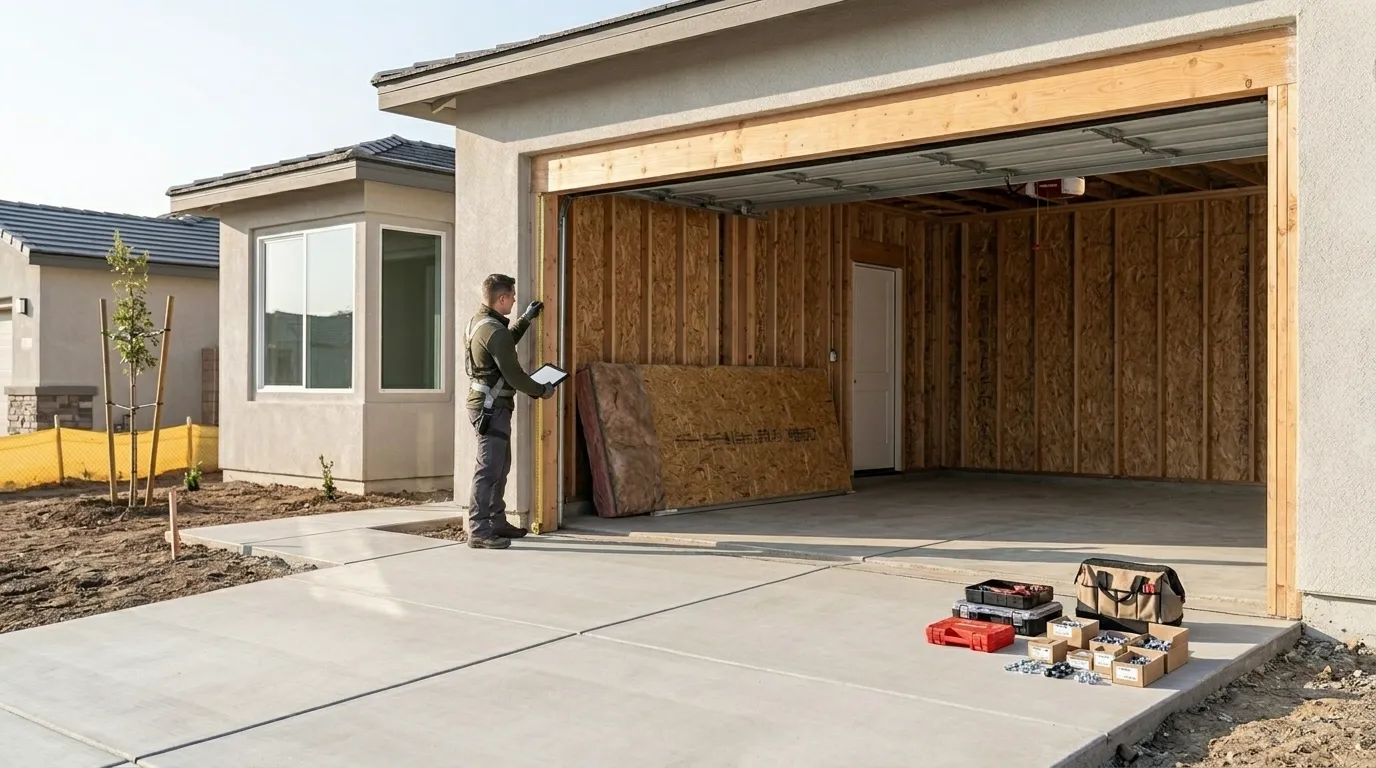
In a lot of Abington garages, the track bolted to the jamb is the same track that went up when the house was built, somewhere around 1956. Nobody's ever had a reason to touch it unless something broke outright, and a track that's never been touched is a track that's never been re-shimmed, never been re-leveled, and never had its brackets re-torqued. So when a homeowner calls about a door that's "off track," what we're usually looking at isn't a fresh problem - it's forty-plus years of small settling finally catching up with hardware that was installed once and left alone.
The door usually still moves. That's what throws people off. It'll travel a few inches, bind, pop a roller out of the channel, and stop dead - sometimes cocked at an angle, sometimes just hanging on one cable. If you try to force the opener through it, you can bend the track further or snap a cable. If the door came down hard, check first whether anyone or anything is under it before you touch a thing.
We come out from Cherry Hill, about 13 miles down, so this isn't a same-hour drive-by - we schedule the visit and bring what an original-hardware door in Abington typically needs, because we've seen the pattern enough times across this part of the service area.
First we get the door supported and off the opener so nothing keeps trying to run a bent track. Then we check the rollers - steel rollers on hardware this old are often worn to an oval instead of a circle, which is half of why the door jumps in the first place. We check the track brackets against the jamb; on houses built in the mid-1950s the jamb itself has usually shifted a little over the decades, even a quarter inch throws a track out of parallel. We re-square and re-bolt the track, swap any roller that's not round anymore, and check both cables while it's open, since a fraying cable is often what let the door start hunting sideways to begin with. If the track itself is bent past straightening, we replace that section rather than fight it. See the full write-up on how we handle this at /garage-door-off-track-cherry-hill-nj.
Abington's housing didn't come up all at once with a single builder spec, but the era is consistent enough - median year built 1956 - that the failure pattern repeats house to house. Original track hardware from that period is light-gauge steel, hung on brackets that were fine for the door weight of the time but were never rated for forty-plus years of thermal cycling. This region sits in a cold, severe climate band, and steel track contracts and expands enough over a winter-to-summer swing to walk a bracket loose a fraction at a time. One season it's fine. A few seasons later, the track's out of parallel by enough that a roller catches the edge instead of riding the channel.
With 22,416 households in Abington and a lot of that stock from the same building wave, this isn't a one-house quirk - it's a hardware-age problem that shows up across the area on a schedule, not by chance.
You can safely check a few things yourself before calling anyone. With the door down and the opener disconnected, look at the track brackets - if you can wiggle one by hand, that's loose hardware, not a bent track, and it's a lighter fix. Look at the rollers through the gap; if they're visibly worn flat on one side, that's a wear issue, not an alignment issue.
What we don't recommend doing yourself: forcing a jumped roller back into the channel by hand while the door is under spring tension, or re-torquing track bolts near a loaded torsion spring. That's where people get hurt, and it's also where a five-minute job turns into a bent track that now needs replacing instead of adjusting. If the door is a double, with two torsion springs and a heavier cable load, we'd rather you leave the tension side alone entirely and just call. Full detail on the general repair is at /garage-door-off-track-cherry-hill-nj, and you can see other nearby towns we cover at /near/abington/.
If your house dates to around 1956 like much of Abington's stock and the track has never been replaced, there's a real chance it is. Original steel track from that era is thinner-gauge than what's sold today, and it's usually the first thing to go out of parallel after decades of seasonal expansion and contraction.
We work out of Cherry Hill, about 13 miles from Abington. We schedule the visit rather than treating it as a walk-in stop, so we can bring the right roller and bracket stock for hardware this age instead of guessing on-site.
Not while it's under spring tension. A door that's jumped track is usually still tied to a loaded cable or spring, and forcing it back into the channel by hand is one of the more common ways people get hurt or turn a bracket fix into a full track replacement.
Call now or request a free quote - same-day service on most repairs, upfront written pricing.