Cherry Hill, NJ · Garage Door Service
Abington's houses date mostly to 1956, with steel rollers on steel track built for a different era. We replace them from our Cherry Hill shop, 13 miles out.
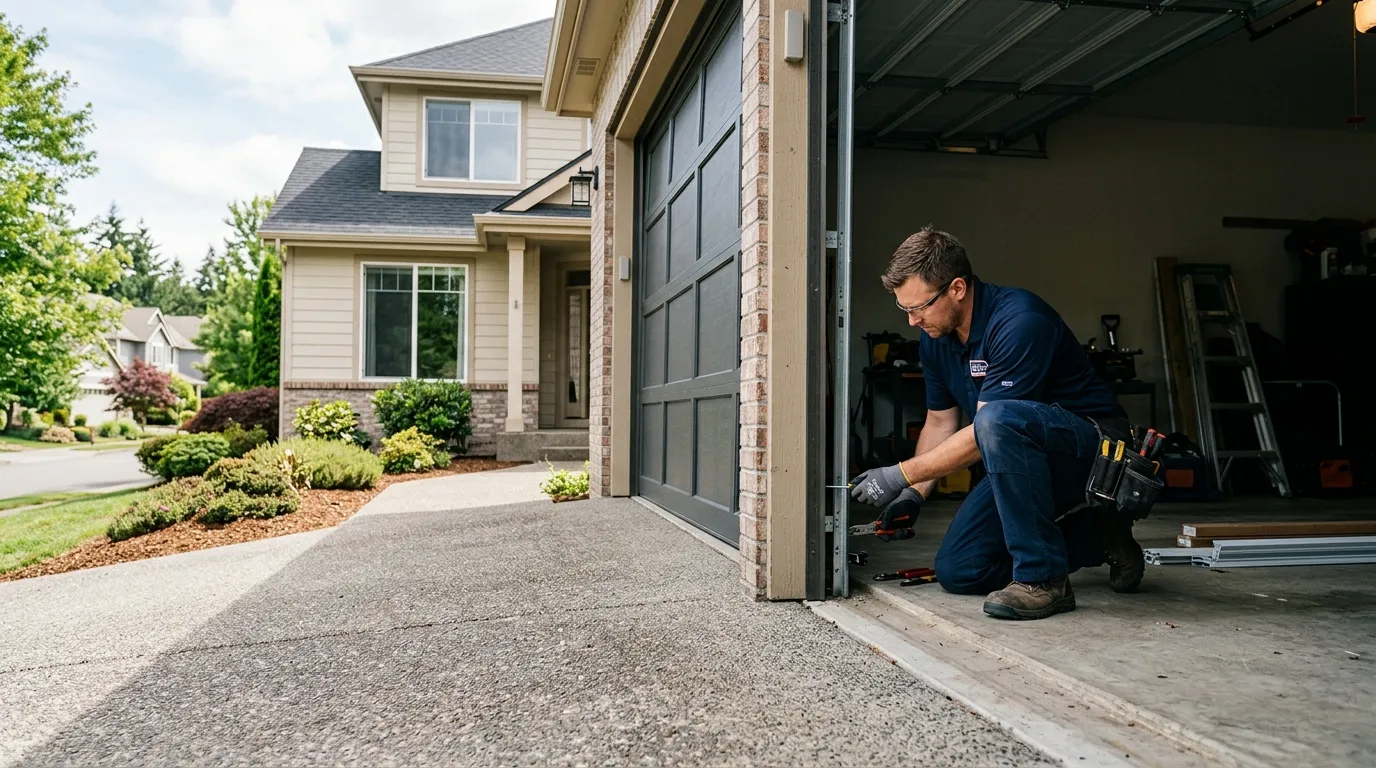
Most garage doors standing in Abington went up around 1956, and a lot of the original hardware is still riding on them. That means steel rollers on steel stems, no bearing, no nylon sleeve, just a rod that spins raw against a plated track. When that setup was new it was fine. Sixty-odd years of temperature swings later, the stems wear an oval groove into the roller barrel and the door starts to hunt sideways as it travels.
What you hear is a rumble that gets louder as the door climbs, or a hard clunk right at the bend where the vertical track turns horizontal - that's the worn roller catching the radius instead of rolling through it. Some owners notice the door hesitating a few inches off the floor, which is usually the bottom roller, the one that takes the most weight and the most road salt kicked up off the driveway in winter.
This isn't a spring problem and it isn't an opener problem, even though it can sound like both. It's metal wearing on metal in a track that was never designed to be maintenance-free forever.
We pull the worn steel rollers and put in sealed ball-bearing nylon rollers sized to the stem length these older tracks use - a lot of 1950s installs in this area used a longer stem than what current standard doors ship with, so we measure before we order rather than assuming a generic kit fits. Nylon quiets the door down immediately because it's not metal riding metal anymore, and the sealed bearing means the roller isn't depending on you to oil it.
We do full sets, not just the noisy one. If one roller has worn that much, the rest on the same door have seen the same age and the same weather, and replacing one now and the next one in eight months costs you two truck visits instead of one.
While the door's open we check the track alignment too, because a groove-worn roller often means the track itself has walked out of plumb slightly, and a new roller in a bent track wears the same way in half the time. If the track needs a tap back into line, we do that as part of the same job, not a separate call.
This area sits in a cold-severe climate band, and that matters more for rollers than most owners expect. Steel contracts in a hard freeze, and a roller stem that's already worn loose in its bracket gets looser still when the metal shrinks overnight. Combine that with road salt and slush thrown up during a plow season and you get a track that rusts from the inside of the groove out, which accelerates roller wear rather than causing it on its own.
Abington's housing stock lines up with a wider pattern here - most of the roughly 86 named areas this company works across are dominated by pre-1960 construction, so this isn't an isolated quirk of one street. It's the standard condition of a door this age, and it shows up on the same schedule house to house.
Across the broader service area, median household income runs around $100,130, and Abington itself runs a bit above that. That matters practically: a full roller set and a track adjustment is a repair most owners here budget for without treating it as an emergency, rather than deferring it until the door won't move at all.
Rollers on the non-spring side of a door are a reasonable weekend project if you're comfortable with a ladder and a socket set - you release tension carefully, slide the roller out of the track, swap it, and reset. We won't talk anyone out of that.
Where we draw the line is the roller nearest the torsion spring or the bottom bracket under load. Those brackets are holding cable tension, and pulling the wrong one on a door this old, where the bracket itself may be original 1956 stamped steel rather than a modern galvanized replacement, can let a cable whip loose. That's not a risk worth the price of a roller kit.
Our honest limitation: we come out from Cherry Hill, about 13 miles from Abington, so we're not a same-hour walk-in shop here - we schedule the visit rather than showing up on demand. For a full roller set with track check, that's rarely a problem since it's not an emergency repair. For a door that's jumped its track and won't close at all, say so when you call so we can prioritize it.
Almost always all of them on doors from this era - typically eight to ten per door depending on size. If the door is original to a 1956-era house, the rollers have all logged the same years and the same weather, so replacing one and leaving the rest is a short-term fix that just delays the next call.
Usually, yes, if the noise is a rumble or a clunk at the track bend. Sealed nylon rollers quiet that down immediately because you've removed metal-on-metal contact. If the noise is a bang or pop instead, that's more likely a spring or hinge issue and worth mentioning when you call.
You can slow the wear a little, but oil doesn't undo a groove already cut into the stem or barrel. Once a steel roller is worn oval, it'll keep tracking rough no matter how well lubricated it is. At that point replacement is the actual fix, not a delay tactic.
We run this job from Cherry Hill, about 13 miles out, so we schedule Abington visits rather than offering walk-up same-hour service. For a planned roller replacement that's not an issue - it's only relevant if your door is stuck shut and you need to flag urgency when you call.
Call now or request a free quote - same-day service on most repairs, upfront written pricing.