Cherry Hill, NJ · Garage Door Service
Abington homes date to 1956 on average, with hardware built for a different era. We drive out from Cherry Hill to fix broken torsion and extension springs correctly.
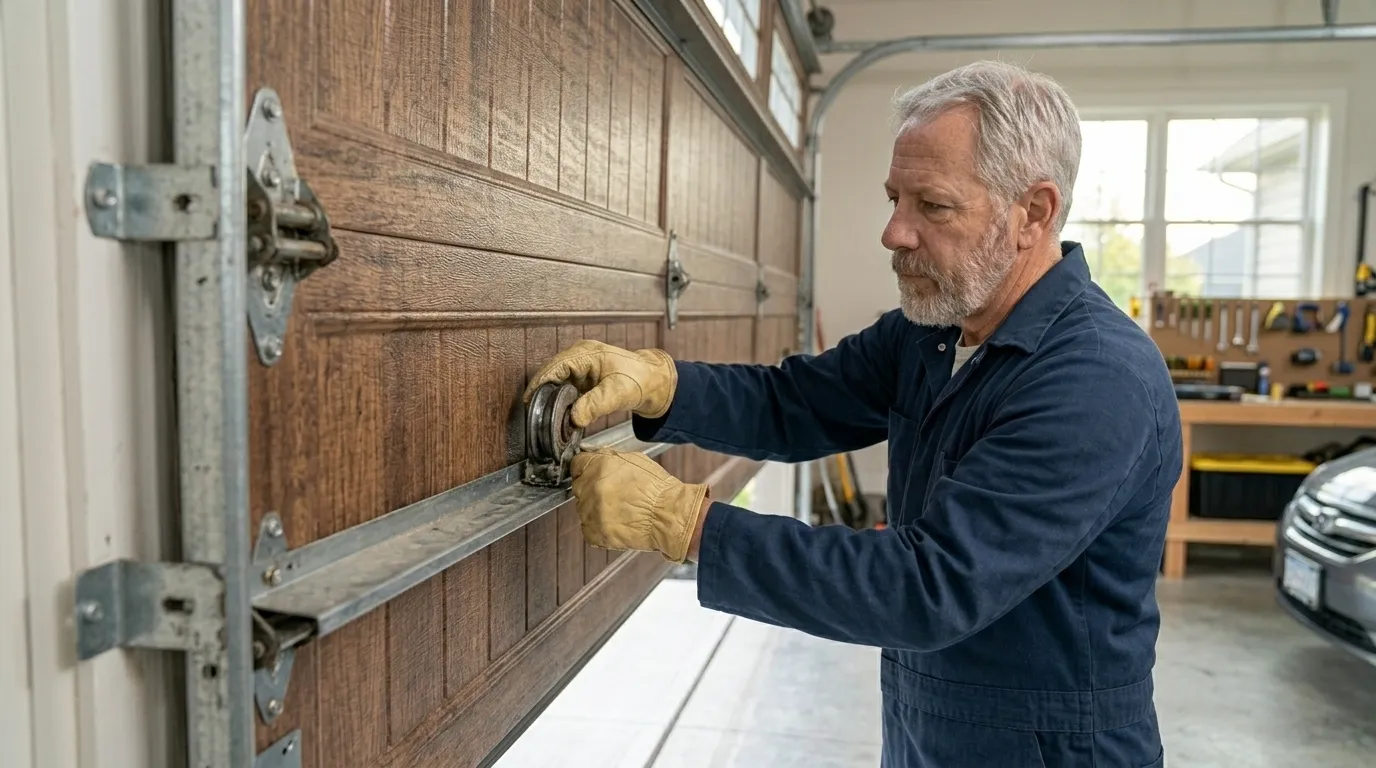
The median home in Abington went up around 1956, and that number matters more than it sounds like it should. A door that won't budge, or one that slams down the last foot of travel, usually traces back to a spring that was sized for the door and opener combination standard in the mid-1950s - often a single extension spring bolted along a horizontal track, sometimes a pair on either side with no containment cable. If your garage still has that layout, or a torsion conversion someone bolted on later without upgrading the rest of the hardware, the failure looks the same either way: the door feels twice as heavy as it should the moment the spring lets go. You'll usually hear it first - a bang, sometimes a visible gap where a coil used to sit. The opener will keep trying and straining the gears, which is its own repair bill if you let it run for more than a day or two.
We come out from Cherry Hill, about 13 miles, so we bring both torsion and extension hardware on the truck rather than guessing what a given Abington house has and driving back for parts. First we identify which system you actually have - a lot of homes from this build era were retrofitted at some point, and the spring on the door isn't always the spring the door was designed for. We match the wire size and wind to the door weight, not just swap in whatever's closest, because an undersized replacement fails again inside a year. Extension spring setups get a safety cable run through the coil if one isn't there already; that's not optional, it's what keeps a broken spring from becoming a projectile. Torsion jobs get both sides replaced together, even if only one broke, because the other is on the same clock. We test full travel and balance before we leave - a correctly sprung door should hold at chest height and not drift.
This region sits in a cold, severe climate band, and steel spring wire loses temper faster with repeated cold-to-warm cycling than it does in a mild climate. A spring rated for a certain number of cycles doesn't care about the calendar, but a winter that swings hard pushes more full-weight cycles onto cold, stiff steel, and that shortens the practical life of hardware that's already decades past its original install in a lot of Abington's 1938-1997 housing stock. Combine that with the fact that most of this broader area's homes are pre-1960 construction, and you get a lot of garages running original or first-replacement springs that were never rated for the cycle count they've since seen. At a median household income of $103,367, most owners here aren't looking to defer this - they want it done right the first time rather than patched twice.
We'll say this straight: springs are not a weekend project, and we're not going to pretend otherwise to sell you a house call. A wound torsion spring under tension can break a wrist or worse if the winding bars slip, and extension springs without a safety cable have hurt people who thought they knew what they were doing. Where a homeowner can genuinely help themselves is in noticing early - a door that's gotten noticeably heavier to lift by hand, or an opener straining more than it used to, is worth a call before the spring actually snaps. What we won't do is talk you into a full door replacement when a spring and cable job solves it; that call depends on the door's condition, not on padding the invoice. If the door itself is original from the 1950s and the tracks are bent or rusted through, replacement may be the honest answer, but that's a separate conversation from the spring.
Springs fail on a cycle count, not a calendar, and cold-climate temperature swings accelerate metal fatigue. A spring installed decades ago in an Abington home built around 1956 has usually absorbed more open-close cycles than its rated life, especially through cold winters, so it can go without any obvious sign beforehand.
Yes. Given how much of the housing stock in this area is pre-1960, we keep both extension and torsion hardware on the truck when we head out from Cherry Hill, rather than diagnosing on site and coming back a second time for the right spring.
On a torsion system we replace both sides together, since the second spring is on the same fatigue clock as the one that broke. On a single extension spring setup, that's a case-by-case call based on the wire's condition, not a blanket rule.
Call now or request a free quote - same-day service on most repairs, upfront written pricing.