Cherry Hill, NJ · Garage Door Service
Cinnaminson homes built around 1967 carry different door hardware than older Cherry Hill stock. We travel 5 miles out to fix springs, openers, and tracks on that generation.
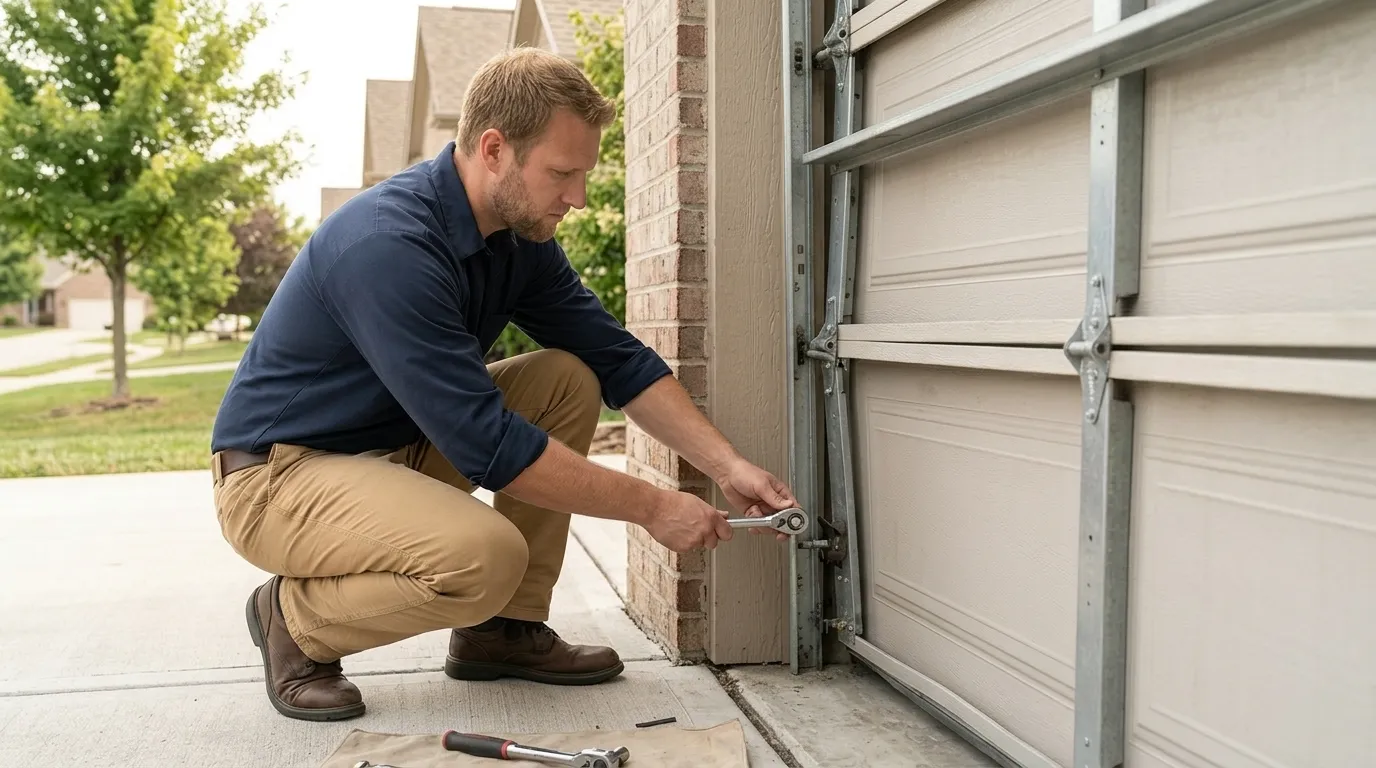
Cinnaminson's housing stock centers on 1967, later than a lot of the older sections closer to Cherry Hill, which run pre-1960. That decade matters because doors going up in the late 1960s were mostly steel sectional panels on extension springs mounted overhead, not the older side-mounted torsion setups you'll find in the pre-1960 tract housing nearby. The extension spring system was standard-issue for that era's builders - cheaper to install, and it's held up in a lot of these houses for over fifty years now.
The failure pattern that comes with this hardware is specific: extension springs stretch and fatigue over decades of cycles, and when one snaps, the door drops unevenly because there's no torsion bar holding tension across the full width. Cables can jump the pulley on the slack side. None of this is exotic - it's just what happens to an original spring system that's outlived its builder-grade lifespan. If your Cinnaminson house dates to that late-60s build wave and the door's never been touched, the spring is the first thing we look at, not the opener.
For the extension spring setup common to Cinnaminson's build era, we replace both springs as a pair, not just the broken one - the surviving spring is usually close behind on fatigue and running it alone loads it faster. We check the safety cables running through the springs too, since those weren't always original equipment.
On openers, we've found late-60s doors are often carrying openers installed decades after the house - sometimes a mismatch between the door's weight and the opener's motor. We size the opener to the door, not just swap in whatever's on the truck.
Winter matters here too. This region sits in a cold climate band, and steel panels contract in low temperatures, which stiffens rollers and can bind a track that was running fine in September. We check roller condition and track alignment as part of any cold-season call, since a spring replacement alone won't fix a door that's also fighting a stiff track.
The most common call we get from this stretch is a door that won't open past a few inches, or one side visibly higher than the other when it's stuck halfway. That's the extension-spring failure pattern described above - one spring gone, the other still holding partial tension unevenly. Some owners hear a loud bang from the garage first; that's the spring snapping, not the opener failing.
A second common symptom: the opener runs, the chain or belt moves, but the door doesn't lift. That usually means the opener is trying to do a spring's job and can't, or a cable has come off the drum. We don't recommend forcing the opener repeatedly once you notice this - it burns out the motor trying to lift dead weight the springs should be carrying.
One real limitation: if the extension springs on a 1960s-era door have never been replaced, the drums, cables, and pulleys around them are often original too, and corrosion or wear on those parts sometimes isn't visible until the spring's already off. That can turn a spring swap into a bigger job once we're inside the hardware, and we'll tell you that before we start, not after.
Cinnaminson households have a median income of $123,542, higher than a lot of the older sections nearer Cherry Hill, and we see more owners here choosing full opener replacement over patching a 1970s-era motor once it's clear the unit's original. That's a reasonable call on a door this age - repeatedly repairing a fifty-plus-year-old opener rarely pencils out compared to a new unit sized correctly.
We don't stock every obsolete drum or pulley casting from that era on the truck. If your hardware is a discontinued part, we'll source it, but that can mean a return trip rather than a same-visit fix.
We run out to Cinnaminson from Cherry Hill, about 5 miles, and we ask a few questions up front - approximate age of the house, whether the door drops evenly or leans to one side, and whether you've heard a bang - so we bring the right spring size and cable length instead of guessing at the door. Given the extension-spring pattern common to the late-1960s build wave here, most of what we carry for this town is spring and cable stock, not torsion hardware.
See our other coverage near Cinnaminson, or check the main page for Cherry Hill Garage Door Pros for the full run of services we offer out of that base.
That's almost always one extension spring breaking while the other still holds partial tension. It's the standard hardware for houses built around Cinnaminson's median year of 1967, and after fifty-plus years of cycles, one spring giving out before the other is the normal failure pattern, not a sign of a bigger structural problem.
We carry common spring and cable sizes for the extension-spring setups typical of this area's building era, but original drums or pulley castings from the 1960s and 70s are sometimes discontinued. If your hardware falls into that category, we'll source the part, which can mean a second visit.
We come from Cherry Hill, about 5 miles away. We're not based in Cinnaminson itself, so we ask for the house's approximate age and the symptom on the phone first - that lets us bring the right spring and cable stock instead of arriving to find we're missing a part.
If the spring's gone but the opener's original to a 1960s or 70s install, we'll usually flag it, since a fifty-year-old motor rarely runs efficiently after that many years, and Cinnaminson's income level means most owners here choose the newer opener rather than repeated patch repairs on the old one.
Call now or request a free quote - same-day service on most repairs, upfront written pricing.