Cherry Hill, NJ · Garage Door Service
Cinnaminson homes mostly went up after 1960, later than the rest of the Cherry Hill service area - which changes what breaks and how the fix goes. Five miles out, one visit.
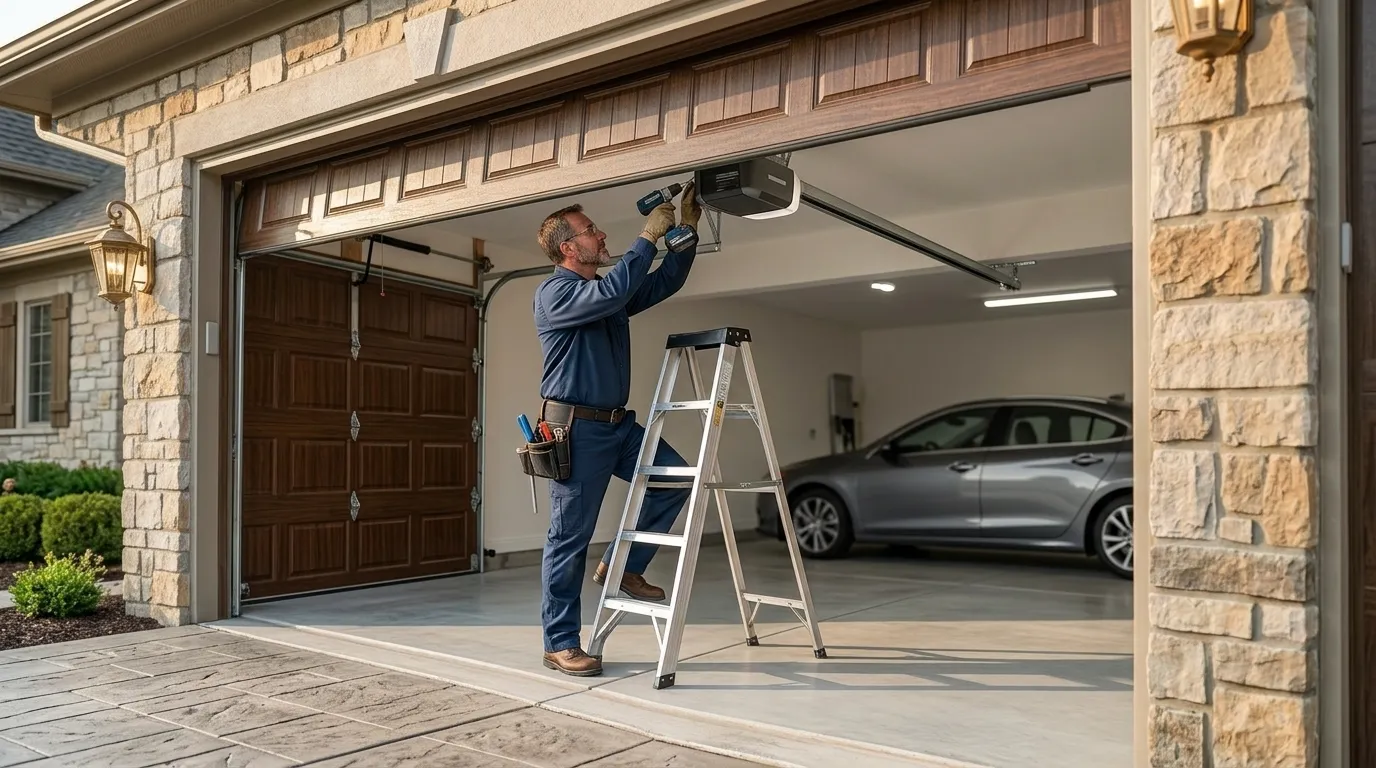
Cinnaminson sits five miles from our shop in Cherry Hill, close enough that a call here doesn't turn into a half-day trip, and close enough that we can carry the same load of springs, cables, and rollers we'd bring to a job across town. That matters because the housing here skews newer than a lot of what we cover. Across the wider service area, most houses were built between 1938 and 1997, with the bulk of that stock going up before 1960 - older one-piece doors, older track systems. Cinnaminson's median build year runs closer to 1967, which puts a good share of these houses into the era of early sectional doors and torsion springs mounted the way manufacturers standardized once extension springs started causing injuries. That's a different failure pattern than the pre-1950 stock nearby: springs sized for a slightly heavier door, openers retrofitted onto original track rather than built in from the start, and hardware that's had two or three owners' worth of "fixes" layered onto it before we ever see it.
We diagnose before we touch anything - check spring wind, cable wear, track alignment, and opener force settings in that order, because a door that's binding on the track will burn out a new opener just as fast as an old one. On a 1960s-and-later door like most of what's in Cinnaminson, torsion spring replacement is usually straightforward: standard mounting, standard drum size, parts we carry on the truck. Where it gets slower is on houses that had a DIY opener swap at some point - we've seen brackets bent to fit, safety sensors wired around instead of aligned, and springs undersized for the door they're holding. We fix the actual fault, not just the symptom that got you to call, and we tell you up front if a repair is going to outlive its usefulness fast because of what's underneath it.
The complaint we hear most from this stretch of houses is a door that reverses on its own halfway down, or one that's suddenly loud where it used to be quiet. On a torsion setup from the 1960s or 70s, that's often a spring losing tension unevenly - one side winds down faster than the other, and the door starts fighting itself. It can also be sensor misalignment on an opener that was added years after the door itself, which is common in this build era since a lot of these doors started manual and got motorized later. Either way, the door usually still works, which is exactly why people wait on it - right up until it doesn't.
The complication with mid-century sectional doors is that the panels, hinges, and track were sized to a spec that's shifted since. If a spring needs replacing, we can usually match it. If a full panel is cracked or a section's rusted through, matching the original profile gets harder - we're honest about that when it comes up, and sometimes the straighter answer is replacing the door rather than chasing a discontinued panel. We also see it where an opener's horsepower doesn't match the door's actual weight, which shows up as slow closes or an opener that runs hot. That's not a five-minute fix on a return visit; it usually means correcting the setup once, properly, rather than patching around it again.
We run out to Cinnaminson from Cherry Hill, five miles down, so a booked visit isn't a special trip - it's a normal stop on the route. Tell us what the door's doing (slow, loud, off-track, won't close) and roughly the age of the house if you know it; that alone tells us a lot about what hardware we're likely dealing with before we even pull up. See our Cherry Hill service area page for the full range of work we do, or check what's near Cinnaminson if you want to see other towns on this same route.
About five miles. It's a short enough run that we treat it as a normal stop, not a special trip, so scheduling isn't any harder than booking a job closer to Cherry Hill itself.
It usually points to a standard torsion spring setup, which is a different repair than what we see in older pre-1950 housing nearby. Parts availability is generally better on this era, since it matches modern spring and drum sizing.
Sometimes, depending on the manufacturer and how common that profile still is. When we can't get a close match, we'll say so up front - chasing a discontinued panel isn't always worth the cost compared to replacing the section or the door.
For common torsion spring and cable jobs, yes - that's most of what we stock on the truck for this build era. Less common opener parts or full panel replacements sometimes need a second visit to source.
Call now or request a free quote - same-day service on most repairs, upfront written pricing.