Cherry Hill, NJ · Garage Door Service
Cinnaminson's 6,149 households sit on housing built mostly in the mid-1960s. We install new doors sized and insulated for that stock, out of our Cherry Hill shop.
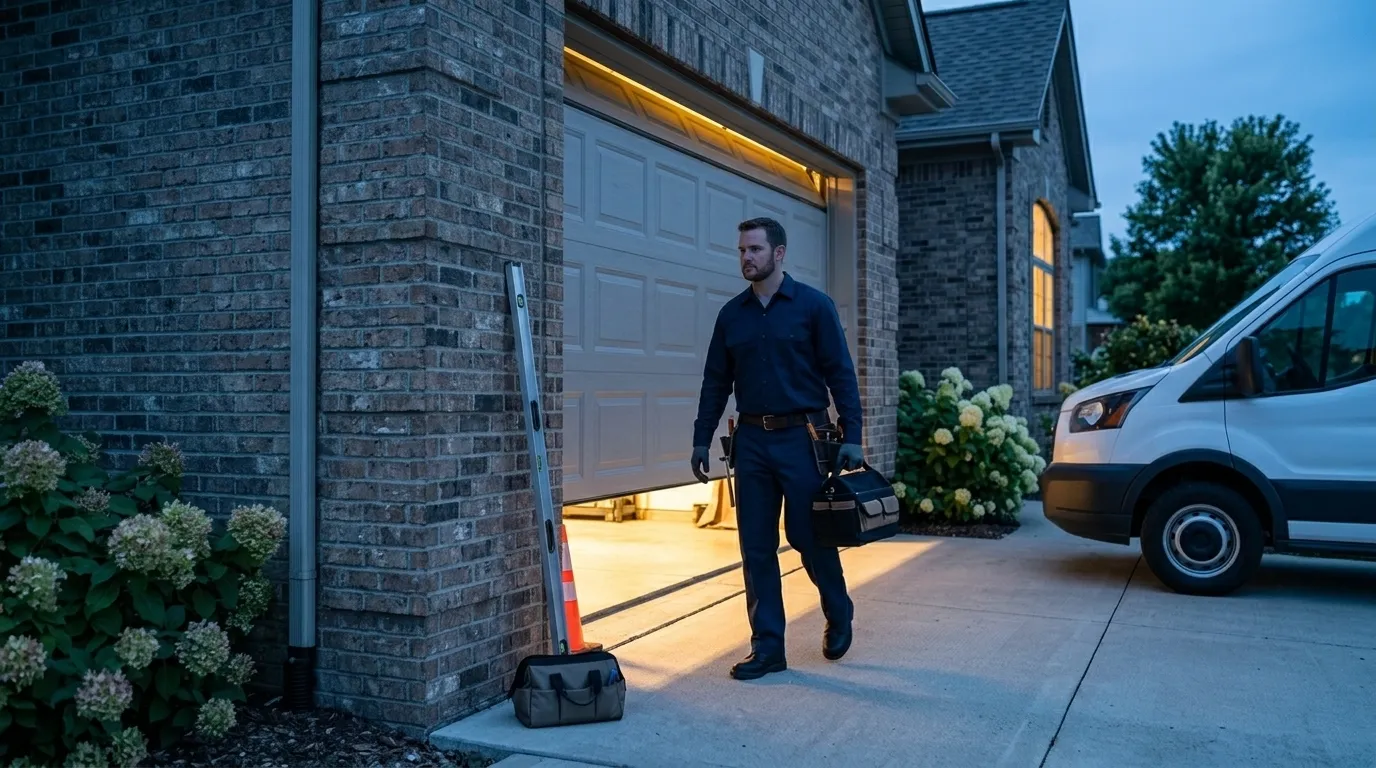
Cinnaminson is a small town as these things go - about 6,149 households, not a sprawling grid. That size matters for garage doors because the housing here went up in a tight window, mostly around 1967, which means a lot of these openings share the same rough dimensions and the same builder-grade steel doors that came standard back then. When one fails, the neighbor's is usually close behind, just a few years off.
That 1967 median puts Cinnaminson's stock noticeably newer than a lot of what we see elsewhere in the wider service area, where the median build year runs closer to 1956 and pre-1960 construction is the norm across 86 named areas. Newer doesn't mean maintenance-free. A door from the late 1960s is still 55-plus years old, and the springs, rollers, and tracks on it were never meant to last that long. Original steel sections on these openings are thinner-gauge than what's sold today, and the tracks are often narrower, which limits what replacement hardware will bolt straight on.
We come out from Cherry Hill, about 5 miles away, so a Cinnaminson visit isn't a special trip - it's routine driving distance. When we quote a new installation here, we measure against the actual opening rather than assuming a modern standard size, because a lot of these 1960s-era openings run a couple inches narrower than what's built today.
We install doors rated for a cold, severe winter climate - thicker insulation, weatherstripping that holds up to freeze-thaw cycling, and hardware that won't seize when the temperature swings hard, which it does in this region. We don't push a top-of-the-line door on every job. If the opening and the household budget call for a mid-grade steel door with a basic torsion spring setup, that's what we recommend. Matching the door to the house is the job, not upselling the biggest unit in the catalog.
The most common call we get from this stretch is a door that's gone heavy - it strains the opener, or won't stay up on manual lift. On a house built around 1967, that's almost always a spring that's outlived its cycle count, not the opener motor. People assume the opener is dying because that's the part making noise, but the spring is usually the actual failure.
Second most common: panels that have started to bow or rust at the bottom, especially on doors that were never replaced since the house was built. Steel from that era wasn't galvanized the way it is now, and once moisture gets behind the bottom panel, it doesn't stop. Neither of these is an emergency the way a snapped cable is, but both are the kind of thing that turns into a full installation call once someone gets a quote for parts alone.
Household income in this part of the service area runs well above the regional median - Cinnaminson's figure is noticeably higher than the broader area's $100,130 - and that changes the kind of job we quote here. We see more requests for insulated doors and quieter belt-drive openers, fewer requests for the cheapest steel option available. That's not a judgment, just what the calls look like.
The complication cuts the other way too: a higher household income doesn't make the opening any wider. A lot of these 1960s garages were built to fit a single car of that era's dimensions, and a modern insulated door section is thicker than what the track was designed around. We sometimes have to swap track hardware, not just the door, to get a full-size replacement to fit right. That adds a line item to the quote that a straight panel swap wouldn't need.
We're honest about one thing: we don't stock every size and finish on the truck for a same-day install. Custom widths and specific insulation grades usually mean an order lead time before the crew comes back to hang the door. What we can do on the first visit is measure the opening, check the track and header condition, and give a real quote - not a phone estimate.
We run this out of our Cherry Hill location, 5 miles from Cinnaminson, so scheduling a look at your opening doesn't mean waiting on a distant crew. If you want to see what else we handle in the area first, our Cinnaminson service page has the rest of it.
Most houses here were built around 1967, so if the door hasn't been replaced, it's pushing 55+ years old. Steel from that era is thinner-gauge and the openings often run a bit narrower than modern standard sizes, which affects what will fit as a straight swap.
No. We operate out of Cherry Hill, about 5 miles away, and drive out for every job. It's a short trip, not a separate branch, so scheduling works the same as anywhere else close to our shop.
Sometimes yes, sometimes no. Openings built around the 1960s can run narrower than today's standard sizes, and thicker insulated sections need more track clearance. We measure before quoting rather than assuming a modern standard will bolt straight in.
On a door this age, a heavy feel is almost always a torsion spring reaching the end of its cycle life, not the opener failing. The motor just has to work harder to compensate, which is often what people notice first.
Call now or request a free quote - same-day service on most repairs, upfront written pricing.