Cherry Hill, NJ · Garage Door Service
Cinnaminson homes built around 1967 still run original steel rollers on original track. Here's why they're failing now and what a proper fix looks like.
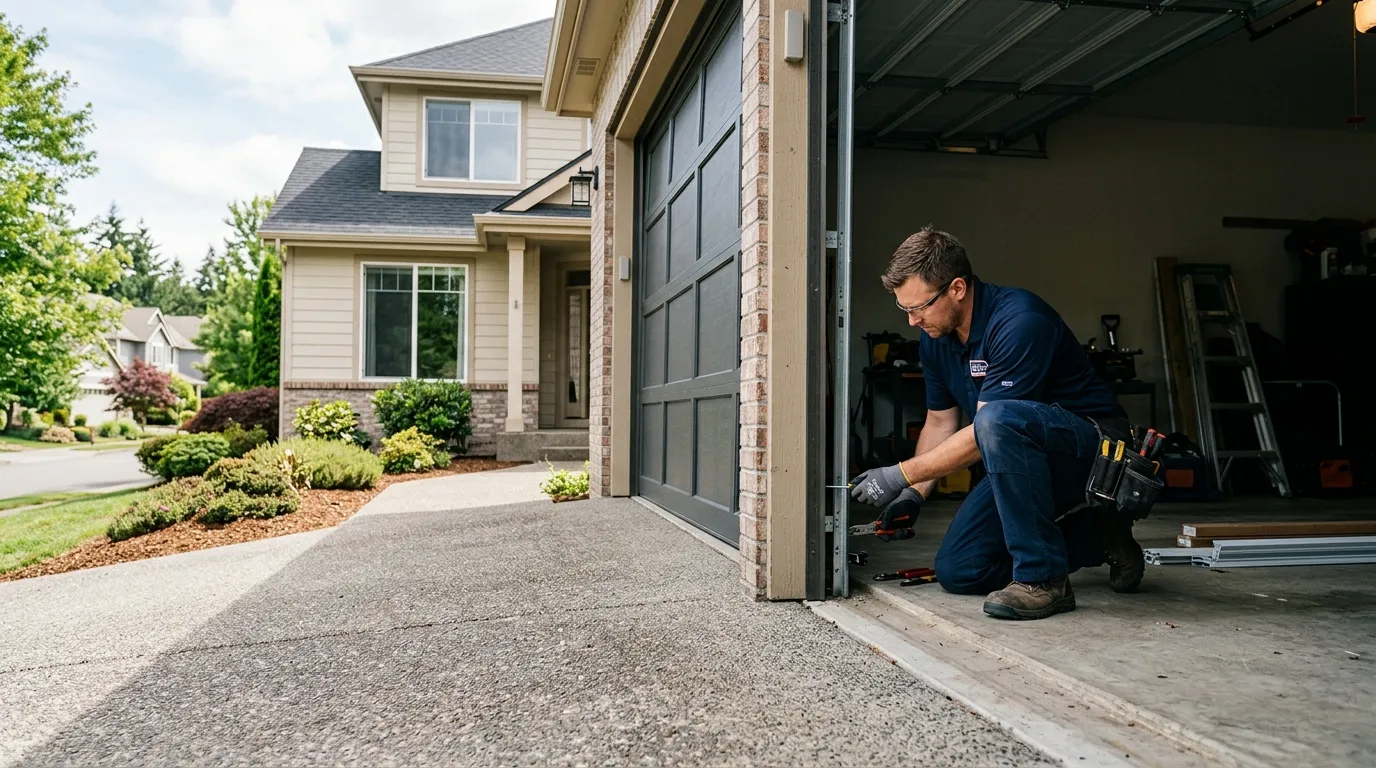
Cinnaminson's housing stock centers on a 1967 build year, a decade newer than the broader service area median of 1956. That gap matters more than it sounds. A door installed in 1967 with steel rollers on steel track has now run close to sixty years on hardware nobody upgraded, because nobody had a reason to - the door still opened. Steel rollers don't fail cleanly. They wear a groove into the roller stem, the bearing dries out, and the roller starts binding in the track instead of rolling through it. You hear it before you see it: a grinding or clunking on the way up, usually worse on cold mornings. Six thousand one hundred forty-nine households in Cinnaminson sit on this same build-year clock, which means a lot of doors are hitting this point in the same handful of years. This isn't a defect in the door. It's just what steel-on-steel hardware does after five and a half decades of daily cycles with no lubrication schedule and no one thinking about it until the door starts fighting back.
We pull the old steel rollers and check the track alignment first, because worn rollers usually take the track with them - the groove they wear into the rail is part of the noise and part of the bind. On a door this age we're not matching parts to a spec sheet from the manufacturer, because in most cases the manufacturer is long gone and the hardware was never standardized the way modern doors are. We replace with nylon rollers on sealed bearings, which run quieter and don't need the periodic oiling steel rollers demand. If the track itself is worn from decades of steel contact, we true it or replace the affected section rather than bolt new rollers onto bent rail - that just moves the noise, it doesn't fix it. We check cable and spring condition on the same visit, since original 1960s-era hardware rarely fails in isolation; a spring or cable under the same fatigue as the rollers is worth flagging while we're already in there.
The tell is a rhythmic clunk or grind as the door travels, often loudest right where the door crosses from the vertical track into the curve near the top. On these older Cinnaminson doors, that curved section is usually the first place the wear shows, because it's where the roller stem takes the most side load. You may also notice the door hesitating or jerking at that same spot, or the opener straining harder than it used to for what should be a routine open-and-close cycle. If the noise has been building over months rather than appearing suddenly, that's consistent with roller wear rather than a snapped spring or cable - those tend to announce themselves all at once.
This region sits in a cold, severe winter climate zone, and cold weather doesn't cause roller wear but it does expose it faster. Dried-out bearings stiffen further when temperatures drop, so a roller that was merely noisy in October can bind hard enough to stall the opener in January. That's worth knowing before you decide the noise is a minor annoyance you'll deal with later. The other complication is cost tolerance versus repair scope: Cinnaminson's median household income runs meaningfully above the wider service area figure of $100,130, and at $123,542 locally, we sometimes see homeowners ask us to replace more than the rollers need - full track and opener included - when the rollers and a track adjustment would have solved it. We'll tell you honestly when that's the case. We won't upsell a full rebuild on a door that just needs its rollers swapped, and we also won't pretend a bent track will hold up if we don't address it.
Cinnaminson sits about 5 miles from our Cherry Hill base, which keeps it a straightforward run for us. We don't keep a branch or crew stationed in town - every job here is dispatched from Cherry Hill, so there's no local depot number to call, just the one line that covers the whole area. If you're hearing that grinding or clunking on the way up or down, it's worth having it looked at before winter turns a noisy roller into a stuck door. See our full service coverage for Cinnaminson or read about how we handle this same repair from the Cherry Hill roller replacement page if you want the broader picture of the service itself.
If your Cinnaminson home was built around 1967, and the door has never been replaced, there's a strong chance the rollers are original steel rollers that have never been swapped for nylon. That's roughly five and a half decades of cycles on the same bearings, which is well past the point where wear shows up as noise and binding.
Sometimes, yes. If the track is straight and the wear is limited to the rollers themselves, we replace rollers and skip touching the track. But steel rollers that have worn a groove into the rail often need the track trued or partially replaced too, or the new rollers will bind in the same spot the old ones did.
Yes. This area sits in a cold, severe winter climate zone, and dried-out or worn bearings stiffen further in low temperatures. A roller that's just noisy in fall can bind hard enough to stall the opener once temperatures drop, so it's worth fixing before winter rather than during it.
Call now or request a free quote - same-day service on most repairs, upfront written pricing.