Cherry Hill, NJ · Garage Door Service
Levittown, NJ homes built around 1956 shipped with steel rollers on narrow track. Cherry Hill Garage Door Pros matches that spacing when rollers wear out.
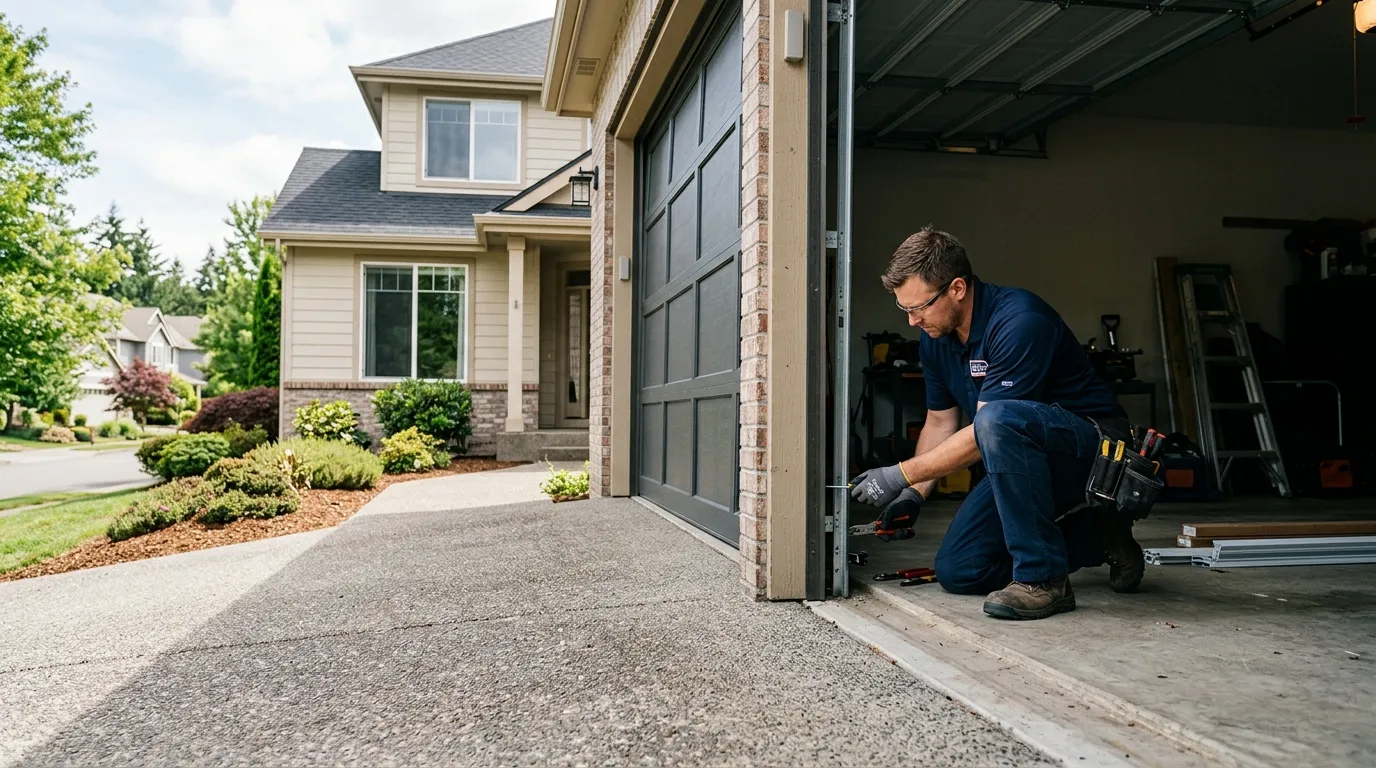
Levittown's housing stock centers on a median build year of 1956, the same year that put steel rollers on narrow track into most doors going up around here. That track spacing is narrower than what ships on doors built in the last twenty years, and it matters the moment a roller wears out. With 18,140 households in Levittown, most of those garage doors are still riding the same narrow track that came standard when the houses went up.
The original steel rollers didn't run on sealed bearings. They ran bare metal on metal, which meant they wore faster and rattled louder as the grease dried out. A lot of owners already swapped once to a basic nylon roller somewhere along the way, but if whoever did that job used a stock kit without checking stem length and track width, the roller binds at the top of its travel and the door drags instead of gliding. That's a repair job showing up as a new-roller problem when it's really a spacing mismatch from day one.
The region as a whole runs mostly pre-1960 housing across dozens of named areas nearby, so this isn't a one-off quirk of a single block. It's the baseline you're working from here.
Bottom rollers with no spring tension nearby are a reasonable weekend job if you're comfortable with a socket set and you buy the right stem length. Top rollers are a different story. On a door this age, the spring is under load right next to where you'd be working, and a slipped roller near a wound torsion spring is how people get hurt.
The honest limitation here: we don't stock every narrow-track roller size on the truck, because most newer doors don't need them anymore. If your door is running 1950s-spacing track, there's a real chance the fix needs an order, not a same-visit swap. We'd rather tell you that up front than hand you a roller that binds in a week.
If you're going to try it yourself, measure the track width before you buy anything, and don't force a wider roller into a narrow channel hoping it'll wear in. It won't. It'll bind, and the next call is a track replacement instead of a $20 part.
We make the 18-mile drive out from Cherry Hill because this fix is narrow-track specific, not a generic roller swap off a shelf kit. When we come out, we measure the track before we touch anything, because guessing on a 1956-era door costs you a second visit.
Levittown's median household income of $101,619 runs above the wider service area's $100,130, and it shows in how many owners here ask for the sealed-bearing nylon roller instead of the stock steel one when we quote the job. Steel is cheaper up front and louder for the life of the door. Nylon costs more at install and runs quiet for years. Either way, we're matching what your track can take, not what's easiest to sell.
See the nearby areas we cover from Cherry Hill if you're checking whether we reach your street.
A door built to 1956 spacing won't take a modern universal roller kit without the stems binding in the track. That's the whole reason a generic roller replacement page doesn't tell you much here. National kits and big-box roller sets are sized for the track widths common on doors built in the last two decades, and Levittown's stock predates that by half a century.
We cover the full roller replacement job, spring tension, hinge fatigue, and the rest, on our garage door roller replacement page for Cherry Hill. What's different about Levittown is just the measuring: track width, stem length, and whether the door's already had a mismatched roller forced into it once before. Get that part right and the roller job is straightforward. Skip it and you're back out here in a year with a bound track and a door that won't close square.
Most likely a track width mismatch. Doors built around 1956, which covers a lot of Levittown, run narrower track than modern universal roller kits expect. If the roller stem doesn't match the original spacing, it binds at the top of travel even when the roller itself is brand new.
Steel is cheaper and louder, and it's what most of these doors shipped with originally. Nylon with a sealed bearing costs more up front but runs quieter and needs less maintenance. Either works as long as the stem length matches your track.
Bottom rollers away from the spring, sure, if you check stem length and track width first. Top rollers near a wound torsion spring are a different risk, and on an older door the spring is right there. We'd rather you call for that part.
We come out about 18 miles from Cherry Hill for Levittown roller jobs. We measure the track on site before quoting, since guessing on a house this age tends to mean a second trip.
Call now or request a free quote - same-day service on most repairs, upfront written pricing.