Cherry Hill, NJ · Garage Door Service
Broken torsion spring on a Levittown, NJ garage door built in the 1950s? Cherry Hill Garage Door Pros makes the 18-mile drive to fix it fast and right.
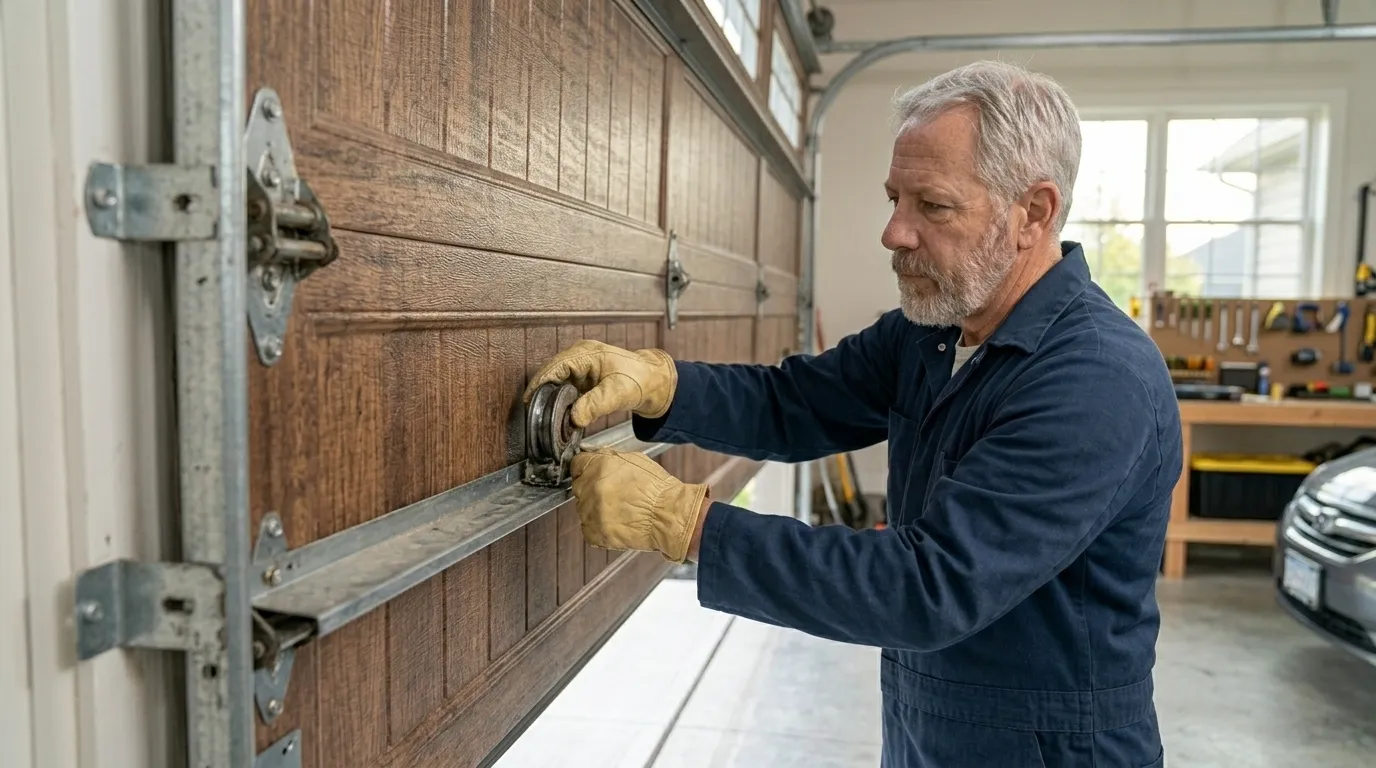
The drive from our Cherry Hill shop to Levittown runs about 18 miles, and that distance shapes how a spring call here actually gets scheduled - it's not a five-minute hop, so we build the route around the day's other stops rather than promising a same-hour swing-by. What we find once we're on site tends to be consistent, though. Levittown's housing stock centers on 1956, which puts it squarely in the post-war building wave that produced a lot of doors on nearly identical torsion setups. A spring that's lasted since the house was framed has usually put in close to seventy years of open-and-close cycles, and when it goes, it often goes as a matched pair - one snaps, the other is close behind it. The region sits in a severe cold climate band, and cold makes steel less forgiving; a spring already fatigued from age is more likely to shear on a hard winter morning than a mild one. None of that is unique to any one driveway in town, but it's the pattern we see across Levittown's older blocks: same install decade, same hardware, same failure point, just staggered by a few years house to house.
A torsion spring holds enough stored tension to break a wrist or worse, and that doesn't change because the door is old or new. If you're looking at a snapped spring on a Levittown door from the 1956 era, the honest answer is don't. Beyond the safety issue, there's a practical one: doors from that build period sometimes carry drum and shaft sizing that current stock doesn't match exactly, so guessing at a universal kit off a shelf can leave you with a spring that's the wrong wind length or wire gauge for the drum it's paired with. That's not a knock on the door - it's just older hardware, and we don't pretend every obsolete torsion drum is something we carry on the truck without checking first. What you can safely do yourself is the diagnosis: look for a visible gap in the coil, listen for a bang at the moment it failed, and check whether the door will lift by hand at all (it shouldn't, easily, if both springs are gone). That tells us what we're walking into before we make the drive, which saves everyone time.
Because we're coming from Cherry Hill rather than sitting a few blocks over, the most useful thing you can give us when you call is what you already noticed - a bang, a door that won't budge, a cable that's slack on one side. That lets us bring the right spring stock instead of guessing. We cover Levittown as part of the wider area we serve near you, and spring repair specifically sits alongside the rest of our door work described on the main Cherry Hill spring repair page, which covers what a typical job involves in more general terms. Here, the scheduling detail that matters is the trip itself: an 18-mile run means we're most efficient when we can group a Levittown call with other stops on that side of the service area, so flexibility on timing - even a window of a few hours - usually gets you seen sooner than holding out for a fixed slot. We'll tell you plainly on the phone if what you're describing sounds like a same-visit fix or something that needs a second trip for a part.
The failure pattern in Levittown isn't abstract - it comes from the numbers. With roughly 18,140 households built around a median year of 1956, this is a town where a large share of garage doors and their hardware are the same age as the houses, not replaced along the way. That's different from a newer development where springs are still well inside their rated cycle count. It also means when one door's spring fails, the neighbor's is usually not far behind it, just because the whole street went up in the same few years. Levittown's median household income of $101,619 runs a bit above the wider service area's $100,130, and in practice that shows up in the decision homeowners make once we're standing in the driveway: more often here, when a spring failure exposes worn rollers or a cracked panel underneath, owners choose to replace the door rather than patch around it, since the cost difference over the door's remaining life is smaller relative to the household budget. A generic spring swap ignores that math. Treating a 1956-era door like a five-year-old one - same spring size, same expectation of how long it'll hold - is exactly the kind of assumption that leads to a return trip.
We don't quote a flat number sight unseen, since it depends on door weight, spring size, and whether one or both springs failed. We can give you a real price once we know the door's age and see it, either over the phone from your description or on site.
We often can, but Levittown sits about 18 miles out, so we try to route those calls alongside other jobs on that side of the area rather than sending a truck out for one stop. If it's urgent, tell us that when you call - we'll work the schedule.
It can. Doors from that era sometimes use torsion drums or shaft sizes that don't match current off-the-shelf kits exactly. We check the actual hardware before quoting a spring, rather than assuming a modern universal part will fit.
That depends on what else is worn. If the spring failure exposed rusted tracks, a cracked panel, or rollers past their life, replacement often makes more sense than a repair that leaves the rest of the door where it was.
Call now or request a free quote - same-day service on most repairs, upfront written pricing.