Cherry Hill, NJ · Garage Door Service
Middletown sits 18 miles out from Cherry Hill, with a housing stock built mostly in 1974 - newer doors, different failures than the rest of the service area.
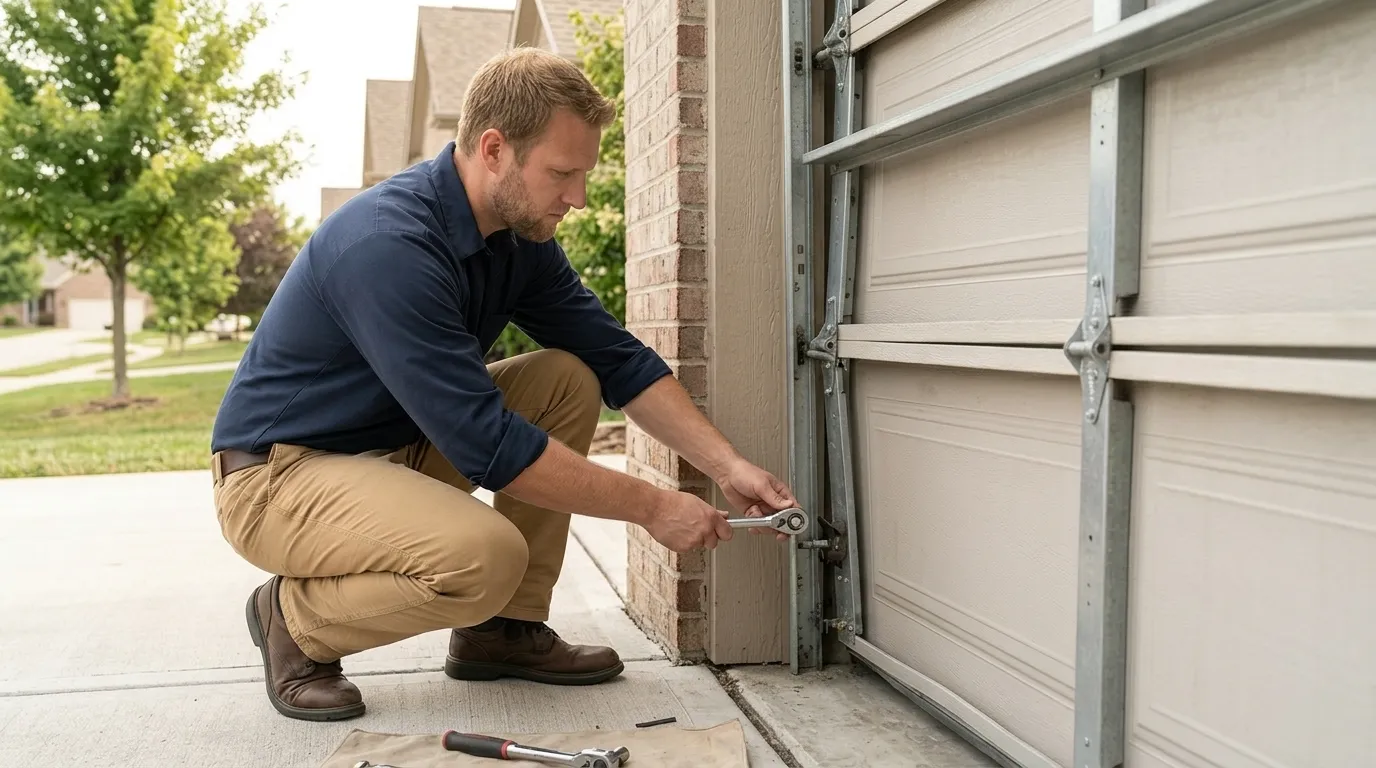
We don't quote a flat number for Middletown, and we won't invent one here. What we can tell you is that a call to Middletown runs longer than most of the routes we cover - it's an 18-mile drive from Cherry Hill, farther than the bulk of the towns on our list. That distance doesn't change the price of a spring or a roller, but it does mean we build the trip into the day's schedule rather than treat it as a quick add-on between two closer jobs. If you need same-day work, say so when you call, because Middletown isn't the town we're already parked next to.
The other number that shapes cost here is the house itself. Median household income in Middletown sits at $112,306, noticeably above the $100,130 median across the wider service area we track. That doesn't set anyone's price - a torsion spring costs what it costs - but it does mean fewer of the calls we get from this side of town are patch jobs on doors that should have been replaced years ago. People here tend to fix things before they fail completely.
Middletown's housing stock centers on 1974, which puts it roughly two decades newer than the 1956 median that defines most of the pre-1960 housing spread across our service area. That gap matters more than it sounds. A door installed in the mid-1970s is usually on torsion spring hardware mounted overhead, not the older side-mounted extension springs you still find on a lot of the 1950s stock we service closer to Cherry Hill. The failure points are different: torsion cables fraying at the drum, center bearing plates wearing loose, or the spring itself losing tension after decades of temperature swings.
With 16,967 households in Middletown, against 369,881 spread across the full service area, this isn't a town where we're pulling the same part off the truck all day. It's a smaller, more even mix of doors from roughly the same building era, which actually makes diagnosis faster once we're on site - fewer surprises, fewer mismatched retrofits from decades of piecemeal repairs.
The service area sits in a cold, severe climate band, and that doesn't skip Middletown just because the houses are newer. Steel tracks and torsion springs both lose tolerance in a hard freeze-thaw cycle, and a 1974-era door has had roughly fifty winters to work loose at every bolt and bearing. What tends to go first on houses from this build era is the torsion spring itself - it's been cycling for decades and finally gives out on a cold morning when the door feels heaviest.
We don't see much of the one-piece, hand-cranked hardware that shows up on the pre-1960 stock nearer Cherry Hill. Middletown's doors are sectional, spring-loaded, opener-driven - closer to what's sold today, just fifty years worn. That's a different repair conversation: less about finding obsolete parts, more about worn bearings, a stretched cable, or an opener logic board that's simply outlived its gears.
For a torsion-spring door from this era, the repair is usually straightforward once we're on site: replace the spring to match the door's weight and cycle count, check the cable and drums for wear at the same time, and test the opener's force settings since a new spring changes the balance the opener was tuned to. We carry common spring sizes on the truck, so most Middletown calls don't need a second trip.
Where it gets slower is a failed opener logic board or a track that's bent from an impact - those sometimes need a part we don't carry standard, and lead time depends on the manufacturer. We'll tell you straight if that's the situation rather than promise a fix we can't deliver that day. The 18-mile drive means we plan the visit, not improvise it, so having the make and rough age of your opener ready when you call saves everyone time.
A torsion spring on a 1974-style door holds real tension, and it's not a safe weekend project - that's true no matter how newer or well-maintained the door looks. What you can reasonably check yourself: the track for visible dents, the rollers for cracking, and whether the door reverses properly when it hits resistance on the way down. Those are cheap, safe checks that tell you whether the problem is minor or structural.
What we won't recommend is stretching a repair past its point. If a door from this era needs a new spring, new cables, and a new bottom bracket all at once, replacement is often the better math, especially on an opener that's also near the end of its life. We'll say so plainly if that's what we find, rather than string together parts on a door that's telling you it's done.
It's about 18 miles, which is farther than most of the towns we run to regularly. We still cover it, but same-day availability depends more on how the route lines up that day than it does for closer towns, so it helps to mention timing when you call.
Generally, yes. Middletown's housing centers on 1974, about two decades newer than the pre-1960 median common closer in. That means more torsion-spring, opener-driven doors and fewer of the older side-mounted extension-spring setups we still repair on the older stock nearer Cherry Hill.
We carry common torsion springs and standard hardware on the truck. Some opener logic boards or older manufacturer-specific parts need to be ordered, and lead time varies. We'll tell you upfront if your repair falls into that category rather than guess.
Depends on what's failing. A spring and a cable is usually worth fixing. If the spring, cables, bottom bracket, and opener are all failing at once on a door from this era, replacement often costs less over time than repeated repair calls.
Call now or request a free quote - same-day service on most repairs, upfront written pricing.