Cherry Hill, NJ · Garage Door Service
Northampton's garage doors are newer than most of the Cherry Hill area's stock, but cold-season hardware fatigue still hits chain-drive openers and steel panels built around 1980.
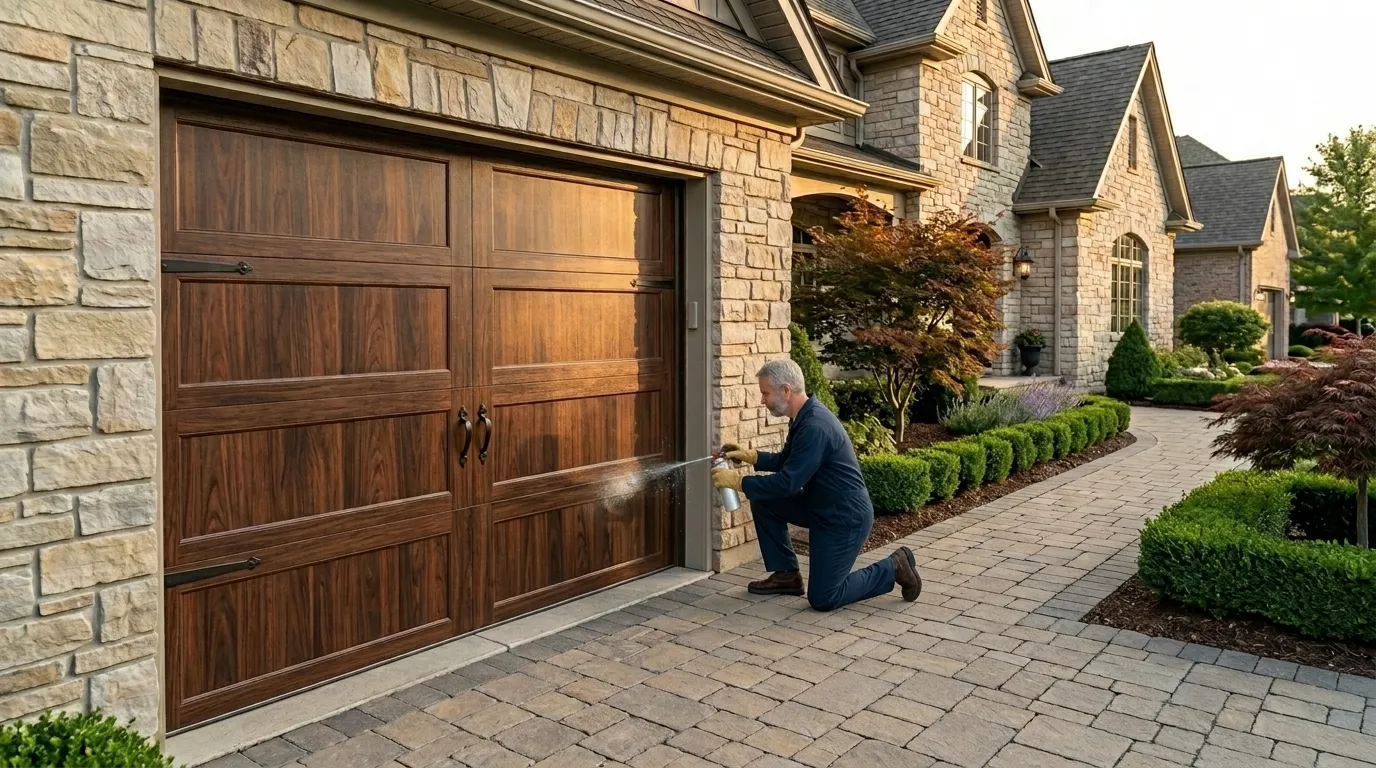
There's no set price to quote here without seeing the door, so we won't invent one. What we can tell you is what drives the number up or down in a town like Northampton: a straight lubrication and adjustment visit costs less than a job where a chain-drive opener from the original build needs its logic board or sensors brought up to modern safety standards. Most Northampton houses date to around 1980, which means openers installed with the house are now well past the point where replacement parts are easy to source. That doesn't mean everyone needs a new opener. It means the first visit is partly diagnostic - checking whether the existing hardware is worth servicing or whether the parts you'd need are the kind nobody stocks anymore. Households here report a median income of $153,375, well above the $100,130 median across the wider Cherry Hill service area, and homeowners in that bracket tend to choose planned maintenance over waiting for a breakdown. That's the cheaper path either way - a scheduled tune-up costs less than an emergency call after a spring lets go on a Sunday.
We run out of Cherry Hill, about 19 miles from Northampton, so a visit here gets scheduled rather than dispatched same-hour. That's the honest limitation: this isn't a town where we keep a truck parked nearby, and we're not going to pretend otherwise. What we can do is plan the trip around the actual job - bring the right torsion or extension spring size, the right opener parts, before we're on site, instead of guessing and driving back. With roughly 14,086 households in Northampton, we're not running a route through here daily, so a booked appointment beats a walk-up call. If you know your opener is a straight chain-drive from the original build, say so when you book - it changes what goes in the truck. A five-minute description of what the door is doing (grinding, sagging, refusing to close) saves a wasted first visit.
The fault we see most in this stretch of houses isn't the one you'd expect from an older neighborhood. Northampton's homes were largely built around 1980, decades newer than the pre-1960 stock that dominates much of the wider service area. That later build date means original one-piece steel doors are less common here, but it also means a lot of these openers and springs are original 1980-era hardware that's now had forty-plus years of seasonal cycling with no upgrade. Extension springs from that era, mounted overhead rather than on a torsion bar, corrode and stretch unevenly - and in a climate band our region shares that runs cold and severe, that metal fatigue accelerates every winter. The failure mode is a door that lifts unevenly on one side, or an opener that strains and reverses instead of closing. Swap this house for a newer build across town and the spring type, the corrosion pattern, and the strain point all change. This is a maintenance problem tied directly to a house built when Carter was in office, not a generic 'doors wear out' story.
A door that's sagging on one side or an opener that reverses isn't necessarily an emergency, but it's not something to leave for a season either. Left alone, uneven spring tension on a 1980-era extension setup puts more load on the opposite cable and track, and that turns a lubrication job into a cable-and-roller job within a few more cold months. We don't stock a truck in Northampton, so once you book, expect the visit scheduled rather than same-day. Most maintenance visits - inspection, lubrication, hardware tightening, balance check - run under an hour once we're on site. If the opener's logic board or sensors need replacing because they're original to the house, that's a longer job and may need a return trip if a part isn't already in the truck. We'll tell you on the spot which one you're looking at, not after.
Plenty of what keeps a garage door running is fair to do yourself: wiping down tracks, checking that the door doesn't drift when disconnected from the opener halfway up, tightening loose bolts on the track brackets. What's not worth doing yourself on a house from this era is anything involving the spring itself. Extension springs under tension, especially ones that have been in place since 1980, can whip hard enough to cause real injury if a bracket gives while you're working near it. That's the one honest line we draw: balance and lubrication checks, fine to learn; spring replacement or adjustment, not a homeowner job, regardless of how simple the video made it look. If your door is heavier to lift by hand than it used to be, or closes crooked, that's your signal to call rather than adjust it yourself.
The pattern that shows up most in Northampton service calls is a door that runs unevenly - one side visibly lower than the other when it's halfway open, or a soft grinding sound as the opener strains against uneven spring tension. That's consistent with what you'd expect from extension-spring hardware original to a house built around 1980, forty-plus years into a climate that runs cold and severe each winter. It's rarely the opener motor itself failing first; it's the spring losing even tension, and the opener compensating until it can't. Catch it at the uneven-lift stage and it's a lubrication-and-adjustment visit. Wait until the door won't stay level or the opener reverses on every attempt, and you're looking at spring or cable replacement instead. If your door has started closing crooked in just the last few cold weeks, that timing lines up with exactly this failure.
Original extension-spring hardware loses even tension over decades of use, and cold weather makes steel less forgiving under that uneven load. The opener isn't failing outright - it's fighting a spring that's no longer balanced, which shows up as straining, reversing, or a door that closes crooked.
No. We run out of Cherry Hill, about 19 miles away, so visits here are scheduled rather than same-hour dispatch. We plan the trip around your door's actual hardware so we're not making a second visit for a part we should have brought the first time.
It depends on what's failing. If it's the logic board or sensors on original hardware, parts get harder to source every year, and replacement can cost less than chasing repairs on a discontinued system. If it's just tension or lubrication, a service visit is the cheaper fix.
Call now or request a free quote - same-day service on most repairs, upfront written pricing.