Cherry Hill, NJ · Garage Door Service
How Cherry Hill's older housing stock and cold winters affect garage door openers, plus what to check before and after a power cut.
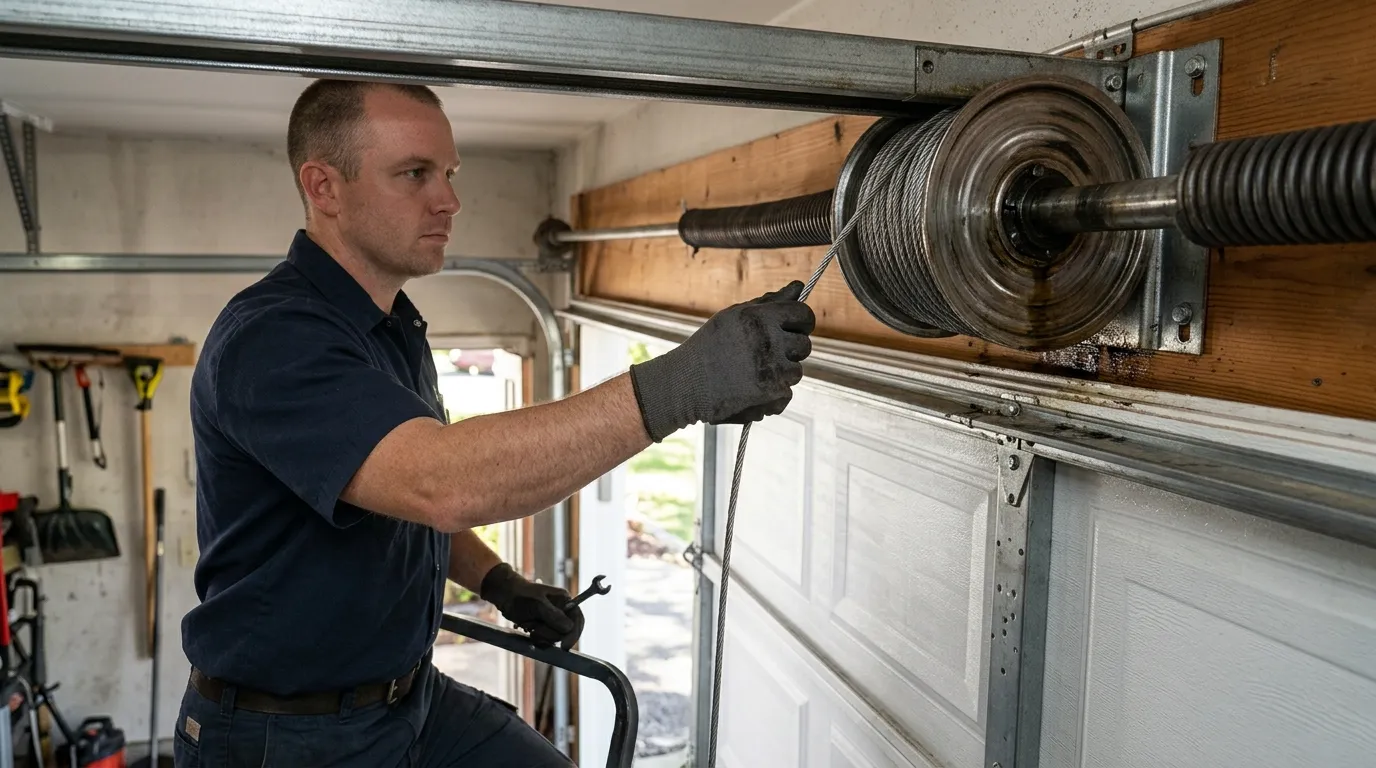
Cherry Hill's housing stock runs from 1938 to 1997, with the median home built in 1956. That matters for openers more than most people think. A house built in the 1950s or 60s was wired for a lot less than a modern home draws, and the garage circuit is often an afterthought - a single outlet on the same breaker as something else, no dedicated line, sometimes no ground. When the power blinks or a breaker trips during a storm, older wiring runs hotter on restart, and that's when you see chain-drive openers with worn gears finally give out. We also sit in a cold-severe climate band, which means real freeze-thaw stress on top of the electrical load. Cold air makes lubricant on chain and rail thicken, motors draw more current to overcome that resistance, and a marginal capacitor that's been fine for years quits on the first hard cold snap. None of this is dramatic. It's slow wear that shows up as a hesitation, then a grind, then a dead unit - usually on the coldest week of the year, which is also the worst week to be stuck outside fighting with a door by hand.
Most of the calls we get after a power cut aren't about the opener refusing to run - they're about it running wrong. The unit loses its position memory, the door reverses halfway up, or the remote stops talking to the receiver. On a house from the 1950s-1970s era common across this area, the opener itself has often been swapped once already, but the wiring and the wall switch haven't. That mismatch is where things go sideways: a newer opener on old wiring can brownout during a voltage dip instead of shutting down clean, which corrupts its memory chip. Battery backup units help here, but they only run the door a limited number of cycles before they need the wall power back - they're not a fix for wiring that's fifty-plus years old, they're a bridge. If your opener has been quietly losing its remote range or its wall button feels sticky before any outage even happens, that's usually the wiring complaining first, not the opener.
Winter is the season that actually breaks things here, given the cold-severe band this area sits in. Cold makes belt and chain drives stiffen, and a motor that's borderline in October will stall in January. That's also storm season for power cuts - ice on the lines, wind on old growth trees, the usual. Spring is cleanup: openers that survived winter on borrowed time often fail once the load eases and the motor relaxes into a bad bearing. Summer heat is comparatively easy on openers themselves, though humidity swells wood-panel doors on the older end of the 1938-1997 build range, which makes the opener work harder to pull a door that's binding in its track - it looks like an opener problem but it's really a door problem. Fall is when we tell people to test the battery backup and the manual release before the first cold front, not after. Nobody wants to learn where the emergency release cord is by flashlight in twenty-degree weather with the power already out.
Before you call anyone, a few things you can check in five minutes. Pull the manual release cord and lift the door by hand - if it's heavy or uneven, that's a spring or track issue, not the opener, and no amount of opener replacement fixes it. Check the wall outlet the opener plugs into with something else, a lamp or a phone charger, to rule out a dead outlet before you blame the unit. Listen for the motor humming without the gear turning - that's usually a stripped gear, common on units old enough to match this area's housing age, and it's a part swap, not a full replacement. One honest limit: if the logic board has been fried by a power surge, we can't diagnose that over the phone or from a description, and sometimes not even on site without opening the unit - surge damage can look identical to a dozen other faults until you're inside it. If your opener is silent, breaker's fine, and the release cord lifts the door smooth, that narrows it to the unit itself pretty fast.
This area sits in a cold-severe climate band, and cold thickens the lubricant on your chain or belt drive while making the motor draw more current to compensate. A marginal motor or capacitor often makes it through fall fine and then fails on the first hard freeze. It's wear that's been building all year, not a sudden winter problem.
It'll get you through a limited number of open-close cycles, not an extended outage. Think of it as enough to get your car out and back in once or twice, not a permanent fix. If your power cuts run long in this area, plan on using the manual release for anything beyond that.
Possibly. A lot of Cherry Hill's housing stock, with a median build year of 1956, was wired for far less electrical load than modern openers and their accessories draw. If your opener browns out or loses memory during minor power dips rather than shutting off clean, the wiring feeding that outlet is worth having a licensed electrician look at.
Call now or request a free quote - same-day service on most repairs, upfront written pricing.