Cherry Hill, NJ · Garage Door Service
Serving Bensalem from Cherry Hill, 13 miles out. Doors here mostly date to the mid-1970s, not the 1950s stock common closer to the shop. Here's what that means for repairs.
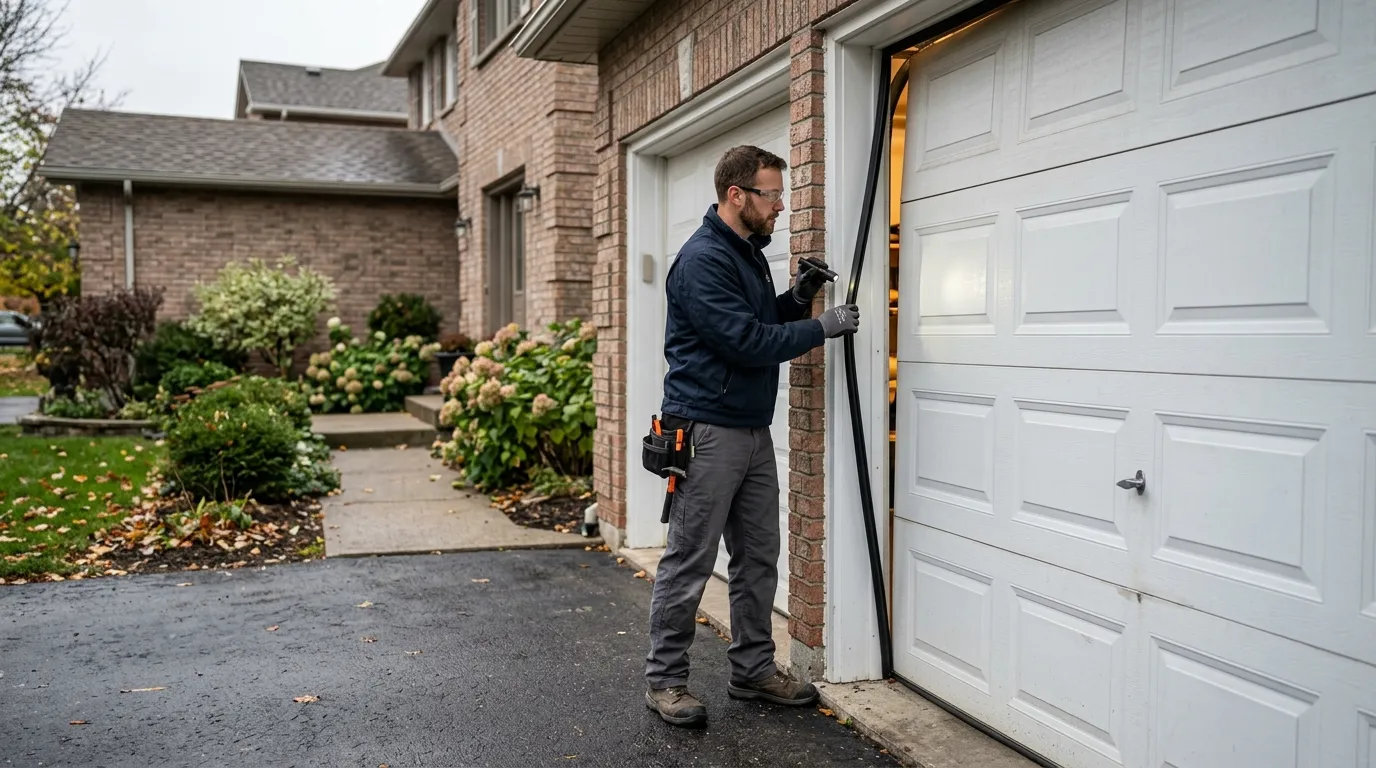
Bensalem sits about 13 miles from our shop in Cherry Hill, and the calls we get from this side of the service area skew younger than what we see closer in. The median home here went up around 1975, a couple of decades past the 1956 median for the broader area we cover. That gap matters more than it sounds like it should. A 1975 build usually means the original door track and opener bracket were sized for a heavier, single-layer steel door than what went into a 1950s garage, and the extension spring setups from that era are a different animal from the torsion systems in older stock. We get calls about openers original to the house finally giving out after decades of use, about rollers that were never swapped and have worn oblong instead of round, and about torsion springs that have simply reached the end of their cycle count. Less often, we hear about track that's pulled away from the jamb on houses where the framing has settled a little over fifty years. None of this is exotic. It's what you'd expect from a house built when Bensalem was Bensalem, not from a house built new.
We don't keep a truck stationed in Bensalem, and we're not going to pretend otherwise. Every job here is a dispatch from Cherry Hill, roughly 13 miles each way, and that's worth knowing before you call, especially if you're weighing a same-day fix against waiting for a scheduled slot. We also don't recommend replacing a whole door and opener when the actual problem is a $30 roller or a misadjusted limit switch. If a repair gets you another decade out of a door that's structurally sound, we'll say so, even though a full replacement is the bigger job. And we don't carry every obsolete part on the truck. Some of the extension-spring hardware and older opener logic boards from mid-1970s installs aren't stocked anywhere anymore, and if yours falls into that category, we'll tell you straight rather than order a part that takes three weeks to land.
The typical Bensalem home dates to around 1975, which puts it well past the 1938 start of the broader building era we work in and closer to its tail end. That's a meaningful difference from the 1956 median across the wider area. Houses from this stretch of the 1970s were usually built with two-car attached garages as standard, not additions bolted on later, which means the openings tend to be a consistent width and the framing around the header is original rather than retrofitted. The area sits in a cold-climate band with real winter severity, so garages built in this period were typically fitted with basic weatherstripping and single-layer doors, neither of which holds up as well as modern equivalents once seals crack or the steel dents. Income levels in the area run higher than in some of the older nearby stock, which we mention only because it tends to track with more owners opting for full opener upgrades rather than patch repairs when something fails.
On a house built around 1975, the door hardware is more likely to be a chain-drive opener from a later replacement cycle than the original unit, since openers of that vintage rarely lasted fifty years untouched. What does often survive from the original build is the track and the spring anchor bracket, and that's where we find the mismatch: newer opener, older track geometry, and a spring tension that was never rebalanced when the door itself got swapped at some point. In a cold climate, that mismatch gets worse in winter, when steel contracts and a door that was already borderline on balance starts binding on the track instead of sliding clean. If your door groans or hesitates only when it's cold out, that's usually not the opener struggling, it's tension and alignment that were fine in summer and aren't anymore. It's a five-minute diagnosis in person, but not one we can do accurately over the phone.
No, we work out of Cherry Hill and travel to Bensalem for jobs, about 13 miles each way. We don't advertise a local depot here because we don't have one, and we'd rather be upfront about that than imply otherwise.
Steel track and springs contract in cold weather, and a door that was already slightly out of balance often binds once temperatures drop. This area sits in a climate band with real winter severity, so that seasonal swing shows up more here than in milder regions.
If your house dates to around 1975, which is typical for this area, the track and spring anchor are often original even if the opener has been replaced at least once. Mixed-age hardware is common and it's part of why balance issues creep in over time.
It depends on whether the problem is hardware, like a spring or roller, or the door panel itself. We'll tell you when a repair gets you real years of use versus when you're better off putting that money toward a new door instead.
Call now or request a free quote - same-day service on most repairs, upfront written pricing.