Cherry Hill, NJ · Garage Door Service
Cherry Hill homes built between 1938 and 1997 carry old door openings and hardware that struggle through cold winters. Here's what installation actually involves and costs.
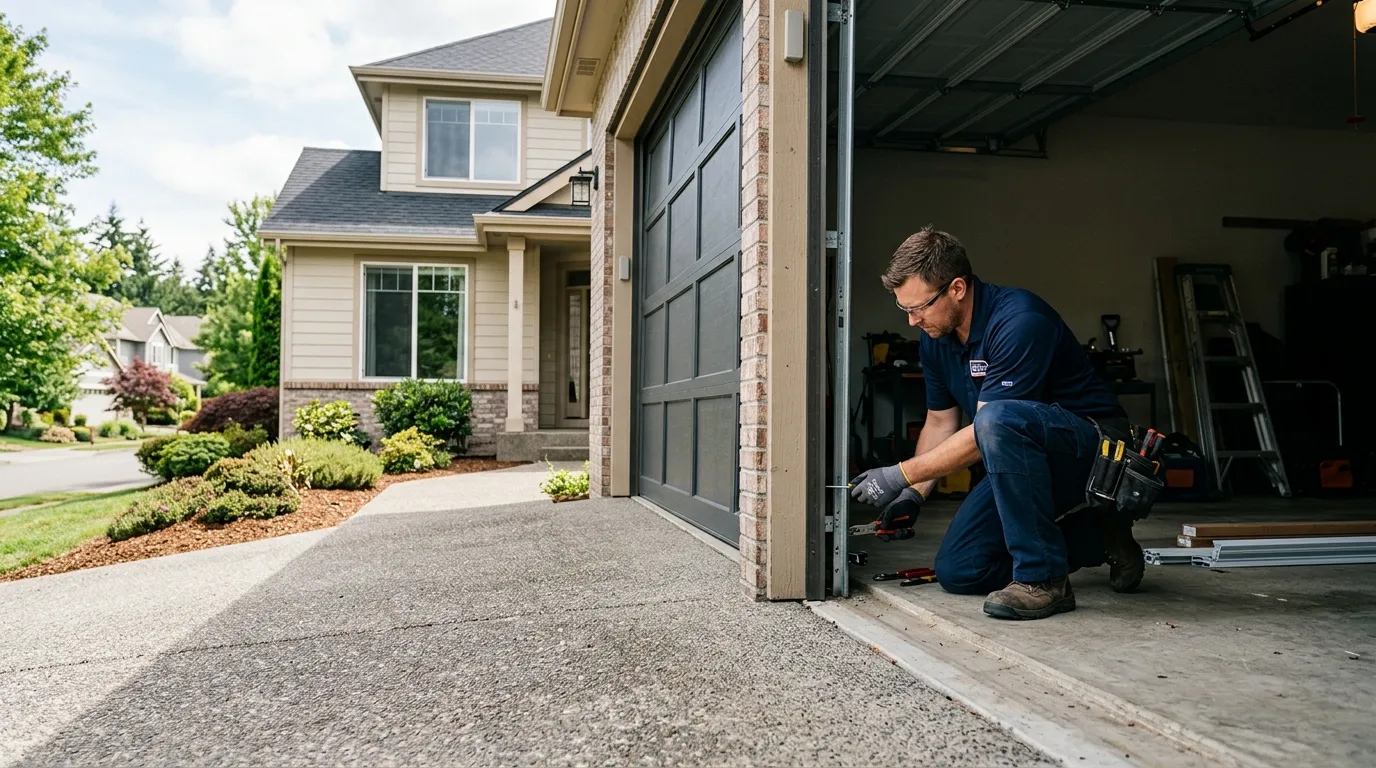
We start by measuring the actual opening, not assuming a standard size. A lot of Cherry Hill houses date to the 1938-1997 build window, with the typical one going up around 1956, and openings from that era don't always match today's standard door widths. We pull the old door and track off the jamb, check the header for rot or settling, and size new track and springs to the door weight and the width of the opening we actually have, not a catalog number.
For a double-car door on an older jamb, that usually means new vertical track, new torsion hardware rated for the door's actual weight, and reinforced strut on the top panel so it doesn't bow under wind load. We set the opener force and travel limits after the door is hung and balanced, not before - a door that's off by even a pound at the spring will fight the opener from day one.
One limitation worth saying up front: if the header or jamb is out of square by more than about half an inch, we're not going to force a stock door into it. That kind of framing repair isn't part of a door install and we'll say so rather than hang a door that binds in six months.
Cherry Hill sits in a cold-climate band the federal data marks as severe, and that matters more than most homeowners think when it comes to garage doors. Steel torsion springs lose temper faster in repeated hard-freeze cycles, and a spring that's been fine for years can snap on the first real cold snap of the season - we see it every winter.
The age of the housing stock compounds it. With most homes here built between 1938 and 1997, and pre-1960 construction common across the wider area, a lot of doors are still riding on the original side-mounted torsion hardware or track that was never upgraded when the door itself got replaced. That mismatch between an old jamb and newer, heavier insulated panels is where we find bent track and stripped rollers most often.
Panels made of thin aluminum or non-insulated steel also take the cold differently than a modern insulated door - they contract and warp at the seams over repeated freeze-thaw cycles, which is why a door that looked fine in October starts binding on the track by February.
We don't quote a flat number for installation without seeing the opening, because the age spread in Cherry Hill's housing means two doors that look the same from the street can need completely different hardware. A single-car opening on a house from the 1940s and a double-car opening on a house from the 1980s are not the same job.
What we can tell you: given a median household income of $100,130 in this area, most of the installs we do are insulated steel doors rather than the thinnest aluminum option, since insulated steel holds up better through the cold-climate winters here and most owners budget for that from the start rather than replacing twice.
Cost drivers we walk through with you before we quote: door width and whether it's insulated, whether the existing track and header can be reused or need replacing, and opener compatibility if you're keeping your current opener. We'll give you a written number after that walk-through, not a phone estimate.
The complaint we hear most from Cherry Hill owners is that the door is hard to lift by hand in cold weather, or the opener strains and reverses partway up on a winter morning. That's almost always a spring that's lost tension from cold-cycle fatigue, not a motor problem, even though the opener gets blamed first.
A second pattern: the door runs fine most of the year but starts scraping or catching on one side once temperatures drop. That's usually a track that's slightly out of plumb on an older jamb - tolerable in summer when the metal has some give, tight enough to bind once the cold stiffens everything up.
If you're hearing a bang or pop from the garage before the door won't open at all, that's a spring that's already gone. Don't run the opener again - it'll try to lift the full door weight through the opener gears and can strip them or drop the door on the track.
If the panels are warped, cracked, or the door is more than a couple decades old and losing insulation value, replacement usually makes more sense than another repair. If it's one broken spring or a bent section of track on an otherwise sound door, repair is the right call. We'll tell you which one you're looking at before we quote anything.
Cherry Hill's winters run cold enough that steel torsion springs lose temper faster through repeated freeze cycles. A spring that's been fine for years of summer use can reach the end of its fatigue life on the first hard cold snap, which is why winter is when we get the most spring-break calls.
Usually yes. Most of the older openings we see in Cherry Hill are off by a small amount, and we can size track and hardware to fit that. If the jamb is out of square by more than about half an inch, that's a framing issue outside a standard door install and we'll flag it before we start.
Call now or request a free quote - same-day service on most repairs, upfront written pricing.