Cherry Hill, NJ · Garage Door Service
Serving Abington, NJ from Cherry Hill, 13 miles out. We work on the pre-1960 torsion and extension setups that fill this area's 1956-median housing stock.
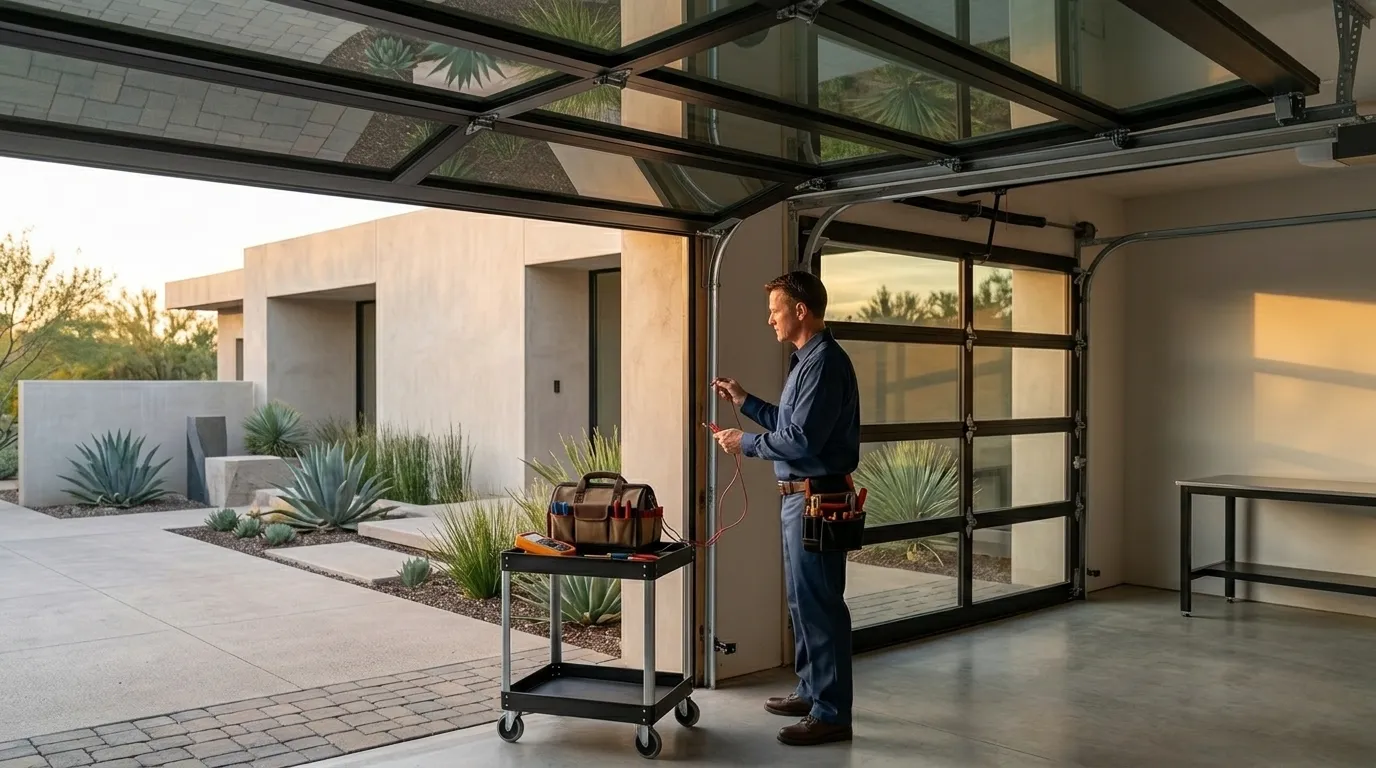
We drive out to Abington from Cherry Hill, about 13 miles, and most of the calls we get from this stretch are about hardware that's older than what we see on newer builds closer in. With a median year built of 1956 across roughly 22,416 households, a lot of the doors we're pulling apart out here are second or third replacements sitting on original framing and original track spacing. That combination throws off standard-width torsion springs more than people expect. We also get calls about openers that are clearly newer than the door they're bolted to - someone replaced the motor in the last decade but kept the panel and the drum from decades earlier, and the two don't always play well together. Income in this area runs higher than a lot of the region, median around $103,367, and we see that reflected in the calls too: people want the job done right the first time rather than patched, and they ask more questions about why a part failed, not just how much it costs to fix.
We don't do new construction framing or rough-in carpentry - if the header or jamb needs rebuilding before a door can go back in, that's a call for a general contractor first. We don't touch a door that's mid insurance claim until the adjuster has signed off, because we've seen jobs redone twice when that order gets skipped. We don't stock every spring wire diameter on the truck; on older, non-standard setups like a lot of what's out here, that can mean a short wait on a part instead of a same-visit fix. And we won't tell you a repair is the better move when it isn't - on a door old enough that the track, hinges, and springs are all failing at once, replacement usually costs less over five years than another round of patch repairs. We say that even when it means a smaller invoice today.
The area's own median year built sits at 1956, which lines up with the broader pattern across this part of the service territory: housing that went up mostly between 1938 and 1997, with the bulk of it concentrated before 1960. That's not a coincidence of one neighborhood - it shows up across dozens of named areas in this region, and Abington sits squarely in that pre-1960 majority. Homes from that era were built with narrower garage bays than what became standard later, single-car openings more often than double, and door tracks mounted directly to framing that wasn't designed around torsion hardware retrofits. The climate band here is cold and severe, which over sixty-plus years means repeated freeze-thaw cycles working on steel track brackets and wood jambs that were never weatherproofed to a modern standard.
Put a 1956-era house through decades of cold-severe winters and the failures follow a pattern: track brackets pull loose from framing that's shrunk and swelled too many times, torsion springs sized for an original narrow door get replaced with the wrong tension when nobody checks the door's actual weight first, and rollers seize in track that's slightly bowed from decades of temperature swing. We see more bent track and worn jamb brackets out here than snapped cables, which tends to be the opposite pattern on newer construction. It also means a repair that looks simple - a roller swap, say - sometimes uncovers a bracket that's been slowly pulling away from old lumber for years, and that job runs longer than the original estimate. We flag that possibility up front on any house built before 1960, because it's common enough here that it shouldn't be a surprise on the invoice.
No. We run out of Cherry Hill and drive to Abington, about 13 miles each way. We don't keep a local depot or promise a fixed response window for this area - we quote the drive time honestly when you call.
On a lot of the older housing stock out here, built mostly before 1960, the original door opening and track spacing don't match standard modern spring sizing. If the wrong tension went in the first time, it wears out fast. We check the door's actual weight and track geometry before we quote a spring, not just the door's width.
Depends on what's failing. If it's one part - a roller, a cable - repair usually makes sense. If the track brackets, springs, and hinges are all going at once, which happens more on houses from this era after enough cold winters, replacement is usually the cheaper path over a few years. We'll tell you which situation you're in before we quote anything.
Call now or request a free quote - same-day service on most repairs, upfront written pricing.