Cherry Hill, NJ · Garage Door Service
Garage door repair for Cherry Hill homes built 1938-1997, where original torsion hardware and cold-climate wear cause the same failures over and over.
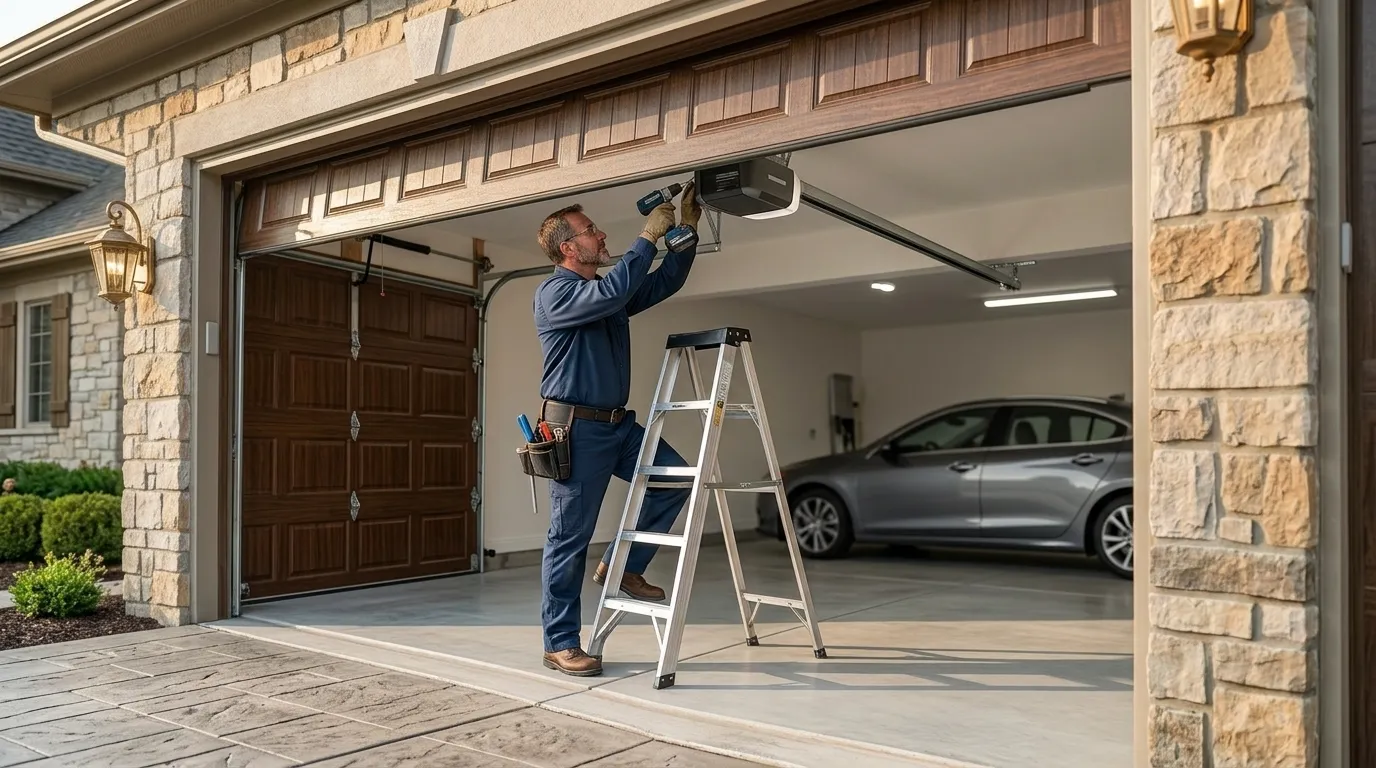
When a call comes in from Cherry Hill, the first question we ask is roughly how old the house is, because that tells us more than the symptom does. Most homes in this area were built between 1938 and 1997, with a median year around 1956, so a huge share of the doors we open up still have the original torsion hardware or a replacement from decades ago that was never matched to the door's actual weight.
We start with the spring and cable setup, since that's where age shows up first - stretched cables, a spring wound for a lighter door than what's currently hanging on it, or a center bearing plate that's been groaning for years before anyone called. Track alignment comes next, because on a lot of these older openings the track was shimmed once, decades back, and never touched again.
We don't guess at parts. If your opener or spring is a size that isn't stocked on the truck, we tell you that up front instead of jury-rigging something that'll fail again in six months. That's the one honest limit here: some older or oddball hardware means a second trip, not because we didn't want to fix it in one visit, but because the part has to come from somewhere.
Cherry Hill sits in a cold-climate band with real winter severity, and that matters more than most homeowners think. Steel contracts in cold and expands in heat, and on a door installed in the 1950s or 60s, that cycle has run through the same springs and rollers for close to seventy years in some cases. Grease that was fine in 1970 has long since hardened, so rollers bind, torsion springs lose consistent tension, and the opener starts working twice as hard to do the same lift.
With 369,881 households in the wider service area and 162,613 owner-occupied houses, we see this pattern constantly - not a one-off breakdown, but a predictable failure tied to how old the housing stock is and how cold it gets here for months at a time. A door that's fine in October seizes up in January because the cold finds every bit of wear that summer hid.
This isn't a Cherry Hill-only problem in the sense that no other town has cold winters, but the combination of a mid-century housing base and a severe cold climate band is exactly the mix that ages torsion springs and steel track faster than newer construction elsewhere would show.
We don't post a flat number here because what a job costs depends on what's actually wrong and what hardware your door is running - a stuck roller job and a full spring replacement on a heavy insulated door aren't in the same category, and quoting one price for both would be a guess dressed up as a fact.
Cherry Hill's median household income runs around $100,130, and we mention that only because it shapes what kind of doors and openers we tend to find in this area - heavier insulated doors, mid-range openers, upgrades that were reasonable investments at the time but that also mean parts and labor scale with the door, not with a generic estimate.
What we can promise is that we look at the door in person before we say a number out loud. If the fix is a fifteen-minute roller swap, we say so. If it's a spring and cable job on an older double door, we say that too, and we say it before we start, not after.
The call we get most from this side of town starts the same way: the door was fine, then one morning it either won't budge past a foot off the ground, or it slams down faster than it used to. Both point to the same root cause - a torsion spring that's lost tension unevenly, which is common on doors installed when the house was built between 1938 and 1997 and never upgraded since.
A door that shudders partway up, or one where you can hear a distinct bang before it drops, isn't a mystery. It's a spring or cable that's been absorbing decades of cold-weather cycling and finally gave out. We don't recommend waiting on this one - a partially failed spring under tension is a real hazard, not a cosmetic issue.
If your door is one of the originals from this era, the fix is rarely just swapping the broken part. We check the drum, the cable seating, and the opposite spring too, because if one side failed from age, the other side is usually close behind.
Cherry Hill sits in a cold-climate band with real winter severity, and steel hardware contracts in the cold. On older torsion springs and track - common in homes built here between 1938 and 1997 - that contraction is often what pushes a worn part from fine to failed.
Not usually just because of age. We check whether the spring size, track, and opener are still serviceable before recommending replacement. A lot of doors from this area's mid-century housing stock run fine with a spring and roller service instead of a full replacement.
Not an honest one. Costs depend on the actual hardware on your door, and doors in this area range from original mid-century setups to newer insulated models. We look at the door first, then quote.
Call now or request a free quote - same-day service on most repairs, upfront written pricing.