Cherry Hill, NJ · Garage Door Service
Serving Burlington, NJ from Cherry Hill, 14 miles out. Built mostly around 1949, this town's doors and hardware are older than the area average - here's what that means for repairs.
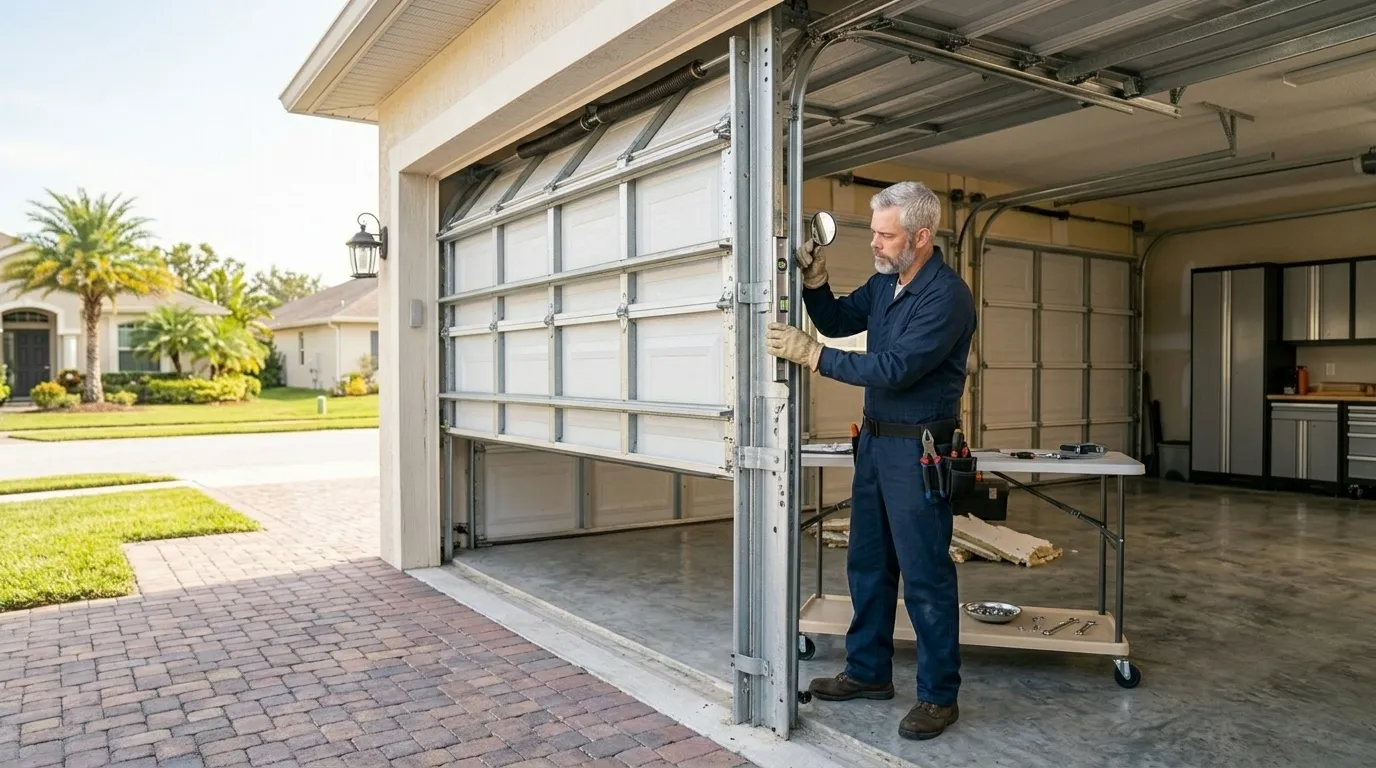
We drive the 14 miles out from Cherry Hill for Burlington calls more than you'd expect for a town this size. With roughly 3,645 households, it's not a huge market, but the age of the housing stock keeps the phone ringing. Burlington's median build year sits at 1949, a good deal older than the 1956 median across the wider service area we cover. That seven-year gap sounds small until you're standing in front of the hardware.
Most of what we see is original or near-original gear that's outlived a couple of openers already: torsion springs sized for doors heavier than what's actually hanging on them now, tracks that were never leveled to today's standard, and cable drums that don't match anything on the shelf at a big box store. We also get calls about doors that were "fixed" by a prior owner with parts from a different era bolted onto older jambs - that mismatch causes its own set of problems.
Burlington's median household income runs about $78,009, noticeably below the broader area's $100,130. That gap shows up in how people ask for the work: more requests to repair a working part instead of replacing the whole door, more questions about whether a spring can be resprung rather than swapped for a full torsion conversion.
We don't keep a truck stationed in Burlington and we won't tell you we do - every job here is a trip out from Cherry Hill, and that's worth knowing before you call for something urgent. We also don't try to force modern low-headroom torsion hardware onto a jamb that was framed for 1949-era clearance without doing the structural check first; if the header won't take it, we say so instead of installing something that will fail in a year.
We don't replace a spring set just because a homeowner asks for a full door swap on a whim. If the panels are sound and the track is square, resetting the spring tension and swapping the bearing plates is often the honest answer, even though a full replacement pays more. On the other side, we won't rebuild a door that's rusted through at the bottom panel or has a broken center stile - past a certain point, patched steel from the late 1940s just doesn't hold torque, and we'll tell you that instead of billing for a repair that won't last the season.
Burlington's housing stock centers on 1949, which puts a meaningful share of its garage doors and openers well past their expected working life - these are homes built when a garage door was often a swing-out barn-style unit before being retrofitted, sometimes more than once, with roll-up hardware later. That's different from newer pockets of the broader service area, where median construction runs closer to 1956 and where a door is more likely to be original overhead-track from the start rather than a retrofit.
The climate here is the same cold-severe band that covers the whole region we work in, which matters for a house this age specifically because the steel and hardware from that era weren't engineered with modern weatherstripping or insulated panel cores. On a 1949 door, temperature swings hit uninsulated steel and old wood-composite panels harder than they hit a door built even a decade later, and it shows in cracked panels and springs that lose tension faster in winter.
On a house built around 1949, the failure pattern is fairly consistent: torsion springs that were sized for a heavier wood door decades ago now overpowering a lighter replacement panel, which throws the door off balance and burns out openers early. We also see galvanized track that was installed straight and has since racked out of square as the framing settled - common in a house this old, uncommon in something built in the 1980s or later.
Cold-severe winters hit this hardware harder than newer stock. Steel torsion springs on original 1940s-era jambs lose tension faster in low temperatures, and the older, non-insulated panel cores common on Burlington's housing crack at the seams before a newer insulated door would show any stress at all. If your opener has started straining on cold mornings only, that's usually the spring losing tension, not the motor failing - worth a call before you replace a part that isn't the actual problem.
Torsion springs on houses from Burlington's 1949 median build era were often sized for original wood doors heavier than the panels hanging today. That mismatch throws off the balance and shortens spring life. Combined with cold-severe winters, tension loss speeds up, so springs on these older setups tend to fail sooner than on newer construction.
No. We're based in Cherry Hill and travel out to Burlington, about 14 miles, for service calls. We don't keep a depot or stock truck stationed in town, so it's worth planning the call rather than expecting a same-hour arrival.
Often yes, if the panels and track are sound - a spring reset or bearing swap is cheaper and faster than a full replacement. But if the bottom panel has rusted through or a center stile has cracked, patched 1940s-era steel usually doesn't hold torque reliably, and replacement is the more honest recommendation.
Call now or request a free quote - same-day service on most repairs, upfront written pricing.