Cherry Hill, NJ · Garage Door Service
Serving Delanco's 1,736 households from 9 miles away in Cherry Hill. We know the 1956-era one-piece doors and torsion hardware common on this side of town.
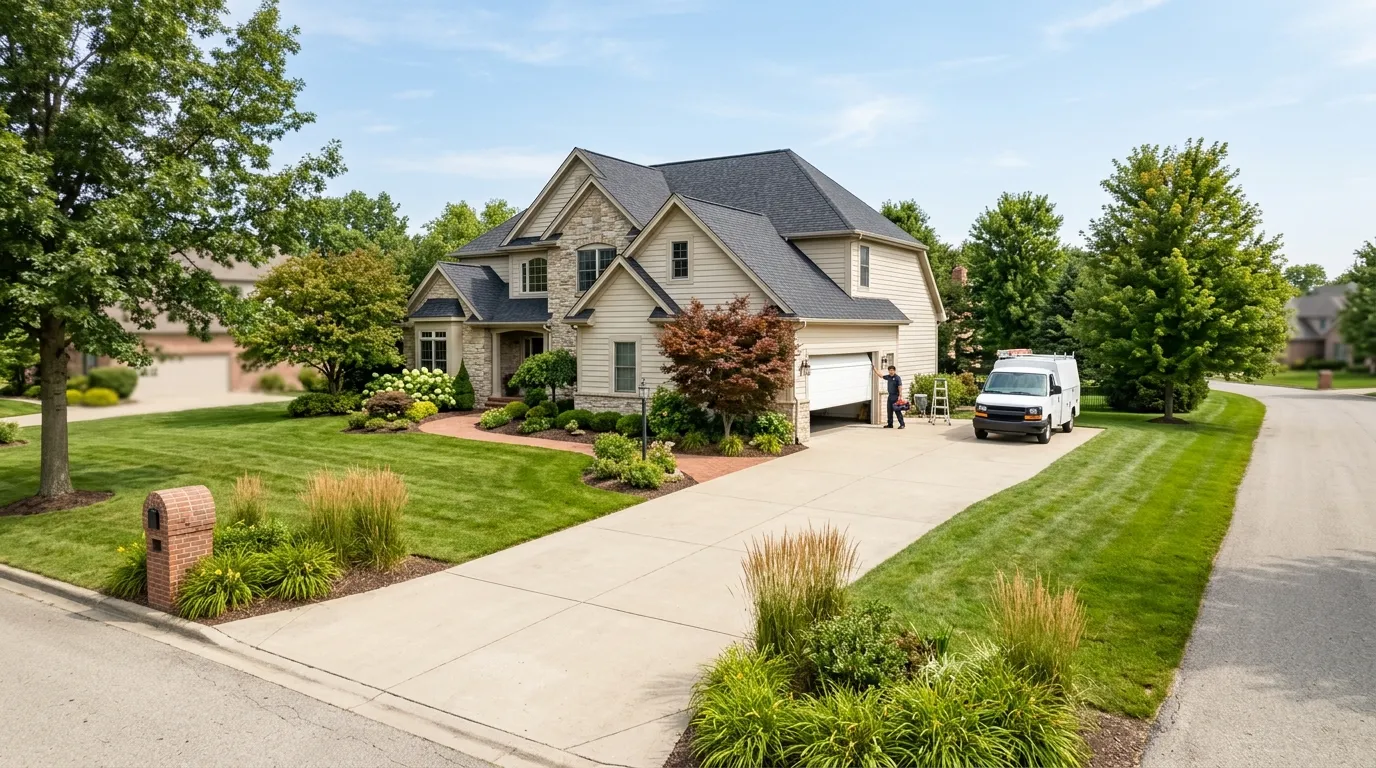
Delanco sits about 9 miles from our shop in Cherry Hill, and the calls we get from this side of the river tend to run a specific pattern. With a median build year around 1956, a lot of these garages still have the original steel one-piece door, or a first-generation sectional swapped in sometime in the 70s or 80s. That means torsion springs mounted on hardware that predates the drop-in extension kits you see on newer builds, and openers that were bolted onto an older track system without updating the safety sensors.
We hear about doors that bind halfway up because the original track was never leveled to spec, and about openers that grind rather than lift because someone replaced the motor unit but left 60-year-old rollers and a stretched cable in place. With 1,736 households in Delanco, most of them built in that same postwar stretch, the failures cluster: worn rollers, dry-rotted weatherstripping, and springs that are original or one replacement removed from original.
We don't keep a truck stationed in Delanco. Every call here means a drive from Cherry Hill, so we schedule the day around clusters of calls when we can.
We don't do same-day emergency service in Delanco. Because we're routing from Cherry Hill, 9 miles out, we can't promise a response window the way a company physically based in town could, and we're not going to claim one we can't back up.
We also don't replace hardware that doesn't need replacing. A lot of these 1950s-built garages have springs and track that, while old, are still within spec - the fix is a roller swap or a cable adjustment, not a full teardown. If a homeowner calls wanting a new opener and the actual problem is a bent track from a car bumping it, we'll say so.
We don't install doors sized for newer three-car garages here, either - Delanco's housing stock doesn't call for it, and we're not going to sell hardware that doesn't fit the house.
Delanco's homes cluster tightly around 1956, part of the broader pattern across this service area where most housing dates to 1938 to 1997 with a median right around 1956. That's a narrower, older window than you'll find in newer developments further out, and it means the garage stock here skews toward original construction rather than additions or teardowns.
Household income in Delanco runs $75,361, below the wider area's $100,130 median, which tends to track with more owners doing repair-and-hold rather than full replacement when a door starts failing. We see that reflected in the calls: people asking what it takes to get another five years out of a door rather than jumping straight to a full sectional swap.
The area sits in a cold-climate band with severe winter exposure, which matters more here than in newer construction because a lot of these original garages were built with minimal insulation in the door panel itself - something that wasn't standard practice in mid-1950s construction the way it is now.
A door built or last replaced around 1956 was engineered for a different set of expectations than today's insulated steel sectional doors. On a lot of Delanco garages, that means a single steel skin with no polystyrene or polyurethane core, which in a severe cold climate translates to condensation on the inside face, rust starting from the bottom panel up, and hardware that seizes stiffer in January than it would on a newer insulated door.
Torsion springs on these older setups were sized for the original door weight, so if a homeowner has swapped in a heavier insulated replacement panel without recalculating spring tension, the opener strains and the cable wears faster than it should. We also see side-mounted torsion hardware on some of these older openings - a setup that's largely disappeared from new construction, so replacement parts aren't always sitting on a standard shelf.
None of this means the door needs to be replaced outright. Often the fix is matching the spring to the actual door weight and clearing rust before it reaches the roller track.
No. We run out of Cherry Hill, about 9 miles away, and drive out for jobs in Delanco rather than keeping a depot or truck stationed in town. That's worth knowing if you're expecting a same-day emergency response.
A lot of Delanco's garages date to around 1956, when doors were typically a single steel skin without an insulated core. In a severe cold climate, that uninsulated panel contracts and the hardware stiffens more than it would on a newer insulated door.
Depends on which one is actually failing. If the spring is original to a 1950s-era door, it was sized for that door's original weight - if the panel's been swapped since, the spring may be mismatched, which is a separate problem from an aging opener motor.
Call now or request a free quote - same-day service on most repairs, upfront written pricing.