Cherry Hill, NJ · Garage Door Service
Cherry Hill Garage Door Pros services Elkins Park's 1950s-era doors and hardware, 11 miles from our shop. Torsion spring, opener, and panel repair for older homes.
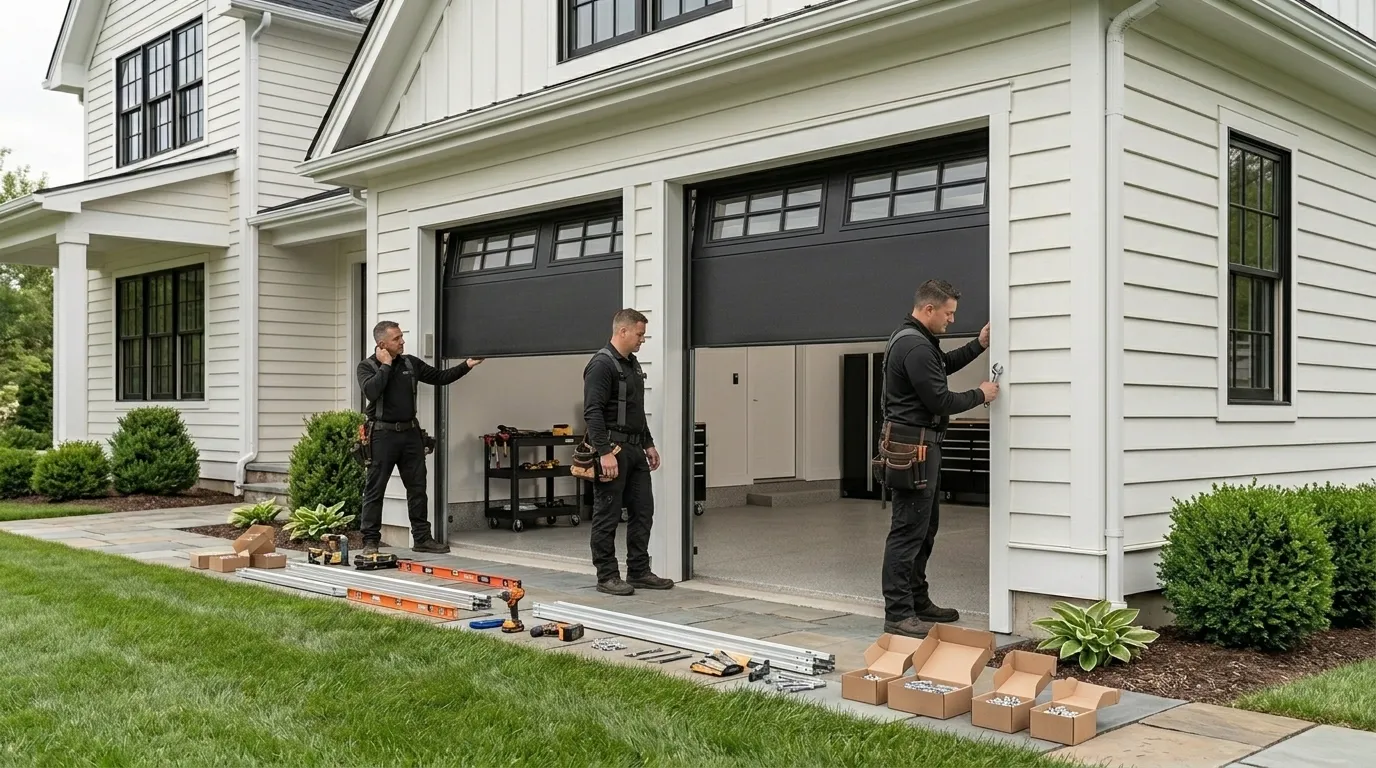
Elkins Park sits about 11 miles from our shop in Cherry Hill, and the calls that come out of this area lean older than what we see closer to home. The median house here went up around 1951, five years ahead of the broader service area's 1956 median, and that shows on the phone before we even get a truck moving. We hear about doors that won't stay in track, openers that grind instead of pull, and torsion springs that let go without warning because they've been carrying the same load since Eisenhower was in office.
With roughly 3,066 households in this pocket, it's a smaller area than most of what we cover, and the housing is tighter and older on average. That means fewer new-construction doors with sensor-heavy openers, and more single-car and narrow double bays built for hardware that's since gone out of production. We also get calls about doors that were replaced once already, sometime in the 80s or 90s, on top of original framing that was never squared for a modern door. Those jobs take longer to diagnose than a straightforward spring swap, because the door and the opening don't always agree with each other anymore.
We don't keep a truck stationed in Elkins Park. Every job here is a trip out from Cherry Hill, so we schedule by route and can't promise a same-hour arrival the way a shop based in the area could. We also don't stock every obsolete spring size or drum on the truck. A door built around 1951 was often fitted with hardware nobody has manufactured in decades, and if the torsion drum or the shaft diameter doesn't match anything current, that part gets special-ordered rather than pulled off the shelf. That can mean a return trip.
We don't do fence, deck, or general contracting work - doors, openers, springs, tracks, and panels are the job. And we won't tell a homeowner to replace a door that just needs a cable or a roller; if the fix is cheaper than the swap and the frame is sound, we say so, even when a full replacement would be the bigger ticket for us.
The homes in this pocket cluster tightly around 1951, inside a service-area range that runs from 1938 up through 1997 with a median of 1956. Elkins Park sits on the early side of that spread, which matters more than it sounds like it should. A door and its hardware get specified to the house at the time of construction, and a 1951 build predates a lot of the standardization that came later in torsion spring sizing, track width, and opener mounting.
The area's median household income runs to $129,773, well above the $100,130 median across the full service territory, and that tends to track with owners who've kept up on maintenance rather than deferring it - but it doesn't change what's behind the wall. Even a well-kept house from 1951 still has 1951 bones. The service area overall is described as mostly pre-1960 stock across its named neighborhoods, and this is one of the areas anchoring that median toward the older end, not the newer one.
Older openings mean the fixes skew mechanical rather than electronic. We see more side-mounted torsion setups here than the center-mounted, sensor-integrated systems common in newer construction elsewhere in the territory. When a spring goes on one of these doors, it's often a heavier gauge than what a big-box replacement kit assumes, and matching it correctly matters for how the door balances afterward.
The region also sits in a cold-severe climate band, which is hard on any door regardless of age, but it's harder on original steel that's been through seventy-plus winters of expansion and contraction on the same hinges and rollers. We check hardware fatigue on these calls that we wouldn't necessarily check on a door installed in the last fifteen years - hinge plate wear, track alignment drift, and whether the header framing has settled enough to bind the door at the top of its travel. None of that shows up until someone's standing in the opening with a level.
On a house from around 1951, that's usually a spring losing tension gradually rather than snapping outright. Original torsion hardware from that era wears differently than modern galvanized springs, and the heaviness you're feeling is often the early sign of a spring that's close to done, not something to wait out.
Not always. Hardware sized for a door built in the early 1950s doesn't always match what's stocked for current production, so a shaft, drum, or bracket for an older setup can require a special order and a second visit rather than a same-day fix.
About 11 miles from Cherry Hill. We don't keep a truck stationed in the area, so every job is a scheduled trip out rather than a walk-in response - plan the call a bit ahead of an emergency where you can.
Often yes, if the frame is square and the track is sound. A cable, roller, or spring replacement on a solid 1950s-era door is usually cheaper than a full swap. We'll tell you straight if the door itself has failed structurally and repair isn't the better call.
Call now or request a free quote - same-day service on most repairs, upfront written pricing.