Cherry Hill, NJ · Garage Door Service
Cherry Hill Garage Door Pros drives 16 miles to Folsom, NJ for garage door repair and replacement, matched to the town's 1957-median housing stock.
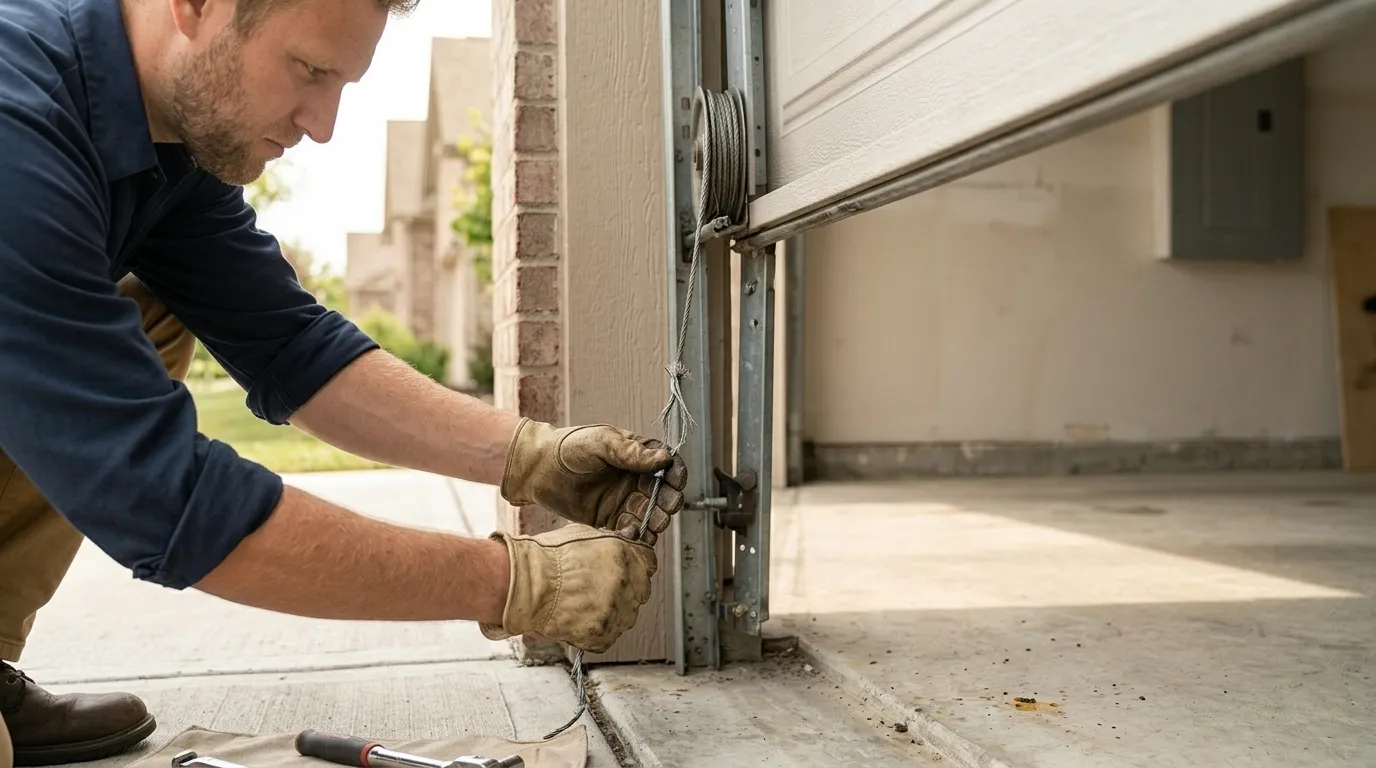
Folsom sits about 16 miles out from our shop in Cherry Hill, and most of the calls we get from this side of the run are about doors that are older than the house next door thinks they are. With a median build year of 1957 here, a lot of these houses still have their original torsion setup, or a replacement door bolted onto original track that nobody bothered to swap out. We hear a lot of "it worked yesterday" calls tied to a spring that finally gave out after decades of cold-weather cycling. We also get openers that are the second or third one on the same bracket, because the bracket itself was never sized for a modern unit. With 3,019 households in Folsom, we're not going to know your street the way a shop based here would, but we know the pattern this housing stock throws at us, and that pattern repeats house after house.
We don't keep a truck stationed in Folsom, and we're not going to tell you we can be there in twenty minutes - we're coming from Cherry Hill, 16 miles away, and traffic on that drive is traffic on that drive. We also don't push full door replacement on a repair that's going to hold. If a torsion spring or a bent roller is the actual problem, we fix that part. We don't do cosmetic paneling jobs or new construction installs - our work here is repair and replacement on existing residential doors, not builder-side installs. And if a job needs a part on a longer lead time, we'll tell you that up front instead of promising a same-day fix we can't back up.
The median year built in Folsom is 1957, which puts most of the housing stock here squarely in the same postwar wave that shows up across a lot of this region - houses built between roughly 1938 and 1997 with a heavy concentration before 1960. That means single-car and two-car garages built for the doors and hardware of that era: lighter panels, simpler torsion or extension spring setups, and openers added later rather than built in. Median household income here runs $100,544, close to the wider area's $100,130, which tells us these are owners who tend to fix rather than gut-renovate - a lot of the doors we see have been maintained piecemeal for years rather than replaced outright. The area sits in a cold-severe climate band, which matters more than people think for a door built in the 1950s: the steel, the seals, and the spring tension were never speced for the freeze-thaw cycling this region gets decades later.
A door built or installed around a 1957 median doesn't fail the way a 2015 door fails. Springs on older torsion bars lose tension gradually and then snap on a cold morning, because cold-severe winters make steel more brittle and put more load on hardware that's already fatigued. Tracks installed for narrower, lighter panels can rack out of alignment when a heavier replacement door goes on the same rollers and hinges built for the original weight. Openers bolted onto framing that was never engineered for a chain-drive unit tend to work themselves loose over the years, which shows up as grinding or a door that shudders partway up. None of this is unique to any one house on your street - it's what happens when 1950s-era garage construction meets sixty-plus years of New Jersey winters. Knowing that pattern before we open the garage is what lets us diagnose the actual failure instead of guessing at it.
No. We're based in Cherry Hill, about 16 miles from Folsom, and we drive out for repair and replacement calls. We won't claim a local depot or a guaranteed response time we can't back up - we'll give you a straight estimate on when we can get there.
If your house dates to around the 1957 median for this area, the torsion spring is likely original or an early replacement, sized for a lighter door than what's on the track now. Combine that with cold-severe winters cycling the steel, and springs here tend to fail suddenly rather than gradually.
Depends on what's actually broken. If it's a spring, cable, or roller, repair almost always makes more sense. If the panels are original from a 1950s build and rusted through or the track is bent beyond adjustment, replacement is usually the better spend. We'll tell you which one you've got.
Call now or request a free quote - same-day service on most repairs, upfront written pricing.