Cherry Hill, NJ · Garage Door Service
Cherry Hill Garage Door Pros travels 17 miles to Fort Washington, NJ for repairs on the newer 1960s-70s sectional doors that dominate this pocket of the service area.
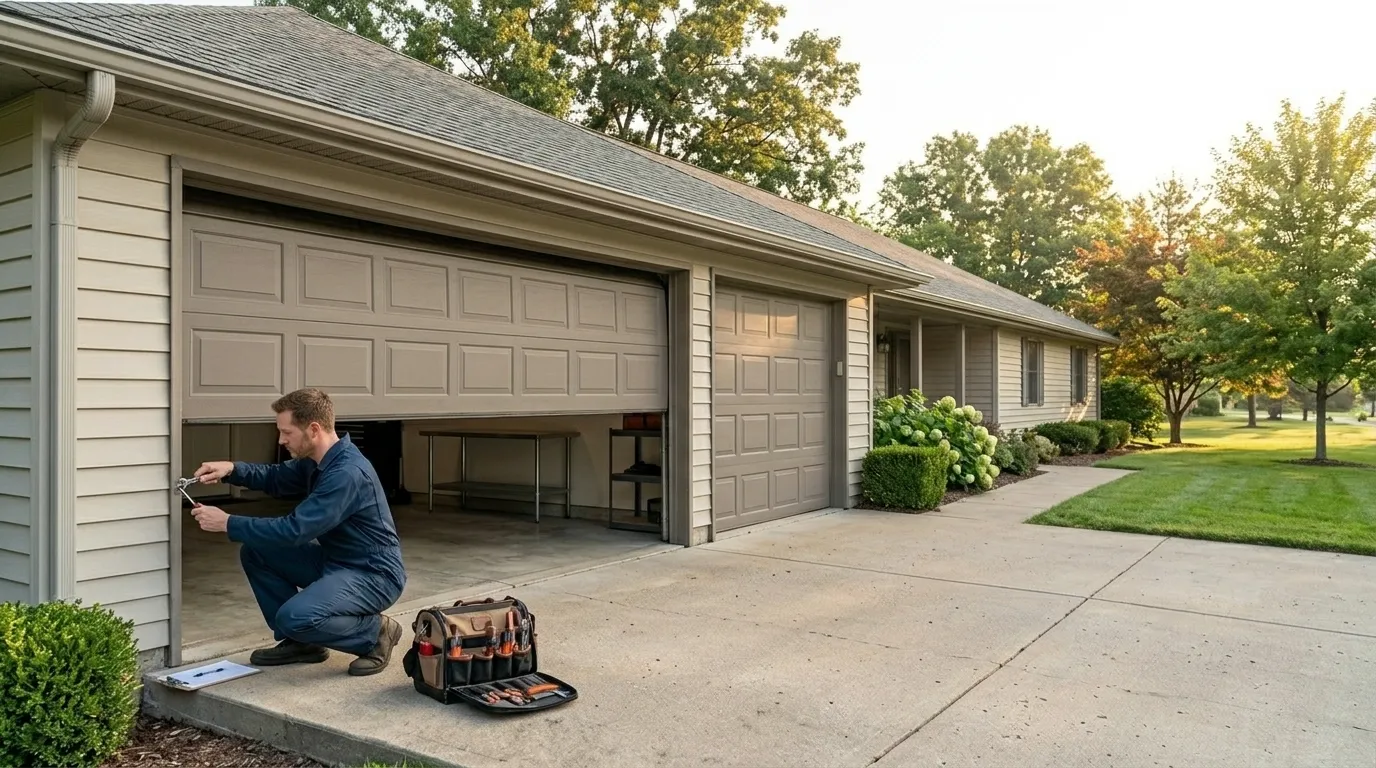
Fort Washington sits about 17 miles out from our Cherry Hill base, which puts it toward the far edge of the routes we run. The calls we get from this pocket skew different from the older neighborhoods closer in. Homes here mostly went up around 1968, so we're not dealing with the original one-piece doors and side-mounted torsion springs that show up on the pre-1960 blocks elsewhere in the area. Instead the common jobs are worn rollers on steel sectional doors, chain-drive openers that have gone noisy after years of use, and torsion springs on standard extension hardware reaching the end of their cycle life. With roughly 2,260 households in this stretch, it's a smaller area than most of what we cover, but the door stock is more uniform - later-model sectional doors on standard track, not the mixed bag of eras you find in older sections of the service area. Median income here runs $159,302, noticeably higher than the $100,130 median across the broader area, and that tends to show up as more owners opting for full opener replacement rather than patching an old one.
We don't keep a crew or a truck stationed in Fort Washington - every job here is a trip out from Cherry Hill, and that means we schedule around drive time rather than promising a same-hour arrival. We also don't try to source parts for doors we haven't seen; if a spring or track size isn't something we carry on the truck, we tell you that up front instead of guessing. On a door this age - built mostly in the late 1960s rather than the 1940s or 50s - we're less likely to run into obsolete hardware, but we still won't force a repair on a door where the frame or panels have failed. If the cost of parts and labor gets close to a new door, we say so, because a homeowner paying $159,302-median-income prices for patchwork on a dying door isn't getting a good trade. That's a plain-numbers call, not a sales pitch.
Across the wider service area, most housing dates from 1938 to 1997 with a median around 1956, and a lot of it - across 86 named areas - is pre-1960 stock. Fort Washington breaks from that pattern. The median build year here is 1968, meaning most of the houses on these blocks are more than a decade newer than the typical home in this coverage zone. That decade matters more than it sounds like on paper. By the late 1960s, garage construction had mostly shifted to sectional doors on steel track instead of the older one-piece swing-up or pivot doors that dominate the 1940s and 50s neighborhoods nearby. Openers from that build era, when original, were chain-drive units bolted to a header that's now closing in on sixty years old. With 2,260 households in this stretch, it's a tighter, more consistent pocket than most of what we service - fewer generations of door replacements layered on top of each other, and less guesswork about what's likely behind the wall when we open a panel.
Because Fort Washington's housing runs about a decade newer than the service-area median, the failure points we see skew toward wear rather than obsolescence. Extension springs stretched past their rated cycles, worn nylon rollers on steel track, and second- or third-generation chain-drive openers installed to replace originals from the late 1960s - that's the typical job here, not a hunt for a discontinued spring size. The area also sits in the same cold-climate band as the rest of the region, so winter still tightens steel springs and stiffens old lubricant on schedule, but you're less likely to be pairing that cold with hardware from the 1940s. Given the median income here, we also see more owners choosing to replace an aging opener outright rather than nurse it along, which changes the kind of call we get - less emergency spring snap, more planned opener swap.
It's about 17 miles from our Cherry Hill location. We don't keep a crew stationed in Fort Washington, so every visit is a trip out, and we plan the schedule around that drive time rather than promising an on-the-spot arrival.
Yes. Median build year here is 1968, versus a lot of pre-1960 stock elsewhere in the service area. That means sectional doors on steel track and chain-drive openers rather than the older one-piece doors and original hardware common on older blocks nearby.
The whole area sits in a cold, severe-winter climate band, and that doesn't change block to block. Cold tightens torsion and extension springs and thickens old lubricant, which is part of why winter tends to bring more spring and opener calls generally.
Sometimes, yes. If a door's frame or panels have failed, or the repair cost gets close to the price of a new door, we say so directly instead of patching something that won't last. It's a numbers call, not a sales pitch.
Call now or request a free quote - same-day service on most repairs, upfront written pricing.