Cherry Hill, NJ · Garage Door Service
Serving Hatboro's 1956-era housing stock from Cherry Hill, 17 miles out. Torsion springs, worn rollers, and cold-climate opener faults on original hardware.
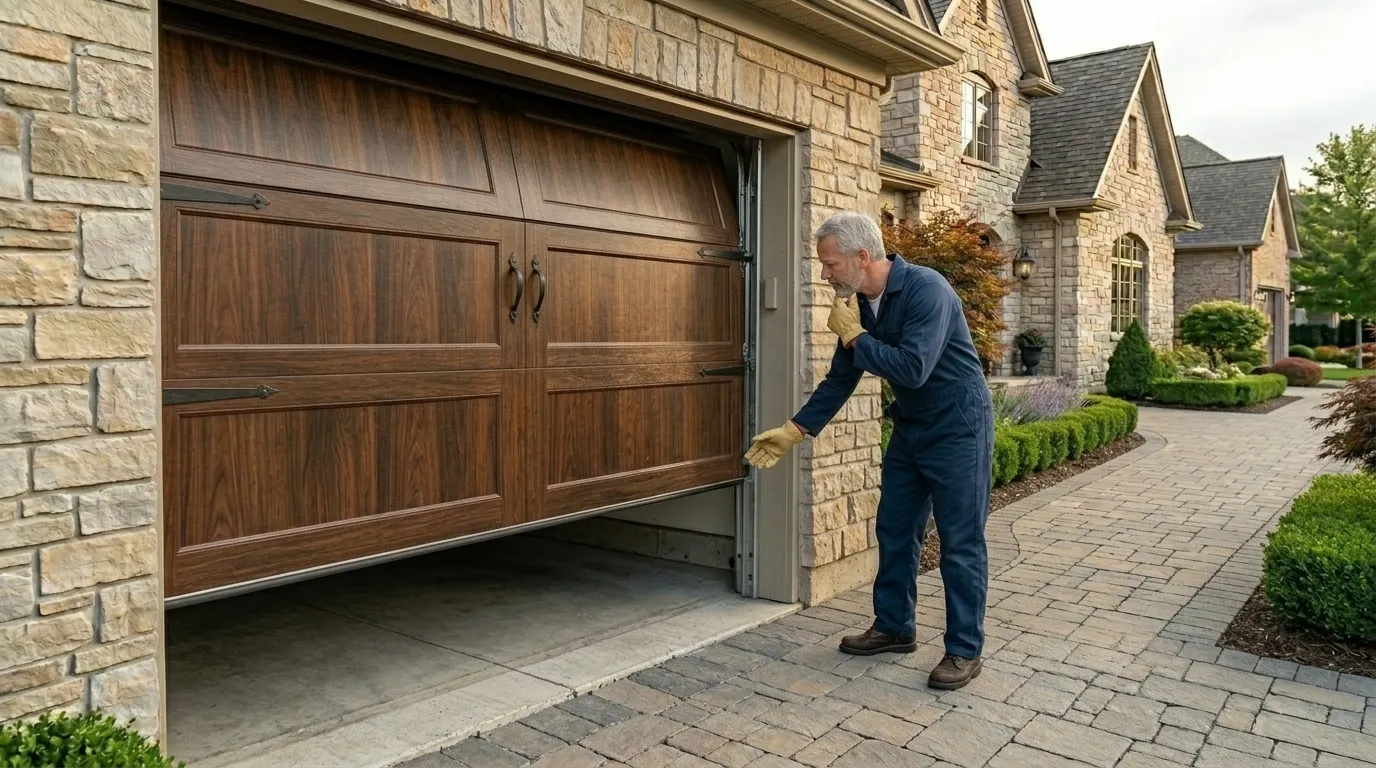
Hatboro sits about 17 miles from our Cherry Hill shop, and most of the calls we take from this side of the service area are about the same thing: a torsion spring that's finally given out on a door that's been running on the original hardware since the house was built. With roughly 3,075 households here, we're not covering a small pocket - it's a real chunk of the territory, and the median household income of $108,927 tells us most owners are looking to fix the door right the first time rather than patch it twice. We hear a lot of "it worked yesterday" calls, which almost always trace back to a spring that was already fraying and finally snapped overnight. Cold mornings make it worse - stiff cable, a sluggish opener, a door that groans up six inches and stops. We travel out for these jobs; we don't keep a truck staged in Hatboro, so same-day isn't something we promise here. What we can say is that when we do get out to you, we're not guessing at what's behind the panel. A house built around 1956 has a specific kind of door and a specific kind of failure, and that's most of what we see.
We don't do same-day emergency response in Hatboro - the drive from Cherry Hill means we schedule the trip, we don't drop everything. We also don't recommend replacing a door just because it's old; plenty of the original doors out here still run fine on a new spring and a set of rollers, and telling an owner to buy a whole new door when a $200 repair would do it is bad advice dressed up as good service. We don't stock every obscure part on the truck either - some of the older torsion hardware and sectional panel sizes from this era aren't things big-box suppliers carry, so a repair on an original door sometimes means a short wait on a part instead of a same-visit fix. And we don't guess at spring size over the phone. Torsion spring wind and wire gauge have to be measured on site or the replacement fails again in a year. If a job needs parts we can't get quickly, we'll tell you that up front rather than promise a fix we can't deliver that week.
The median year built across this side of the service area is 1956, and Hatboro's housing lines up right with that - most of the neighborhood went up in the 1950s, with the broader service area spanning construction from 1938 to 1997. That means original doors here are almost always steel sectional panels on side-mounted torsion springs, hung on track hardware that predates the extension-spring and safety-cable designs required on newer installs. It's not exceptional hardware, but it's old, and the wear patterns match the age: rollers worn oval instead of round, cable strands frayed from decades of the same friction point, and center hinges stretched from thousands of cycles on a door nobody's rebalanced since it was installed. This area also sits in a cold, severe climate band, which matters more than people expect for a door this age. Metal fatigues faster with repeated freeze-thaw cycling, and lubricant that was fine in 1975 has usually gone gummy by now. None of that is unusual for a house this age - it's just what 65-plus years of Northeast winters does to a torsion spring nobody's touched.
On a door this age, the fault almost never shows up as "the opener is broken." It shows up as a door that's heavy to lift by hand, a motor that strains and reverses, or a spring that lets go with a bang loud enough to bring the neighbors out. Because the median build year here is 1956, side-mounted torsion springs and older-style rollers are the norm, not the exception, and those parts fail differently than the extension-spring setups common in newer subdivisions. A worn roller on this hardware binds in the track and throws the whole door off balance before it ever fails outright - you'll notice it as a shudder partway up, not a total stop. Cold weather speeds all of it up: stiff steel cable, thickened lubricant, and a spring under more strain than it was ever designed to hold at 20 degrees. The honest fix on most of these calls is a spring and roller replacement, not a new door - the panels themselves usually outlast the hardware that runs them.
No. We run out of Cherry Hill, about 17 miles away, and we schedule Hatboro jobs rather than offering same-day emergency dispatch. If your spring breaks and the door's stuck shut, tell us that when you call so we can prioritize the trip, but we won't promise a response time we can't back up.
It's possible. The median build year across this part of the service area is 1956, and a lot of houses from that era still have their original steel sectional door on side-mounted torsion springs. If nobody's replaced the spring or rollers, that's usually the first thing to fail, not the panels themselves.
This area sits in a cold, severe climate band, and torsion springs under tension fatigue faster through repeated freeze-thaw cycles. A spring that's already worn from 60-plus years of use is more likely to let go on a cold morning than a mild one - the metal's just less forgiving at low temperatures.
Sometimes it takes an extra day or two. Some of the torsion hardware and panel sizes common on 1950s-era doors aren't things standard suppliers keep on hand, so an older repair can mean a short wait instead of a same-visit fix. We'll tell you upfront if that's the case for your door.
Call now or request a free quote - same-day service on most repairs, upfront written pricing.