Cherry Hill, NJ · Garage Door Service
Cherry Hill Garage Door Pros travels 20 miles to Mansfield, NJ for garage door repair and install, built for a mostly 1990s housing stock, not the 1950s stock closer to Cherry Hill.
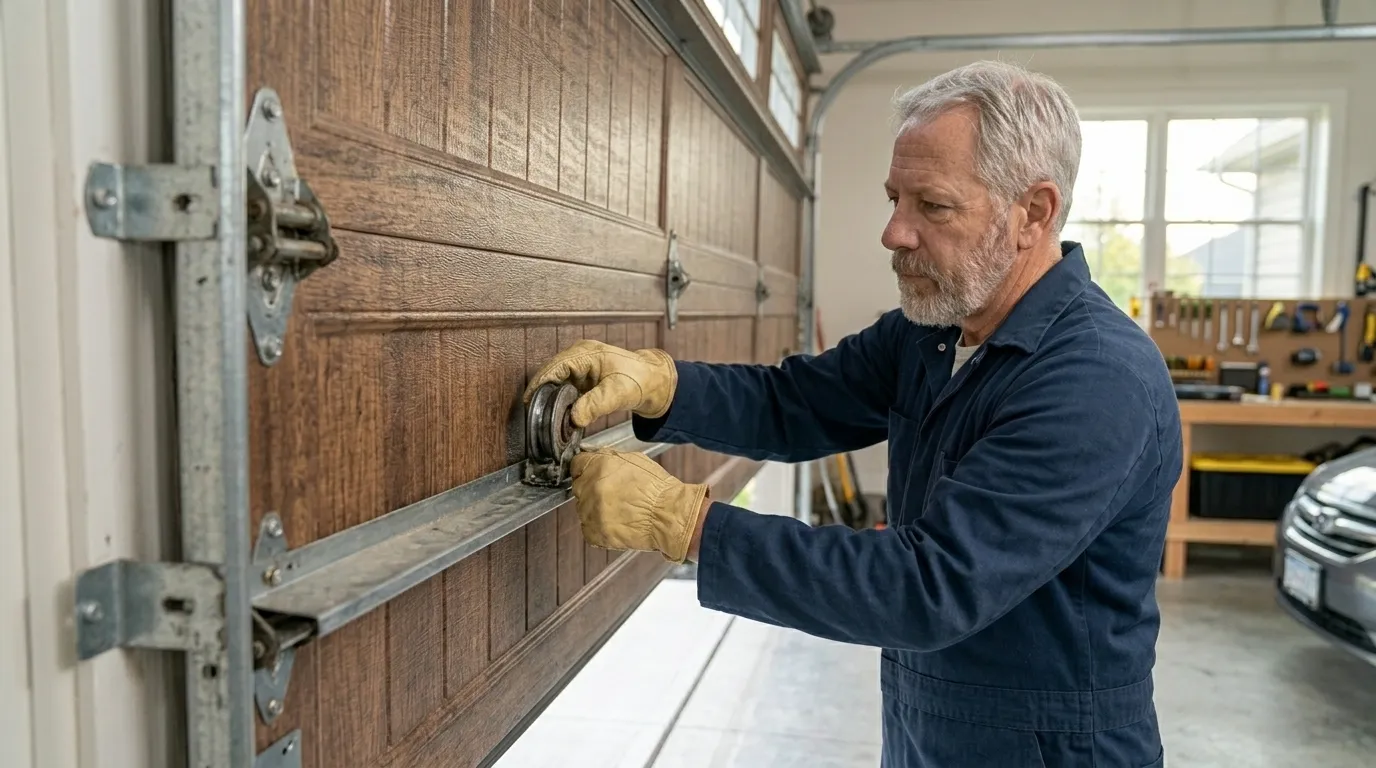
Mansfield is a different job than most of our route. The median home here was built around 1994, which puts most garage doors on steel raised-panel construction with extension or torsion springs sized for lighter insulated sections, not the heavy wood or single-layer steel doors common on older stock closer to Cherry Hill. We're 20 miles out from our base, so a Mansfield call goes on the schedule, not the same-hour list - we're upfront about that before you book.
What we actually get called for out here: openers reaching the end of their circuit boards (a lot of 1990s door packages came with openers that are now aging out), broken springs on doors that are 25-30 years old, and worn rollers on tracks that have never been touched since the house was built. With 3,428 households in this area and a median income near $108,851, we also see more requests for full opener upgrades with smart features than we do in older neighborhoods, where people are usually just trying to keep the original door running.
We don't stock a truck out of Mansfield and we don't promise a same-day window here the way a company based in town could. If your spring breaks at 7am and you need someone by 9, call whoever's closest - we'll tell you that straight rather than string you along. We also don't try to force a repair on a door that's cheaper to replace outright; a 1990s steel door with a shot bottom seal and pitted panels usually isn't worth patching piece by piece once you add up labor. And we don't do work we haven't priced in front of you first - no verbal estimate that turns into a different number on the invoice.
This part of the service area sits well outside the older, denser sections built up through the mid-1900s. The typical Mansfield house went up closer to the mid-1990s, decades after most of the housing stock the parent company covers, where median build year runs closer to 1956. That gap matters for garage doors specifically: 1990s construction almost always means a wider standard opening, factory-installed torsion springs on a center bracket, and steel doors with foam-injected insulation, rather than the older solid wood or single-skin steel doors with side-mounted torsion setups that show up on pre-1960 homes.
With 3,428 households and a median income of $108,851, this is a smaller, newer pocket than most of what we cover - fewer inherited hardware problems, more doors reaching the natural end of a factory opener's life or the springs' rated cycle count around the 20-25 year mark.
Because the build era here skews so much newer, the failures skew newer too. We're not chasing brittle 1950s hardware or replacing parts nobody makes anymore. Instead, the common Mansfield job is a torsion spring that's simply logged its rated cycles, a logic board on an original 1990s-era opener that's finally failed, or weatherstripping and rollers that were never swapped in 25-30 years of daily use. Cold-climate stress still applies - the region sits in a cold, severe climate band, and steel doors from this era can show hairline seams at the panel joints where insulation has settled or shifted over three decades of freeze-thaw cycles. It's a maintenance-and-replacement pattern more than a hardware-mismatch pattern, which is a different conversation than we have on the older side of the coverage area.
No. We run out of Cherry Hill, about 20 miles away, and travel to Mansfield for scheduled jobs. We're not the fastest same-day option for an emergency here, and we'll say so upfront rather than promise a window we can't hit.
Homes built around the mid-1990s, which describes most of Mansfield, came with factory openers whose circuit boards and logic gears are now reaching the end of a normal 25-30 year service life. Springs on these doors typically last longer than the opener electronics.
Often yes, if the panels aren't rusted through and the track is straight - a new torsion spring or opener is usually cheaper than replacement. But once the bottom panel is rotted or the seams have separated from insulation shift, replacement tends to cost less than repeated patch repairs.
Call now or request a free quote - same-day service on most repairs, upfront written pricing.