Cherry Hill, NJ · Garage Door Service
Serving Mount Holly homes built mostly in the 1950s, 14 miles from our Cherry Hill shop. We know the torsion hardware this era's builders used and fix it right.
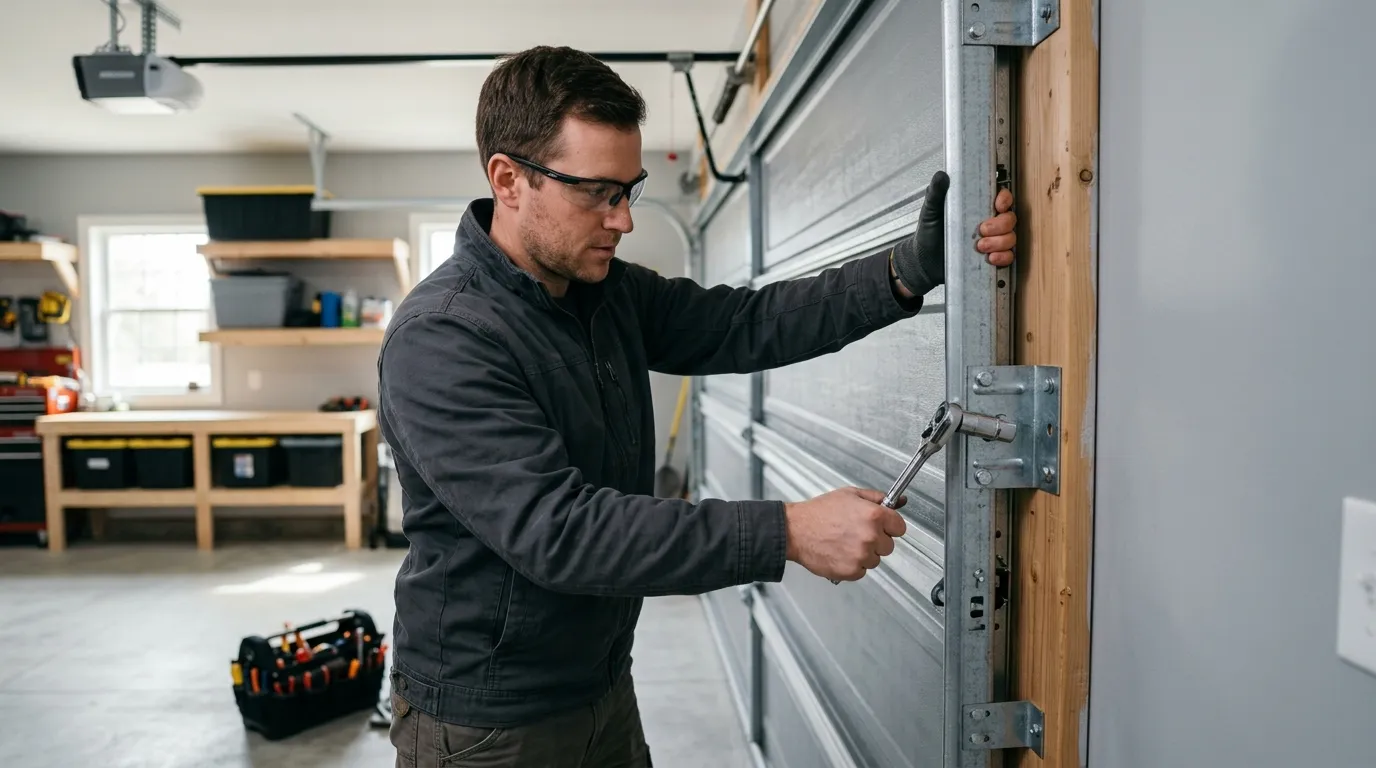
We drive out to Mount Holly from Cherry Hill, about 14 miles, and most of the calls follow a pattern tied to the age of the housing stock here. The median build year in Mount Holly sits around 1955, which lines up with the broader pre-1960 pattern we see across most of this service area. That means a lot of the doors we open up still have their original jamb brackets, or a torsion spring that was swapped once sometime in the 1980s and never touched again. We get calls about a spring that let go with a bang, a cable that frayed through on a rusted drum, and openers bolted onto framing that was never meant to carry the weight of a modern unit. With 3,570 households in the immediate area, we're not guessing at a type of house - the pattern repeats block after block.
We also hear from folks whose door just feels heavy all of a sudden, which almost always means a spring is losing tension before it fully breaks. That's the call we'd rather get, because it's a scheduled repair instead of an emergency.
We don't stock a warehouse of every obsolete bracket and drum size from the 1950s and 60s on the truck, because there isn't a way to carry parts for every hardware variation that era produced. If your door has a section or a track that's genuinely out of production, we'll tell you that up front rather than jury-rig something that won't hold up through another cold winter. We also don't try to talk anyone into a repair on a door that's cheaper and safer to replace outright - if the springs, the track, and the panels are all failing at once on a door this old, patching one part just moves the next failure a few months down the road. And we don't work from a Mount Holly depot; we come out from Cherry Hill for every job, so we schedule around the drive rather than pretending we're already local.
Mount Holly's housing stock centers on a median build year of 1955, which puts a large share of the area's homes right in the middle of the region's broader 1938 to 1997 building window, itself centered on 1956. That's not a coincidence - this whole corridor went up in waves after the war, and the tract housing from that era used a fairly narrow set of construction methods. Single-car and two-car attached garages from this period typically got wood jambs, steel track bent to a shallower radius than what's sold today, and torsion springs sized for lighter, wood-panel doors rather than the heavier insulated steel sections many owners have since installed. At an $83,145 median household income, a lot of owners here have been maintaining these houses for the long haul rather than doing full teardown renovations, which means original hardware often outlives more than one door.
When a door built for 1950s hardware gets a heavier replacement panel later, the spring that was sized for the original door is now working too hard, and it fails sooner than it should. That's the single biggest pattern we see on Mount Holly service calls: a mismatch between old jambs and track and a newer, heavier door hung on top of them. Add the region's cold, severe winter swings, and steel hardware that's been through 60-plus years of freeze-thaw cycling gets brittle at the weld points and rusts through at the roller stems first. We check jamb condition and bracket wear on every visit here before we touch a spring, because on a house this age, the spring is rarely the only thing carrying wear. One honest limitation: if the wood jamb itself has rotted behind the bracket, that's carpentry work outside what a door repair call covers, and we'll say so rather than bolt new hardware to soft wood.
On houses from the 1950s, the torsion spring was often sized for a lighter wood-panel door. If that door was replaced later with a heavier insulated steel one, the original spring is undersized and wears out faster, which feels like the door getting heavier before it fails outright.
No. We run out of Cherry Hill, about 14 miles away, and drive out for scheduled jobs. We don't claim a Mount Holly location or a guaranteed response time - we tell you honestly what the drive means for scheduling when you call.
Not always. Some brackets, drums, and track profiles from the 1950s are out of production. When that's the case we'll say so directly rather than force a mismatched part, and we'll talk through whether a full hardware update makes more sense than patching.
Call now or request a free quote - same-day service on most repairs, upfront written pricing.