Cherry Hill, NJ · Garage Door Service
Garage door repair and installation for Plymouth Meeting, NJ, serviced from Cherry Hill. We know the 1970s-era hardware and cold-weather spring wear common to homes built here.
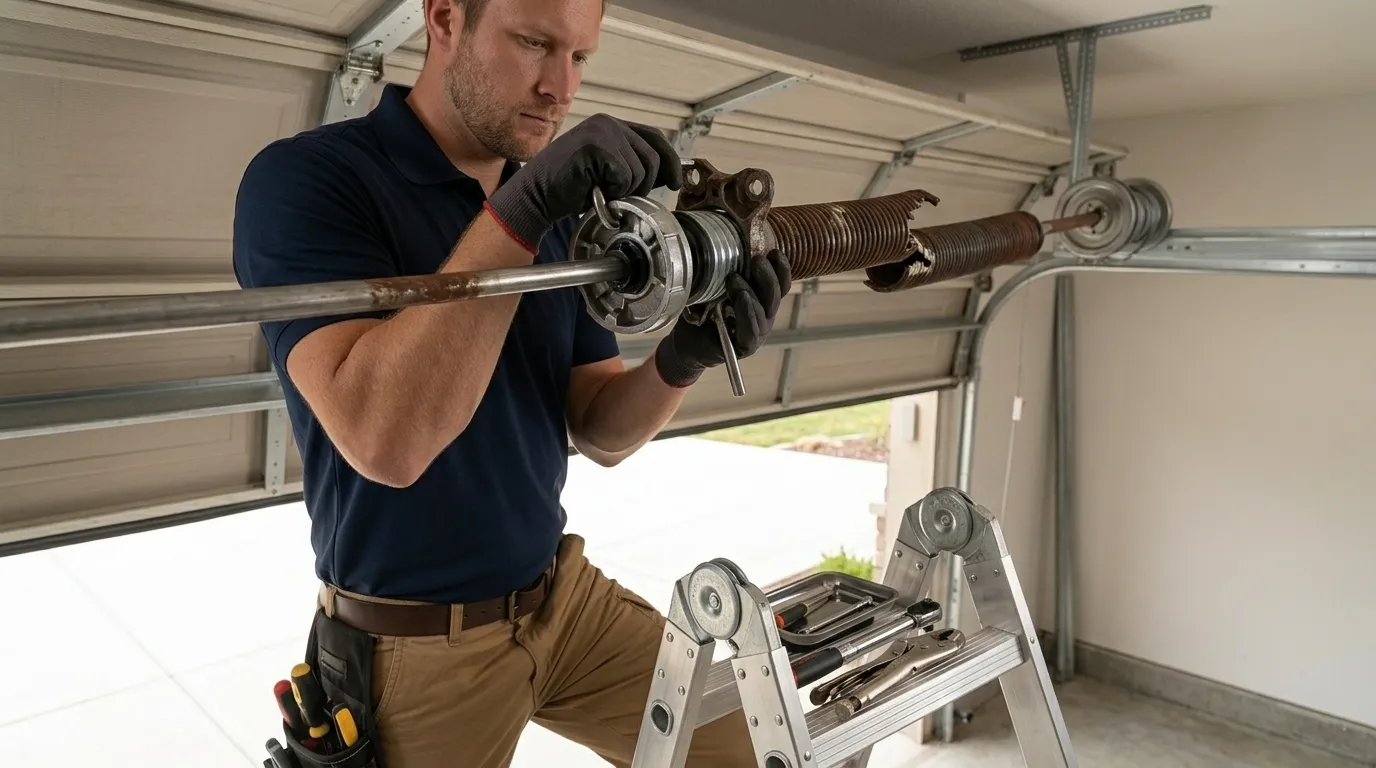
Most houses in this pocket of Plymouth Meeting went up around 1975, which puts them a full generation past the 1956 median for the wider Cherry Hill service area. That gap matters. Instead of the original one-piece doors and side-mounted hardware you find on 1950s stock, homes here started life with sectional steel doors on torsion springs, paired with chain-drive openers that were standard through the 70s and 80s. By now most of those first-generation openers have been swapped at least once, and the springs on doors that never got replaced are well past a normal service life. The calls we get from here are what you'd expect from a 45-to-50-year-old door: a torsion spring that finally lets go on a cold morning, a chain drive worn loud enough that the owner wants it gone, or rollers that have chewed a groove into the track. With roughly 3,134 households in this stretch, it's a smaller area than most we cover, and the housing is consistent enough that we see the same handful of failures repeat house after house.
We run this call from Cherry Hill, 18 miles out, so we're not going to promise a same-day depot or a truck already parked nearby. If your spring goes at 6 a.m., we're not the fastest option on paper, and we'd rather say that than pretend otherwise. We also don't do commercial roll-up doors, gate operators, or fence work here or anywhere in the service area - garage doors and openers on residential houses are what the trucks are stocked for. And we won't tell you to replace a door that just needs a spring and a tune-up; a 1975-built door with the original steel skin still intact is usually worth saving, even if the opener isn't. Where we do draw a hard line is parts availability. Some of the chain-drive openers original to houses this age used proprietary logic boards that aren't made anymore. If yours is one of those, we'll tell you straight that repair means a new opener, not a chase for a part that doesn't exist.
Across the broader Cherry Hill service area, most housing dates from 1938 to 1997 with a median build year of 1956, and 86 named areas skew pre-1960. Plymouth Meeting doesn't fit that pattern - the median build year here is 1975, closer to the newer end of the regional range. That later build date lines up with a median household income of $109,706, higher than the service-area median of $100,130, and it shows in the housing stock: fewer original wood doors, more steel sectional doors that were standard by the mid-70s, and openers added or replaced over four decades rather than doors held over from the 1950s. The area sits in a cold-climate band with severe winter conditions, same as the rest of the region, so the hardware still has to survive the same freeze-thaw cycles regardless of when the house went up. What's different is the starting point: a 1975 garage was built for torsion springs and steel panels from day one, not retrofitted onto older wood-frame construction.
Because these garages were built for torsion springs from the start, you won't find the side-mounted extension-spring setups that trip up techs working on the older stock nearer the city center. What you will find is torsion hardware that's now on its second or third spring cycle, and steel panels from the 70s that have held up structurally but show surface rust at the bottom seam where cold-weather condensation collects. Openers are the bigger tell. A chain-drive unit installed alongside a 1975 build, or even a replacement from the 80s or 90s, is well past the point where a burnt-out circuit board is a matter of when, not if. Cold snaps make torsion springs feel stiffer and can expose a spring that was already fatigued, which is why late-winter calls here tend to be springs, not tracks or cables. None of this is dramatic - it's ordinary wear on ordinary suburban doors - but the fixes lean toward opener and spring replacement more than the panel repairs you'd expect on older housing stock closer to Cherry Hill itself.
Torsion springs lose some flex in cold weather, and this area sits in a climate band with severe winters. A spring that's already near the end of its life often shows it first on a cold morning, not because the cold breaks it outright but because it exposes wear that was already there. If the door feels noticeably harder to lift once temperatures drop, the spring is worth checking.
It depends on the model. Openers installed with houses built around 1975 often used chain drives and logic boards that manufacturers stopped supporting years ago. If a part isn't made anymore, repair isn't an option and replacement is the honest answer. We'll check before assuming either way.
No. We run this job from Cherry Hill, about 18 miles away. We don't advertise a local depot or a guaranteed response window here, and we'd rather tell you that upfront than promise something we can't back up.
Most doors in this area date to the mid-70s or later, and the steel panels from that era generally hold up well structurally. A worn spring, opener, or roller set doesn't usually mean the door itself needs replacing - the panel is often the part with the most life left in it.
Call now or request a free quote - same-day service on most repairs, upfront written pricing.