Cherry Hill, NJ · Garage Door Service
Sharon Hill homes went up mostly before 1960, and that shapes the doors, springs, and openers we see on every call out here from Cherry Hill, 13 miles away.
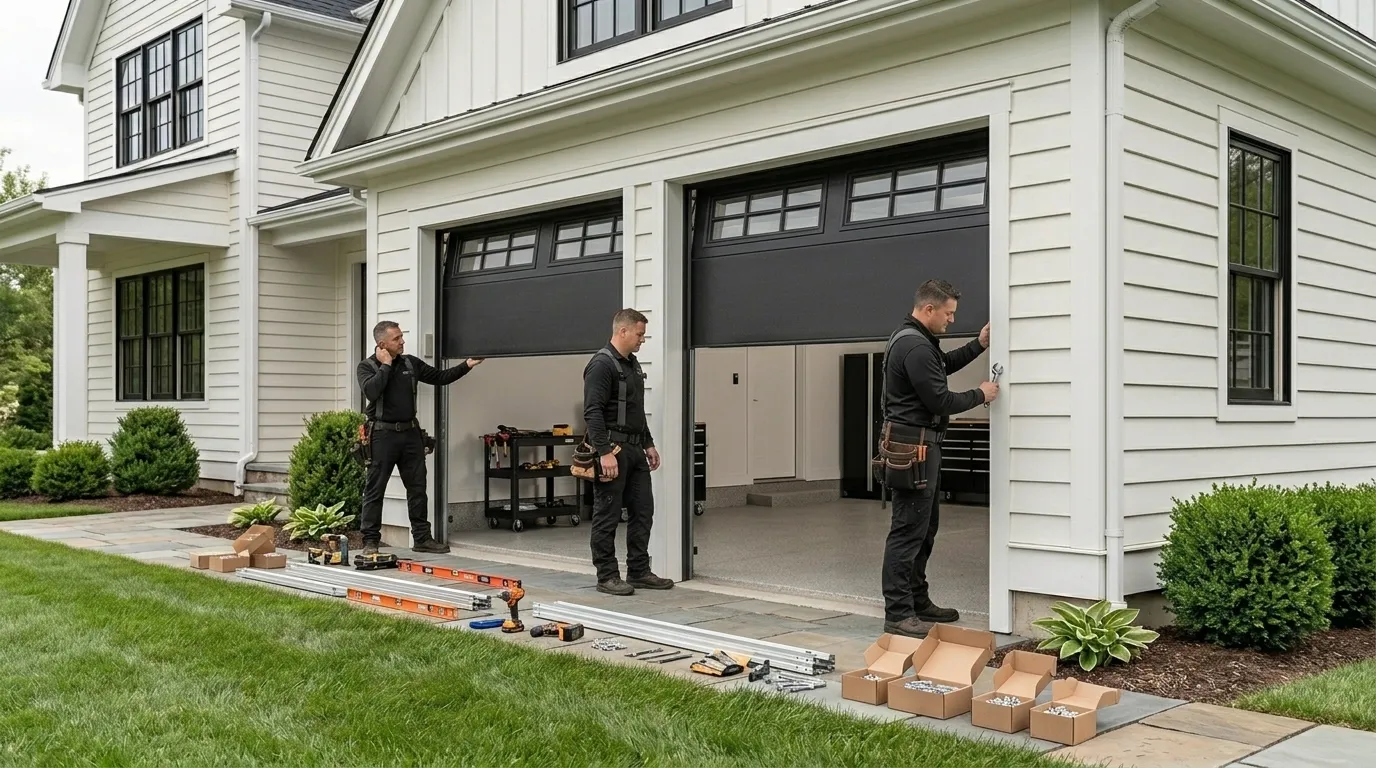
Sharon Hill sits about 13 miles from our shop in Cherry Hill, and the calls we get from this area track pretty closely with what's under the roofs here. This is older housing stock, mostly built before 1960, and it shows in the hardware. We see a lot of torsion springs that were sized for doors heavier than what's on the track now, because somewhere along the way a wood door got swapped for steel and nobody rebalanced the spring. We see openers bolted onto brackets that were never meant to carry a chain-drive unit, because the original setup was a manual door with no motor at all. With 1,959 households in this pocket, we're not out here every day, but when we do come, it's usually one of those two calls: a spring that let go, or a track that's been fighting the door for years and finally lost.
We don't stock a truck full of parts sized for houses that don't exist here. If your door needs a part built for new construction - wide low-headroom track, insulated steel panels sized to a modern 9-foot opening - we may need to order it, and that can add a day or two, since Sharon Hill's garages mostly weren't built to those dimensions. We also don't do cosmetic upgrades as a side hustle; if you want a new door because you don't like the color, that's a different conversation than a repair call. And we're honest when a fix isn't worth it: on a door old enough that the track, spring, and opener all need replacing at once, patching one piece and leaving the rest is a waste of your money.
The median household income in this area is $68,529, noticeably below the $100,130 median across our full service area, and the housing reflects an older, more settled part of the region rather than newer development. Most of what's here went up around 1955, squarely in the pre-1960 band that makes up the bulk of the towns we cover. That means single-car and narrow two-car openings, sometimes with the garage tucked under the house rather than built as an attached bay. Framing from this era used dimensional lumber that's often slightly different from today's standard stock, which matters when a track bracket needs to be reset into the jamb rather than just re-bolted.
A door built or replaced for a 1955-era opening usually runs on hardware that predates a lot of the safety and efficiency standards common now. Extension springs mounted along the horizontal track, rather than torsion springs over the header, are still common on these older setups, and they wear differently - you'll hear more banging and see more visible stretch before failure. The cold winters here also matter: this region sits in a severe cold climate band, and steel doors without a thermal break flex more in freezing temperatures, which stresses hinges and rollers that are already decades old. On a house this age, a rattling door in January is often the spring and the cold working against each other at the same time, not one or the other.
No. We work out of Cherry Hill and drive out to Sharon Hill, about 13 miles away, for scheduled calls. We don't keep a depot or staff stationed here, so we book by appointment rather than same-hour walk-ins.
On houses from the 1950s era common in this area, extension springs mounted along the horizontal track were standard, and they don't last as long or fail as gracefully as a torsion spring over the header. If yours keeps going, it may be time to replace the whole spring setup rather than the spring alone.
Sometimes. Houses built in this era often have openings and track spacing sized differently than new construction, so a replacement panel or bracket may need to be special ordered. We'll tell you upfront if that's the case rather than guess.
Call now or request a free quote - same-day service on most repairs, upfront written pricing.