Cherry Hill, NJ · Garage Door Service
Cherry Hill Garage Door Pros serves Villanova, NJ homes built mostly in 1963, 18 miles from our Cherry Hill base, with repairs matched to that era's hardware.
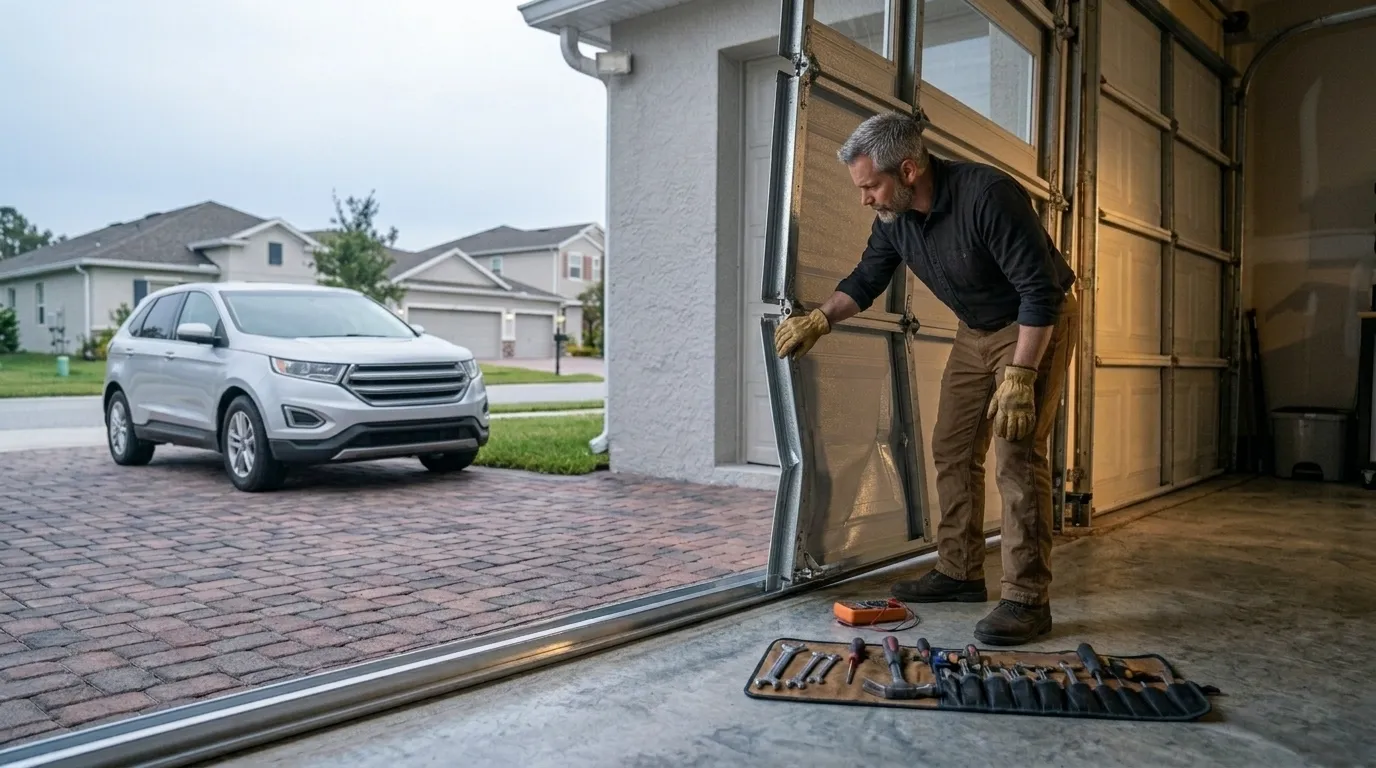
Villanova is a small pocket for us, about 855 households, and the calls that come out of it don't look like the calls from the older, denser parts of our coverage area. The median home here went up around 1963, which is newer than the 1956 median across the rest of the towns we serve. That seven-year gap matters more than it sounds. Homes from this stretch went up after steel sectional doors and torsion spring setups had already become standard, so we're not chasing down the odd one-piece wood doors or side-mounted low-headroom hardware you find in older stock nearby. What we do see is worn torsion springs on double-wide doors sized for two-car garages, opener units that have been swapped once or twice since the house was built, and track misalignment on doors that have had 60 years of seasonal use. With median household income here at $250,001, well above the $100,130 median across the rest of our territory, we also get more calls about upgrading to quieter or insulated doors rather than just patching what's there. It's less emergency repair, more planned replacement.
We don't keep a depot or a truck staged in Villanova. Cherry Hill is our base, and it's an eighteen-mile drive out to you, so we can't promise the same-day walk-in service we might offer to a street five minutes from the shop. If a spring goes at 6pm on a Friday, we'll tell you honestly where we are in the schedule rather than pretend we're around the corner. We also don't stock every custom panel finish on the truck. Homes in this income bracket tend to have architectural doors with specific wood-grain finishes or carriage-style hardware, and matching a single damaged panel on one of those can mean a special order with a real wait, not a same-visit fix. If your door is one of those, we'll tell you the lead time up front instead of guessing. And we don't push replacement when a repair will hold. A 1963-era torsion spring setup is usually straightforward to service on its own merits; we're not going to sell you a new door because the one you have is old, if the hardware underneath it is sound.
Across the wider area we cover, the housing stock runs from 1938 to 1997 with a median around 1956, and most of the 86 named communities in our territory lean pre-1960. Villanova sits on the newer side of that range, with a median build year closer to 1963. That difference of even a handful of years changed what got installed in these garages. By the early 1960s, builders had largely moved past the older detached single-door layouts and into the double-wide two-car configuration that's common here now, framed for standard steel sectional doors rather than retrofit hardware. The climate this area sits in is classified cold and severe, which over sixty winters puts real wear on weatherstripping, bottom seals, and any door that wasn't built with insulated panels from the start. Combined with the income profile of the area, at $250,001 median household income against a $100,130 median for the rest of our coverage territory, a fair number of these original 1963 doors have already been swapped once for higher-end insulated replacements, which changes what we're actually working on when we get the call.
A door built to 1963 specs runs on torsion spring hardware mounted above the opening, not the older side-mounted extension spring setups you'd find on a pre-1950 garage. That means when a spring fails here, it's almost always a torsion spring job, and the fix is more predictable than on older stock: known cable routing, standard drum sizes, hardware that hasn't been modified twice over. The cold-and-severe climate rating for this area means the metal track and hinges see real temperature swings across a winter, and on a door that's now over sixty years old, that shows up as roller wear and bent track sections before it shows up as anything dramatic. Because household income here runs well above the area average, we also see more doors that have already been upgraded once, insulated steel or composite replacements installed sometime after the original 1963 build, which brings a different set of common faults: opener sensor issues, insulated panel seams separating at the corners, and heavier doors that strain openers sized for the lighter originals. We size the fix to whichever generation of door is actually on the house, not to what the build year alone would suggest.
It's about eighteen miles from our base in Cherry Hill. We don't keep a truck staged out this way, so we schedule Villanova calls into the day's route rather than treating them as instant walk-ins. We'll give you a real window when you call, not a guess.
Yes. The median home here was built around 1963, newer than the 1956 median across most of our territory. That means torsion spring hardware and standard steel sectional doors, not the older side-mounted or one-piece setups common in pre-1960 housing nearby.
Sometimes, but not always on the same visit. Custom finishes and carriage-style panels common in higher-income areas like this one often need a special order from the manufacturer. We'll tell you the real lead time before you commit to anything.
Call now or request a free quote - same-day service on most repairs, upfront written pricing.